
The Brighton Boy: Thomas Sayers, 200 Years On
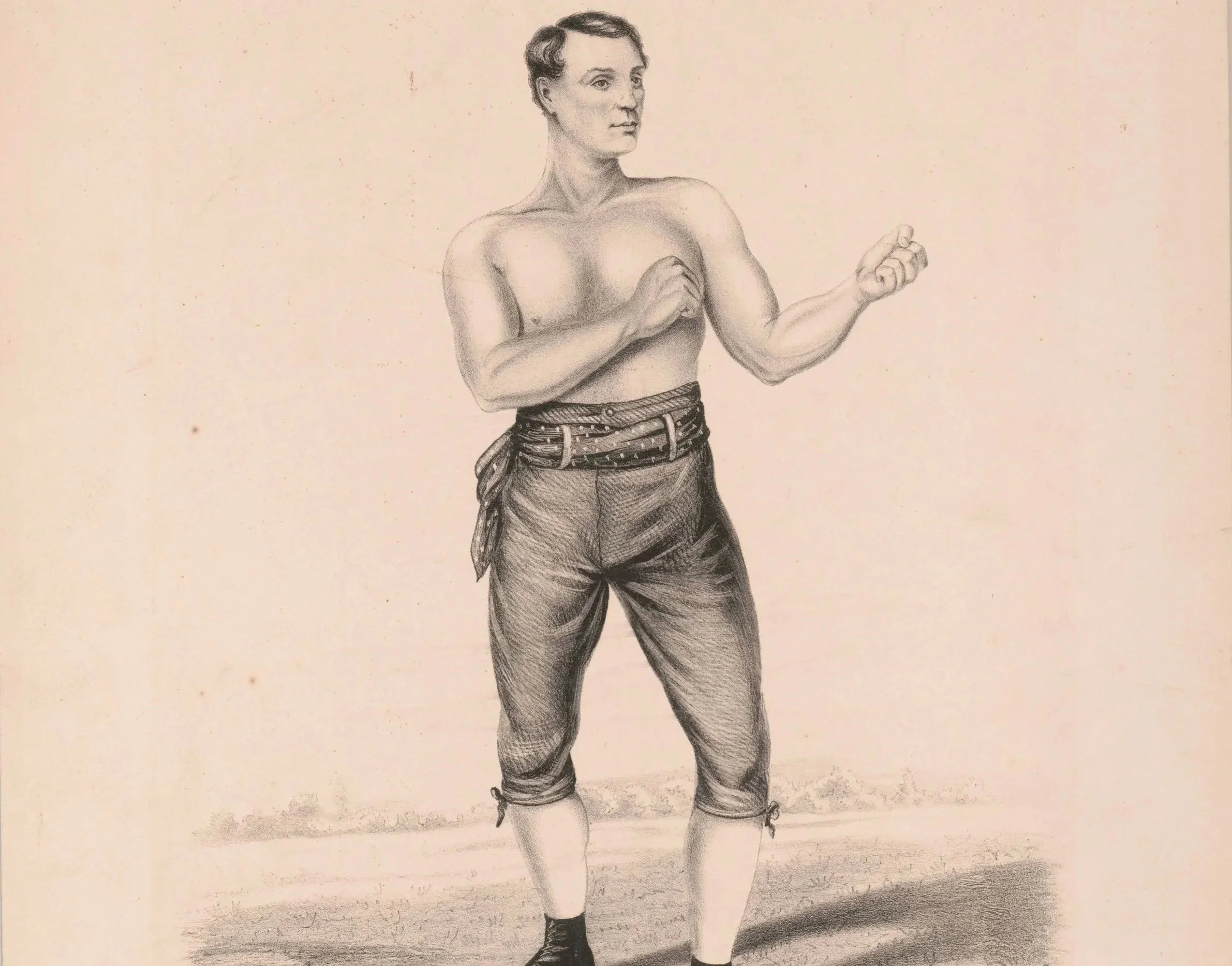
Thomas Sayers, champion of England, born in Pimlico, Brighton in 1826. Height 5ft 8in, fighting weight 10 stone 10lbs. Public domain image via Wikimedia Commons
On 25 May 2026, Brighton quietly passed the 200th birthday of one of its most remarkable sons. There were no official celebrations. No civic event. Just a councillor with a cloth, cleaning a plaque on a guitar shop wall in the North Laine
Councillor Jacob Allen, Brighton and Hove City Council's Cabinet Member for Public Realm, spent part of his bank holiday weekend on his hands and knees cleaning the blue plaque on North Road that marks the birthplace area of Thomas Sayers. He posted about it. He said he wanted to pay his respects and make sure the plaque was looking pristine for the bicentennial birthday.
It was a kind gesture. It was also, quietly, a little sad. Because Thomas Sayers deserved more than a clean plaque.
He was born two hundred years ago in a one-room cottage in the Pimlico slums of Brighton, a few hundred yards from where that plaque now stands. He grew up in poverty, left school barely able to read, worked as a bricklayer and fought his way, quite literally, to becoming one of the most celebrated sportsmen in Victorian England. The man widely recognised as the first heavyweight boxing champion of the world. When he died in 1865 at the age of thirty-nine, ten thousand people came to watch his funeral procession make its way through London to Highgate Cemetery. His dog sat on top of the coffin.
In Brighton, two hundred years on, a councillor cleaned his plaque.
This is his story. And it deserves to be told properly.
Brighton, 1826
Thomas Sayers was born on 25 May 1826 in the Pimlico district of Brighton, a notorious slum packed between what is now Tichborne Street and Gardner Street in the North Laine. Around a thousand people lived crammed into those streets. His father, James Sayers, was a travelling cobbler. Thomas was the youngest of five children.
The Brighton of 1826 was a city in transformation. King George IV had just completed the Royal Pavilion, the extraordinary Indian-inspired palace that still stands a short walk from where Thomas was born. The wealthy came to Brighton to take the sea air, to gamble and to be seen. The poor lived alongside them in conditions that a government report in 1849 would describe as a district where disease prevailed, often the result of excrement retained in cesspools. That was the world Thomas Sayers came from.
He attended Middle Street School briefly from the age of nine. He was barely literate when he left. By the age of six he was already working, earning pennies on Brighton beach helping fishermen and holidaymakers with small tasks. By thirteen he had left Brighton entirely, heading to London to stay with his sister Eliza and her husband, a builder.
He found work as a bricklayer. He worked on the London Road Viaduct, which was completed in 1846. He was twenty years old. The story goes that his reputation as a fighter began when he challenged a tyrannical foreman on a building site to a fight and won decisively. Whether or not that story is entirely true, what happened next certainly is. Thomas Sayers turned to prize fighting, and he turned out to be extraordinarily good at it.
The making of a fighter
Bare-knuckle prize fighting in Victorian England was illegal. It was also enormously popular. Fights were organised in secret, with venues revealed only at the last moment to avoid police. Crowds of hundreds, sometimes thousands, would gather in fields outside towns and on riverbanks to watch men fight until one of them could not continue.
There were no formal weight divisions. There were no gloves. A round ended when a man went down. Fights could last dozens of rounds and several hours. The rules came from the London Prize Ring Rules of 1838, which prohibited eye-gouging and biting but permitted almost everything else.
Thomas Sayers had his first recorded fight in 1849. He was twenty-three years old, five feet eight inches tall and weighed around ten and a half stone. He would spend the next eleven years fighting men who were almost always bigger, heavier and more experienced than him. He would lose only once.
He became known as The Brighton Boy. Later, as his reputation grew, he acquired two more names: The Little Wonder and The Napoleon of the Prize Ring. All three names pointed at the same thing. Here was a small man from a Brighton slum who kept beating much larger ones, and nobody could quite explain how.
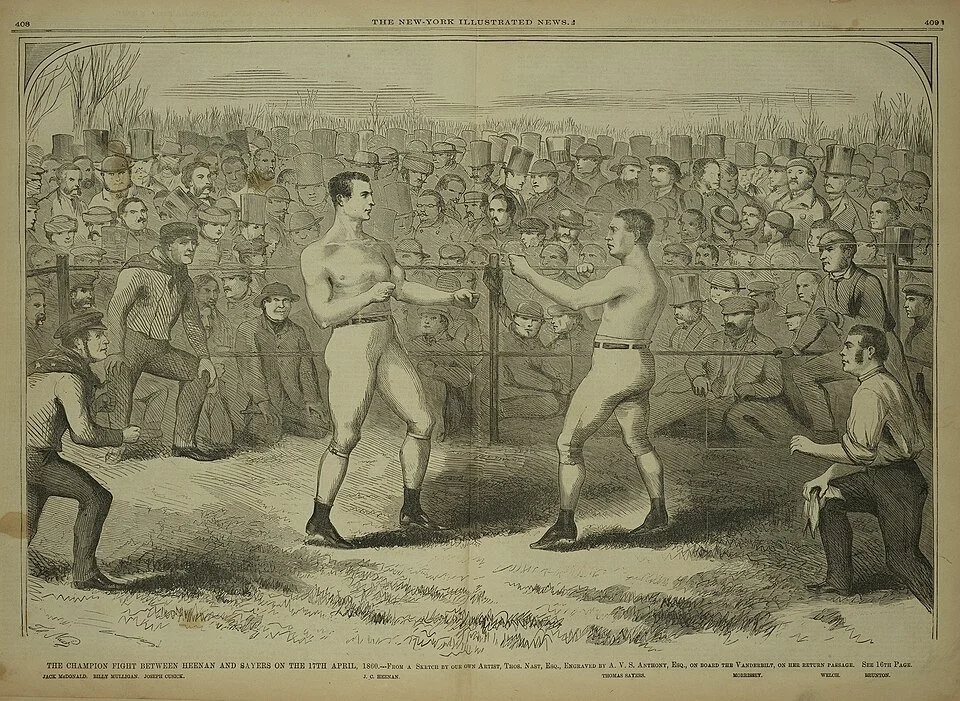
The world heavyweight championship fight between Thomas Sayers of Brighton and American champion John Camel Heenan on 17 April 1860, illustrated by Thomas Nast. The bout lasted 42 rounds before the crowd invaded the ring and the referee declared a draw. Public domain
The rise to the championship
Thomas Sayers fought his way through the bare-knuckle world methodically and relentlessly. Sixteen fights. Twelve wins. One loss. Three draws. The record tells the story clearly enough but it does not tell you what it felt like to watch him fight, or why England fell in love with him.
His only defeat came on 18 October 1853, against Nat Langham, in a fight that lasted sixty-one rounds. Sayers was younger and less experienced. Langham was a technically superior boxer who understood how to neutralise Sayers' power. The defeat lasted in the record but not in the spirit. Sayers came back from it, improved and kept winning.
On 16 June 1857, Thomas Sayers fought William Perry, known as the Tipton Slasher, for the heavyweight championship of England. Perry was significantly bigger than Sayers. Nobody gave the Brighton man much of a chance. The fight lasted ten rounds. Sayers won.
He was thirty-one years old, five feet eight inches tall, weighed around ten and a half stone and was now the heavyweight champion of England. He was also the last champion England would crown under the bare-knuckle rules that had governed the sport since the eighteenth century. The Marquess of Queensberry Rules, which introduced gloves, limited rounds and the structure that eventually became modern boxing, were still years away. Thomas Sayers was the end of one era and, it turned out, the beginning of something else entirely.
The fight that stopped the world
On 17 April 1860, Thomas Sayers climbed into a makeshift ring in a field near Farnborough in Hampshire and faced John Camel Heenan, the American champion known as the Benicia Boy. The fight was billed as the first world heavyweight boxing championship in history. Nothing like it had ever happened before.
Heenan was enormous. He stood over six feet tall and weighed around fourteen stone. Sayers was giving away six inches in height and around three and a half stone in weight. Despite that, Sayers was made the 2 to 1 betting favourite. The people who had watched him fight knew something that the statistics did not show.
The bout lasted forty-two rounds over two hours and twenty minutes. It was witnessed by hundreds of spectators who had travelled through the night on special trains from London, including members of the aristocracy, politicians, writers and journalists from both England and America. The whole English-speaking world was paying attention.
In the later rounds, with both men exhausted and Sayers fighting with a damaged right arm, the crowd broke through the ring ropes and invaded the fighting space. The bout descended into chaos. Police arrived. The referee, faced with an impossible situation, declared a draw.
England was furious and simultaneously proud. The newspapers devoted page after page to the fight. A national subscription was opened for Sayers, raising £3,000 to fund his retirement. He was thirty-three years old and he never fought again. He had drawn with the American champion in what the whole world had called a contest for the heavyweight championship of boxing, and England treated him as the victor. He was a national hero. He received a special silver championship belt. The belt still exists.
The years after the ring
Thomas Sayers retired from boxing in 1860 with £3,000 raised by public subscription and the adulation of a nation. He had five years left to live.
The retirement was not easy. Sayers struggled with the transition from the structure and purpose of fighting to ordinary life. His health deteriorated. By December 1864 he was described by those who saw him as haggard, thin and wretched. A medical examination revealed severe diabetes. His lungs were also failing.
In April 1865 he visited Brighton, the city of his birth, for what would be the last time. He returned to London. On 8 November 1865, Thomas Sayers died at his home on Camden High Street. He was thirty-nine years old. His father and two of his children were with him at the end.
The funeral was extraordinary. Ten thousand people came to watch the cortege make its way through the streets of London to Highgate Cemetery in north London. His dog, a lion called Lion, sat on top of the coffin. Businesses closed. Traffic stopped. London had not seen anything like it for a private citizen in living memory. He is buried at Highgate Cemetery, his grave topped with a reclining stone lion. It is still there. It is still visited.
What Brighton remembers
Thomas Sayers was inducted into the Boxing Hall of Fame in 1954, eighty-nine years after his death.
In Brighton, his memory has been preserved modestly. On 17 April 2010, on the 150th anniversary of his world championship fight, a blue plaque was unveiled on the wall of the Guitar and Amp shop on North Road in the North Laine, near the area where he was born. The pavement outside was packed for the unveiling. The plaque is still there.
On 25 May 2026, the 200th anniversary of his birth, Councillor Jacob Allen cleaned it with a cloth and posted about it online. He said: "I went to personally clean up the plaque on North Road to pugilist Thomas Sayers ahead of his 200th birthday. I wanted to pay respects to Sayers and make sure his plaque was looking pristine ahead of his bicentennial birthday. As an administration, we are proud of Brighton and Hove's heritage and that includes celebrating figures from our past who made an impact, literally in Tom the boxer's case."
It is a kind thing to have done. A plaque that is clean and cared for is better than one that is not. But it is also a measure of how little this city has done to properly mark the life of the man who was born here, worked here as a child and went on to become the first heavyweight boxing champion of the world.
The North Laine that shaped him is now one of the most celebrated independent retail areas in England. The streets where he grew up in poverty are lined with coffee shops, record stores and vintage boutiques. Brighton has changed enormously in two hundred years.
Thomas Sayers changed too, from a barefoot boy earning pennies on Brighton beach to the man that ten thousand Londoners came out to mourn. Two hundred years after his birth, his story deserves more than a clean plaque and a social media post. It deserves to be told, properly, to the people who live in the city he came from.
200 years on: why Thomas Sayers still matters
Thomas Sayers matters for several reasons that go beyond sport.
He was the last English champion under the bare-knuckle rules that had defined boxing for over a century. After him came the Queensberry Rules, the gloves, the rounds and the structure that eventually became modern boxing. He stands at the hinge between two eras of the sport.
His 1860 fight with John Heenan was the first genuinely international sporting event in modern history, attracting global press coverage and a transatlantic crowd. It prefigured the world of international sport that we now take for granted.
And he was a working-class man from a slum who achieved something extraordinary through physical courage, tactical intelligence and an absolute refusal to be beaten by opponents who had every physical advantage over him. He stood five feet eight and weighed around ten and a half stone. He fought and beat men who were six feet tall and fourteen stone. He did it again and again for eleven years.
In Brighton, where his story began on a street that no longer exists in the form he knew it, that is worth remembering. Two hundred years on, if you walk down North Road and look for the plaque, it will be clean. Now you will also know whose name is on it and why it matters.
For more on Brighton's hidden history and the people who shaped the city, follow ImJustBrighton. For the places and stories most visitors never find, read our Brighton Hidden Gems guide.
This article is based on historical records verified from official sources including Encyclopaedia Britannica, the North Laine History archive, Brighton and Hove News and Wikipedia. Thomas Sayers was born on 25 May 1826 in Brighton and died on 8 November 1865 in London. This year marks the 200th anniversary of his birth.
