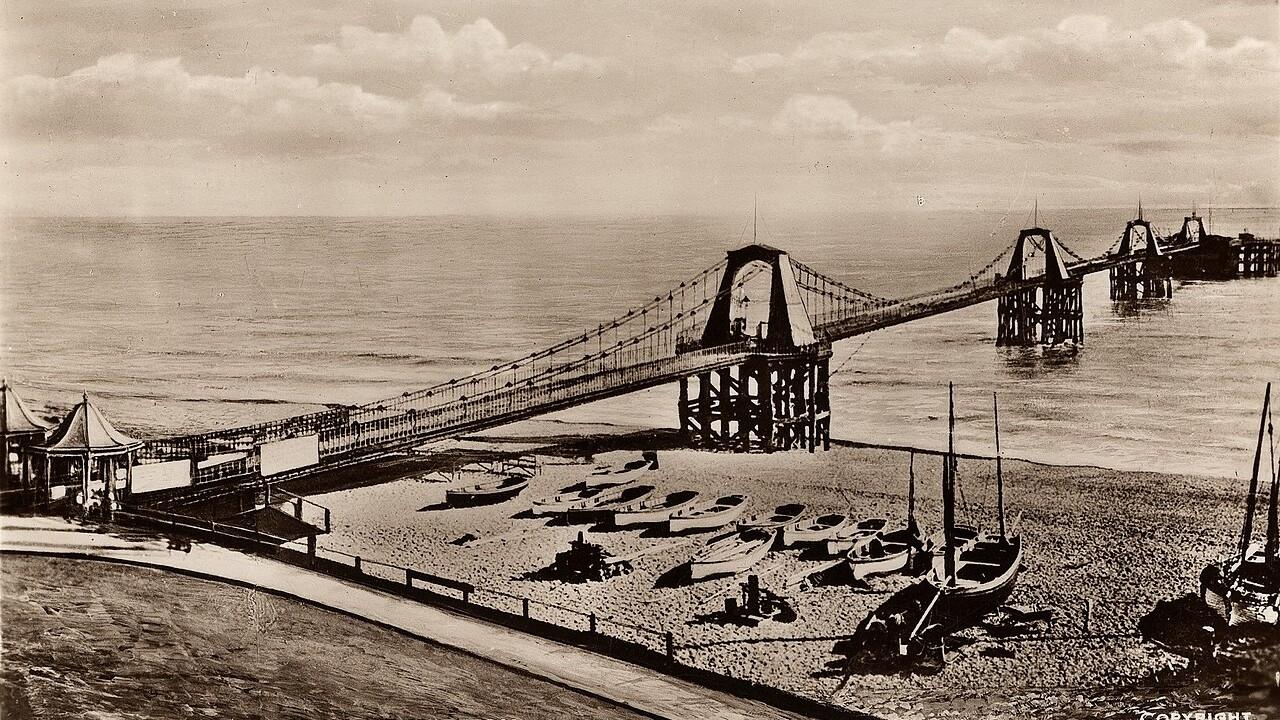
On 28 November 1896, Brighton opened one of the strangest railways ever built: a tram that ran through the sea. Next Saturday marks 130 years since the Brighton and Rottingdean Seashore Electric Railway, better known as the Daddy Long Legs, carried its first passengers.
Less than a week later, on 4 December 1896, a huge storm hit the coast. It wrecked the new railway and destroyed Brighton's oldest pier, the Chain Pier, for good.
A tram on stilts
The railway was the idea of Magnus Volk, the Brighton engineer who had already built Volk's Electric Railway along the seafront in 1883. The cliffs east of Kemp Town made it hard to extend that line to Rottingdean, so Volk laid his track on the seabed instead.
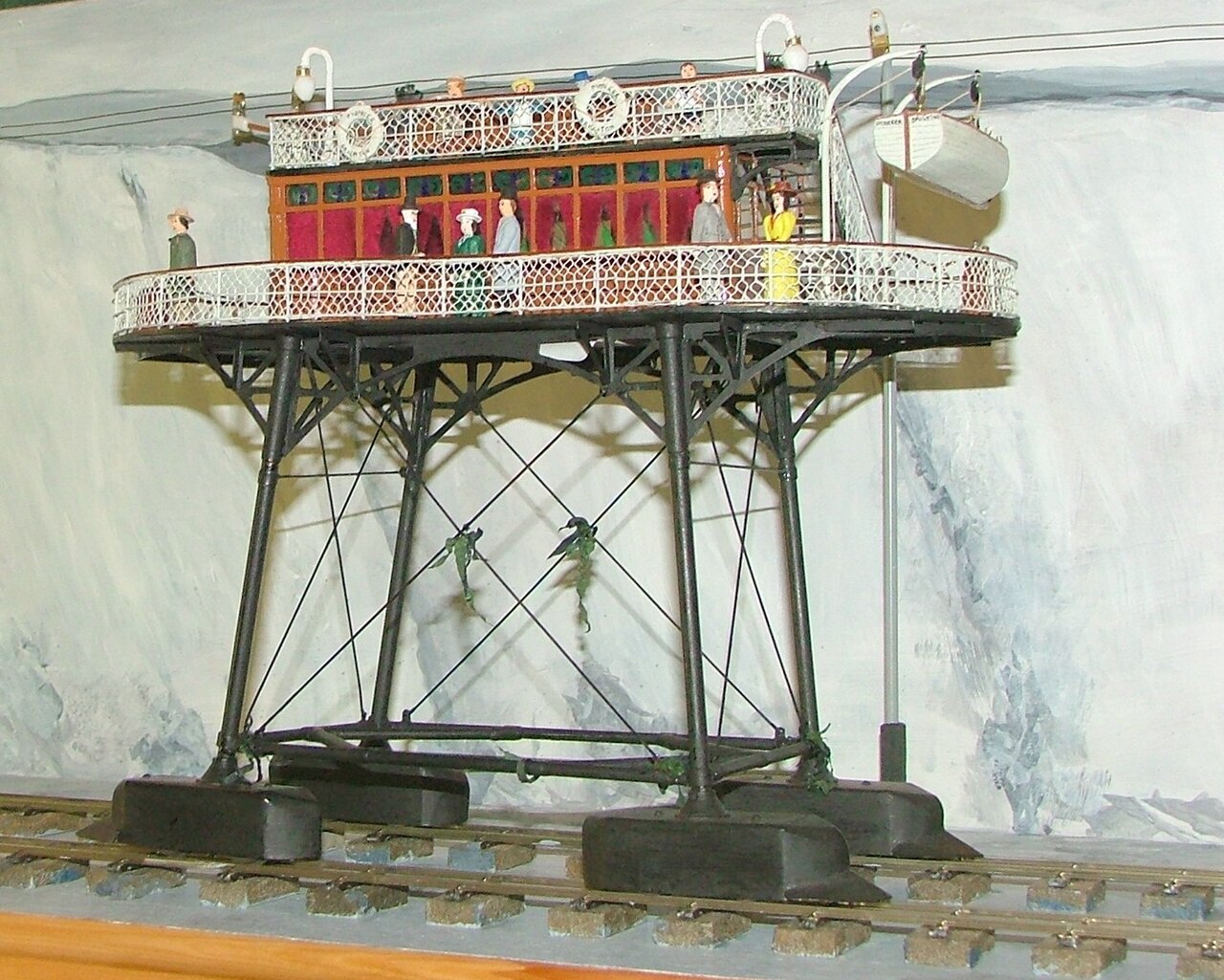
The single car, named Pioneer, sat on four legs about 23ft tall. It looked like a small pier deck with a cabin on top, and it rolled along rails on the shore. At high tide the track was under several feet of water, so passengers rode above the waves. The car even carried a lifeboat and life belts.
The storm of 4 December 1896
Days after opening, the storm tore Pioneer from its moorings at Rottingdean and turned it over, and damaged the track. Volk rebuilt the car and the line, and the railway reopened on 20 July 1897.
It never had an easy life. The car was slow at high tide, and it ran for only a few years. It closed in 1901, when sea defence work meant the line would have had to be moved further out, and Volk could not afford it.
The end of the Chain Pier
The same storm finished off the Royal Suspension Chain Pier. It opened on 25 November 1823, was designed by Captain Samuel Brown and ran 1,134ft into the sea from the bottom of the Old Steine. It was painted by both John Constable and JMW Turner.
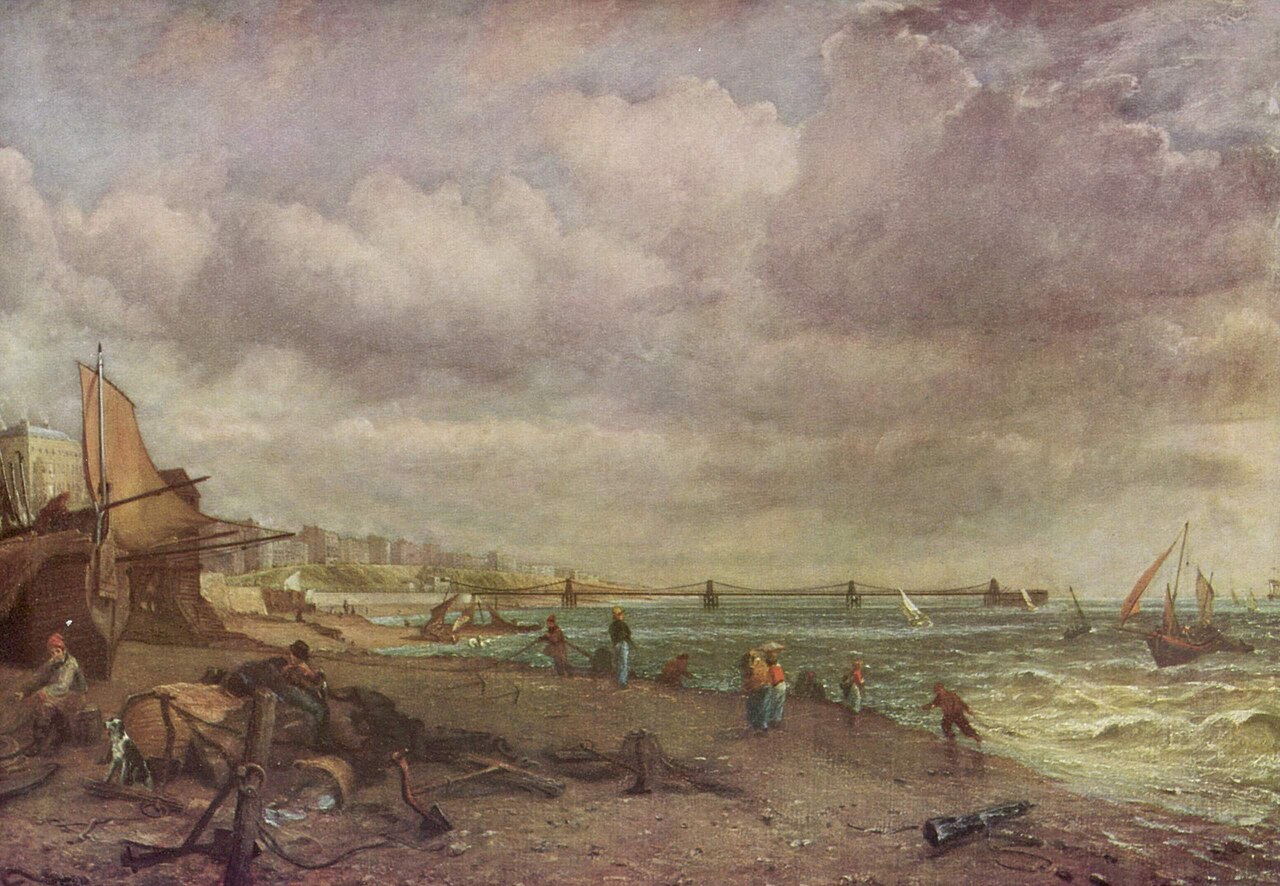
By the 1890s the pier was in poor condition and it had been closed to the public as unsafe in October 1896. On the night of 4 December the storm broke it apart. Wreckage was thrown along the coast and damaged the West Pier and the new Palace Pier, which was still being built.
The Palace Pier, now Brighton Palace Pier, opened in 1899 near the spot where the Chain Pier had stood.
What you can still see today
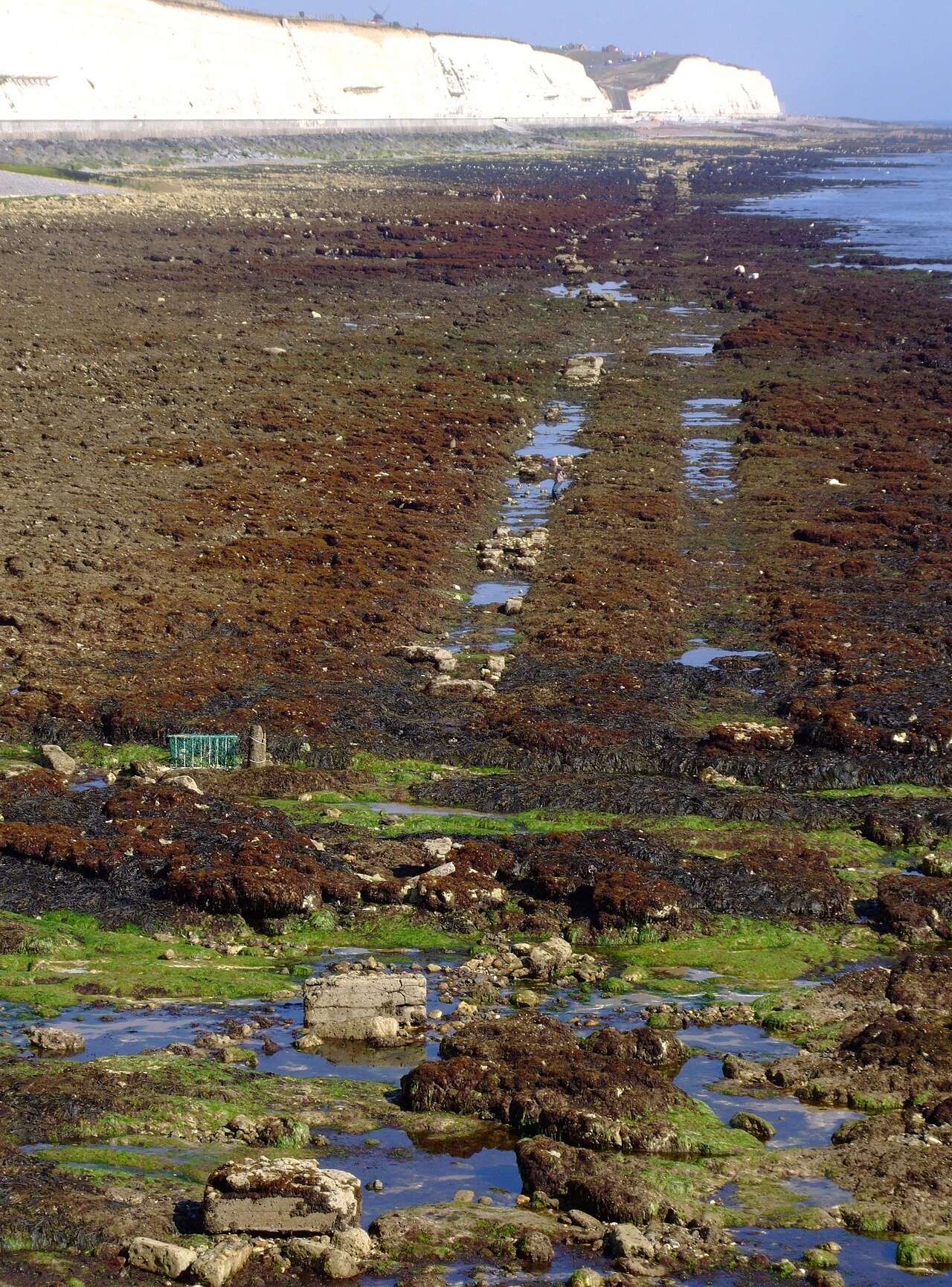
- The Daddy Long Legs track. Lines of concrete blocks that held the rails can still be seen on the shore between Brighton Marina and Rottingdean at very low tide.
- Volk's Electric Railway. The original 1883 line still runs along Madeira Drive, the oldest operating electric railway in the world.
- Chain Pier remains. Stumps of the Chain Pier foundations sometimes appear on the beach near Brighton Palace Pier at very low tide.



Comments
There are no comments on this story.
Comments are closed on this story.