Jeanne Saunders Centre SEND Nursery in Hove Rated Exceptional in All Six Areas by Ofsted
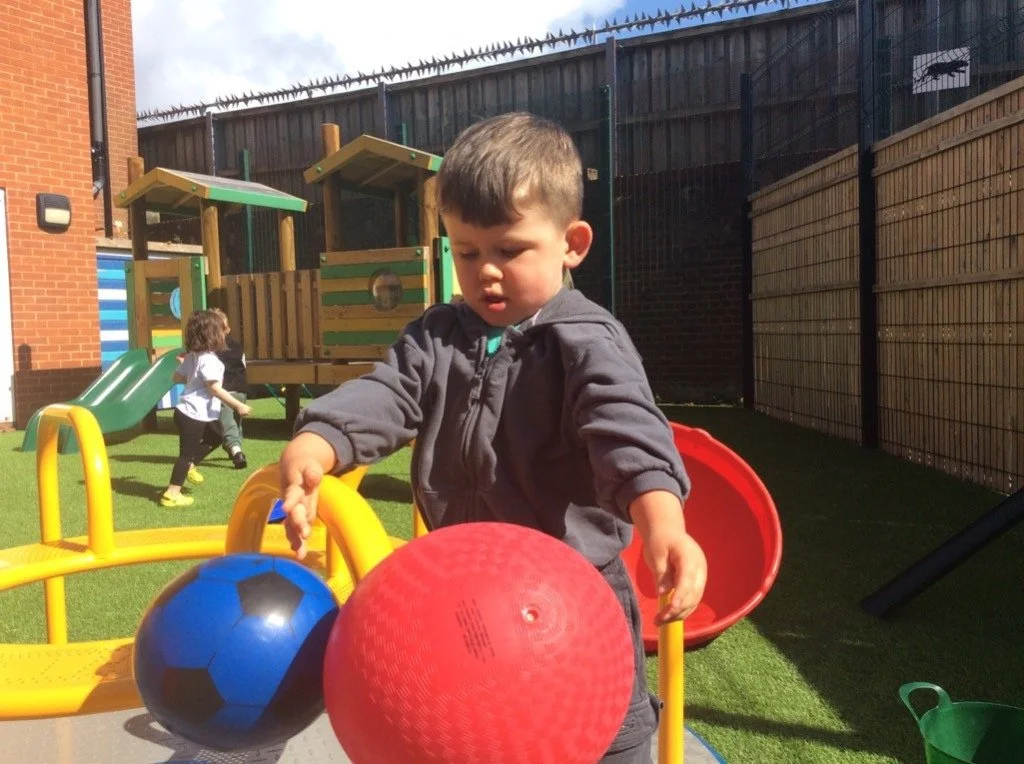
A child playing outside at the Jeanne Saunders Centre SEND nursery in Hove, photo supplied by Brighton & Hove City Council
Ofsted inspector Natalie Moir visited the Jeanne Saunders Centre at 9-11 Connaught Road, Hove, on 1 July 2026 and graded all six evaluation areas Exceptional, the highest of five grades, with safeguarding standards met. The report was published on 11 September 2026 and Brighton & Hove City Council announced the result on 28 September 2026. The centre is a sessional day nursery registered for 24 places for children aged 3 to 5, open Wednesday and Thursday from 9.30am to 3.30pm and Friday from 9.30am to 12.30pm, according to its Ofsted page.
The council describes it as a council-run nursery for children with special educational needs and disabilities (SEND), providing intensive early learning and assessment for children with complex needs including severe language delay and autistic spectrum conditions, and support for parents, carers and families. Ofsted lists Brighton & Hove City Council as the registered person. The council says the centre is one of only a handful of settings across the country to be given the grade in all six areas. It is the centre's fifth Ofsted inspection since it registered in 2005, and each of the four before it, listed on its earlier Ofsted record, also gave the highest grade available at the time, Outstanding.
Ofsted explains the renewed grading framework for nurseries, pre-schools and other registered early years settings in a webinar published on 25 September 2025, which you can watch here.
The webinar is part of an 18-video playlist that Ofsted made to help providers prepare for the November 2025 changes.
The six areas graded Exceptional
Ofsted's inspection report grades six areas. The centre received the top grade in every one, and this is what inspectors wrote under each.
- Achievement. Children communicate through signing, visual aids and spoken language, and the report describes them as exceptionally well prepared for their next stage of learning, including moves to specialist and mainstream schools. The toolkit asks inspectors to judge whether children, especially those with SEND, gain the knowledge they need for the next stage and make progress across the seven areas of learning so that they know more, remember more and can do more.
- Behaviour, attitudes and establishing routines. Staff read children's non-verbal cues and use now and next visual boards, and each child's transition to school is tailored and used by the local authority as an example for other settings. The toolkit covers how leaders and practitioners teach children to understand and manage their own emotions and how they work with parents to establish routines, including attendance.
- Children's welfare and wellbeing. Care is personalised, including preparation for nappy changes and the gradual introduction of specialist equipment such as leg splints. The toolkit looks at warm, trusting relationships between key persons and children so that they form secure attachments, and at care tailored to each child's age, stage and needs.
- Curriculum and teaching. Every child has a "just right profile", specialist speech and language therapists work with staff, and resources are placed at wall height for children who need to move along the walls of the classroom. The toolkit asks whether leaders provide an ambitious curriculum that meets the needs of every child, with a strong focus on communication and language.
- Inclusion. Specialist nursery nurses support parents at home, and leaders advocate for specialist services, respite care, funding and equipment on behalf of families. The toolkit looks at how leaders identify and support four groups: disadvantaged children, children with SEND, children known to children's social care, and children who face other barriers to learning or wellbeing.
- Leadership and governance. Leaders run open groups for other local families, invite special educational needs coordinators and the local authority inclusion team to observe, and hold morning briefings so the whole team is up to date before children arrive. The toolkit covers leaders' high expectations for all children, their understanding of the setting's strengths and weaknesses, staff wellbeing and workload, and engagement with parents.
Safeguarding is judged separately as met or not met, and the report says the centre's safeguarding standards were met. The toolkit asks leaders to respond to the additional safeguarding vulnerabilities of some children, including those with SEND and those who are non-verbal.
What Exceptional means, and what it does not
Ofsted's new report cards use a five-point scale of urgent improvement, needs attention, expected standard, strong standard and exceptional. Ofsted confirmed the scale on 9 September 2025 and it applied to early years inspections from 10 November 2025. Its guidance for parents says exceptional is only awarded for practice among the very best nationally, which should be shared with other providers.
Ofsted's early years FAQ is clear that exceptional is not the new outstanding, because there is no read-across from the old system, and that the grade will be rare. The centre was graded Outstanding at all four of its earlier inspections, between 2006 and 2020, but the two sets of grades cannot be compared. The FAQ also says every report card goes through quality assurance, which checks that any exceptional grade is proportionate and reflects the quality of education and care. Ofsted's operating guide for inspectors tells them to check that a setting meets every expected and strong standard before considering exceptional, and to call the inspection duty desk when the grade is likely.
Ofsted's early years inspection toolkit sets the standards behind each grade and is usually updated once a year. Its current version, 2.0, applies to inspections from 1 September 2026, two months after the centre was inspected, so what follows describes today's toolkit rather than the exact text used on 1 July. In every area, exceptional can only be considered once the strong standard has been met. Inspectors then look for exceptionally high standards that have been sustained, a transformational impact on disadvantaged children, children with SEND and others who face barriers, and no significant areas for improvement that leaders have not already prioritised. The toolkit adds that leaders of a setting graded exceptional should use that success to improve all of their own provision and share what they know with other settings, professionals and local networks. The Ofsted report uses the word transformational about the centre's approach to inclusion, and it records the open groups and the invitations to other coordinators and the inclusion team described above.
Ofsted's early years inspections frequently asked questions blog post, published on 23 January 2026
What the inspector reported
The report says each child's transition to school is tailored to their individual journey and is used by the local authority as an example for other settings. Children who go on to mainstream school get ongoing specialist support from the centre's leaders and staff during their first term there.
It adds that the centre also supports other early years providers, and that leaders invite special educational needs coordinators, additional support workers and early years specialists from the local authority inclusion team to observe their practice. Children receive intensive interaction from specialist speech and language therapists alongside the nursery staff.
Children flourish and thrive at this extraordinary specialist centre.
Ofsted inspection report, 1 July 2026
Travel is part of the picture too. The report says leaders make attendance possible by arranging travel for children across the city on the minibus service, with personalised home support for parents so that children feel safe enough to use it. In 2021 the council announced a new minibus for the centre, donated by Variety Golf and part-funded by the council.
How an early years inspection works
Ofsted's guidance says an inspection starts with a notification call and a planning call of around 30 minutes, normally by video, where the inspector and leaders discuss the setting's context, curriculum and approach to inclusion. The inspection information adds that for group settings with restricted daily hours the inspection normally lasts around four hours. The planning call section of the operating guide sets out what inspectors cover.
On the day, inspectors no longer carry out learning walks, as the inspector did in 2020, and instead gather most of their evidence through shared observations with leaders, following the experiences of a sample of children, including those with SEND. Settings can choose a nominee to act as the link between staff and the inspector, a role that is optional and has its own training video. Ofsted also publishes a webinar for out-of-school providers on the Early Years Register, covering the same renewed framework.
Settings on the Early Years Register are normally inspected at least once within a four-year window, as Ofsted's page for the centre explains. The FAQ adds that every registered setting will be inspected at least once by March 2030, and that settings inspected under the earlier six-year window move to the four-year one at their next routine inspection. Ofsted also lets anyone subscribe to email alerts for the centre's page, so they are notified when a new report is published.
Twenty years of top grades, and the move to Connaught Road
Every Ofsted inspection of the centre since its first in 2006 has given it the highest grade available at the time. Here is the record, with each report linked.
- 4 July 2005
The centre registers on the Early Years Register at Penny Gobby House, 31 Palmeira Avenue, Hove, as shown on its earlier Ofsted record. - 28 March 2006
First inspection: Outstanding for both care and nursery education. The centre is registered for 20 children, has 36 on roll and 14 staff, and the inspector makes no recommendations for improvement. - 23 June 2009
Second inspection: Outstanding in all 14 judgements, with 22 children on roll against a maximum of 20 at any one time and 10 staff. The one suggestion is to keep developing the outdoor play area. - 15 April 2016
Third inspection: Outstanding in all four judgement areas, with 12 places, 12 staff and sessions on Thursdays and Fridays. The one suggestion is to keep expanding support for parents to guide their children's development at home. - 5 March 2020
Fourth inspection: Outstanding overall and in all four areas, with 18 places, 11 staff, an in-house speech and language therapist and sessions from Wednesday to Friday in term time. - 28 August 2024
The centre registers with Ofsted at 9-11 Connaught Road, Hove, as shown on its current Ofsted page. - 1 July 2026
Fifth inspection: Exceptional in all six areas with safeguarding standards met, 24 places, and sessions on Wednesday, Thursday and Friday.
Reading the reports side by side shows what has stayed the same. Signing and visual aids appear in the 2016, 2020 and 2026 reports, with choice boards also named in 2026, and speech and language specialists feature in 2006, 2020 and 2026. Support for parents is a constant: in 2006 the report records home visits, Makaton workshops and a two-way mirror that lets parents watch their child, in 2020 parents said they used to feel isolated and now feel part of a community, and in 2026 the report says parents build their own social communities within the centre. Transport runs through the record too, from an established transport service with consistent drivers and escorts in 2006, to a farm trip by minibus in 2009, to the minibus service praised in 2026.
When the council announced the 2020 result on 14 May 2020, it quoted Councillor John Allcock, then chair of the children, young people and skills committee, saying the staff were highly skilled and compassionate and did an extraordinary job working with some of the city's most vulnerable children. The centre's manager at the time, Anne Rhodda, is now its headteacher.
The move to Connaught Road was decided in two council steps. On 18 September 2023 an urgency sub-committee acting for the Jeanne Saunders Centre (Penny Gobby House) charity agreed the sale of 31 Palmeira Avenue and the charity's purchase of the Annex at Connaught Road. On 25 April 2024 the council's Strategy, Finance & City Regeneration Committee agreed to sell the freehold of the Connaught Annex to the charity. The committee's report says the council is the sole trustee of the charity, which is listed on the Charity Commission register as number 276384. The council administers at least one other local charity too, Gorham's Gift in Telscombe Village, which ImJustBrighton covered when the council recruited a community trustee.
The council's announcement of 18 April 2024 said the centre's existing accommodation in the four-storey Penny Gobby House was increasingly unsuitable and inaccessible. It said the Connaught Annex, also known as the Connaught Day Centre and occupied by West Hove Primary School until 2022, would give the centre a ground floor space with easy access to different areas that can accommodate wheelchair users. The council valued the Annex at £800,000 and said the sale would support its corporate capital strategy, and Councillor Lucy Helliwell said the move would support the city's SEND Strategy by providing a long-term home for the service. Using the coordinates in Ofsted's own map links, the old site and the new site are about one kilometre apart in a straight line.
What the council and the centre said
Councillor Emma Daniel, Cabinet Member for Children, Families and Youth Services, said:
This is an amazing achievement and reflects the dedication, care and commitment of the nursery's leadership and staff and the warm, encouraging environment they've created.
She added that the findings highlight the importance of bespoke, personalised learning for children with SEND and of trusting relationships with staff, and said she was pleased the nursery has continued to flourish since its 2024 move. Anne Rhodda, headteacher at the Jeanne Saunders Centre, said:
We have an amazing team who go above and beyond to ensure that every child matters and every day counts.
Councillor Daniel also commented in July on the council's draft SEND Sufficiency Plan 2026 to 2029, a three-year programme to create more specialist education places that Cabinet discussed on 16 July, which ImJustBrighton reported at the time.
Read the documents and watch more
Every document used for this article is below, and each can be opened or downloaded directly. The first two are the centre's current Ofsted report and its page on Ofsted's reports website.
Ofsted inspection report, 1 July 2026
Download the Ofsted report (PDF)
Jeanne Saunders Centre on Ofsted's reports website
The council release, the four earlier Ofsted reports, the toolkit and the committee papers are below, each as its own download.
Brighton & Hove City Council press release, 28 September 2026
Ofsted inspection report, 5 March 2020 (old site)
Download the 2020 report (PDF)
Ofsted inspection report, 15 April 2016 (old site)
Download the 2016 report (PDF)
Ofsted inspection report, 23 June 2009 (old site)
Download the 2009 report (PDF)
Ofsted inspection report, 28 March 2006 (old site)
Download the 2006 report (PDF)
Early years inspection toolkit, version 2.0, June 2026
Strategy, Finance & City Regeneration Committee papers, 25 April 2024
Download the committee papers (PDF)
For wider context, Ofsted's explore an area map shows childcare and schools near the centre, and Ofsted's YouTube playlists cover the renewed framework webinars, early years registered providers and early years childminders.
One of the report's clearest pictures is of communication. Children who arrive with very little of it now make connected sentences using visual aids, choice boards and signing, and others are saying their first words.
More from ImJustBrighton
→ Council Sets Out Three-Year Plan to Boost SEND Support in Brighton and Hove
→ Volunteers wanted to help preserve historic Telscombe Village
→ Brighton & Hove charities unite to tackle homelessness with Make Change Count