
Brighton and Hove City Council Cuts Ethnicity Pay Gap to Zero
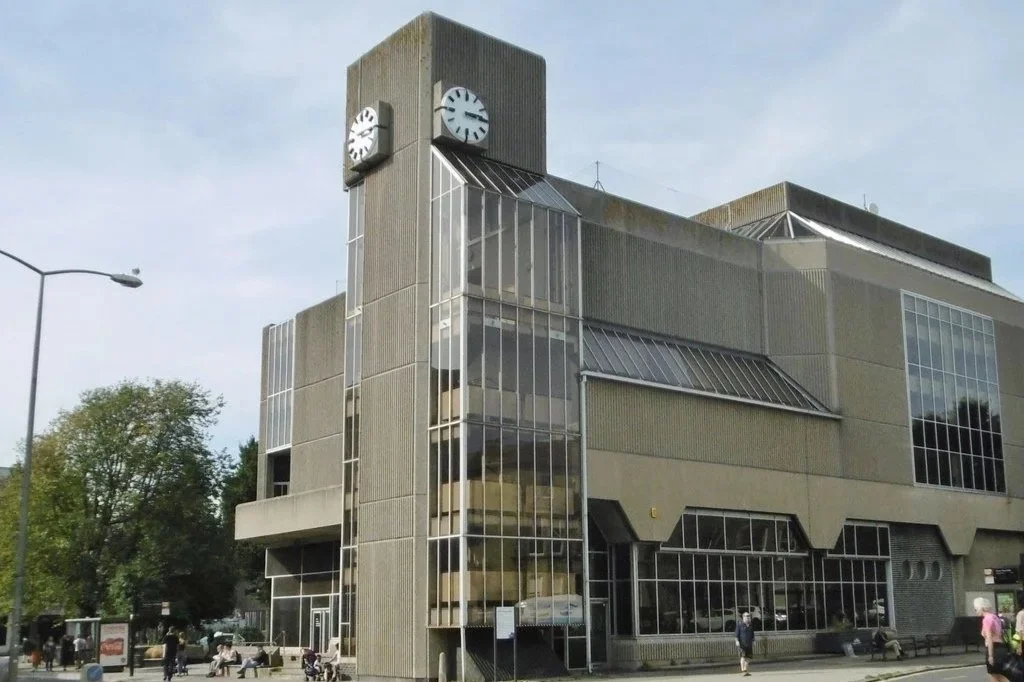
Hove Town Hall, headquarters of Brighton and Hove City Council, has published new workforce pay gap data showing progress on ethnicity and disability equality. Photo: Mike Faherty via Geograph, Creative Commons licence
Brighton and Hove City Council has published new workforce data showing it has reduced its median ethnicity pay gap to zero and made significant progress on disability pay equality
Brighton and Hove City Council has cut its median ethnicity pay gap to zero, according to new workforce data published on 27 May 2026. The figures, based on hourly pay data from March 2025, represent a significant shift from the previous year and mark one of the strongest results the council has recorded since it began publishing voluntary pay gap data alongside its statutory gender pay reporting.
The median ethnicity pay gap stood at 2.7% last year. It now sits at 0%, meaning there is no difference between the median hourly pay of staff from Black, Asian and minoritised ethnic backgrounds and white staff at the council.
The mean ethnicity pay gap has also reduced, falling from 4.9% to 3.1% over the same period.
What the figures show
Pay gap reporting compares the hourly pay of different groups of employees across an entire workforce. A positive pay gap means one group earns more on average than another. A negative gap means the reverse. A gap of zero at the median means the middle earner in both groups is paid the same.
For Brighton and Hove City Council, the median ethnicity pay gap reaching 0% means that when all staff are ranked by pay, the person sitting at the midpoint of the Black, Asian and minoritised ethnic staff group earns the same hourly rate as the person at the midpoint of the white staff group.
The council is clear that pay gaps are influenced by workforce structure, representation at different grades and patterns of career progression, not pay discrimination alone. Progress on the median figure does not mean the work is done. The mean gap of 3.1%, which takes all salaries into account rather than just the midpoint, shows there is still a difference in average pay when the full workforce is measured. But the direction of travel is significant.
Progress on disability pay equality
The council has also reported positive movement on disability pay equality. The median disability pay gap is now -0.3%, compared with 2.7% in the previous year. A negative figure means that disabled staff at the median point of the pay distribution now earn marginally more per hour than non-disabled staff at the equivalent point.
As with ethnicity pay data, the council acknowledges that these figures can fluctuate year on year and are shaped by factors including how many disabled staff are employed at each pay grade. The shift from 2.7% to -0.3% in a single year is nonetheless a substantial move in the right direction.
Gender pay gap
For the same period, the council's gender pay gap remains in favour of women, with a median gap of -6.8%, compared with -3% the previous year. This reflects the council's overall workforce profile, where women make up a higher proportion of employees across the organisation.
Brighton and Hove City Council is required by law to publish gender pay gap data annually. Publishing ethnicity and disability pay gap data alongside it is voluntary. The council has chosen to do so as part of what it describes as a wider commitment to equity, inclusion and transparency.
What the council leader said
Councillor Bella Sankey, Leader of Brighton and Hove City Council, said the figures showed that sustained work on inclusion, representation and fair progression was making a difference.
"Reducing pay gaps is not about quick fixes. It reflects longer-term efforts to create equitable pathways into senior roles and ensure our workplace culture supports everyone to thrive," she said.
"We know that pay gap figures never tell the whole story on their own and that progress is not linear, but these figures are incredibly encouraging.
"We are committed to continuing this work with staff, trade unions and partners and to being open about both the progress we are making and the challenges that remain."
Why voluntary reporting matters
UK employers with 250 or more employees are legally required to publish gender pay gap data each year. There is no equivalent legal requirement to publish ethnicity or disability pay gap data, though the government has consulted on making ethnicity pay reporting mandatory for large employers in the past.
Brighton and Hove City Council has chosen to publish all three voluntarily. That decision matters because it creates a public record of progress, or lack of it, that would otherwise not exist. It also creates accountability. Once a public body commits to publishing this data annually, a worsening figure becomes a story in itself.
The council employs thousands of people across a wide range of roles, from social care and housing to planning, environmental services and administration. Pay gaps in large public sector organisations are rarely caused by a single factor. They are shaped by which groups of staff are concentrated in which roles, how promotion and progression work in practice, and whether the culture of the organisation supports people from all backgrounds to reach senior positions.
The reduction in the ethnicity and disability pay gaps suggests that some of those structural factors are beginning to shift. The council's own language is careful about claiming too much. Pay gaps remain, the mean ethnicity gap of 3.1% is evidence of that, and the council acknowledges that progress is not guaranteed to continue in a straight line year on year.
Brighton and Hove's wider equality picture
Brighton and Hove has a strong public reputation as a progressive and inclusive city. The council's voluntary pay gap reporting is consistent with that identity, but the underlying data also shows that even in a city with that reputation, structural inequalities in pay take sustained effort to address.
One in four children in Brighton and Hove is living in poverty, according to council data. The city has the highest homelessness rate in Sussex. An independent inequality review panel is currently being recruited, looking for residents with lived experience of poverty to help shape real solutions. Applications for that panel close on 19 June 2026. Read the full story on ImJustBrighton.
The pay equity figures published this week sit alongside that wider picture. Progress at the council level is meaningful. It does not resolve the broader inequalities in the city, but it is part of the same direction of travel.
The full workforce data is available via Brighton and Hove City Council's website at brighton-hove.gov.uk.
This article is based on a Brighton and Hove City Council press release issued on 27 May 2026, sent directly to ImJustBrighton via Vuelio. For the latest Brighton and Hove council news, visit ImJustBrighton.
