
Brighton Is Recruiting Residents Who Have Lived in Poverty to Help Shape a Fairer City
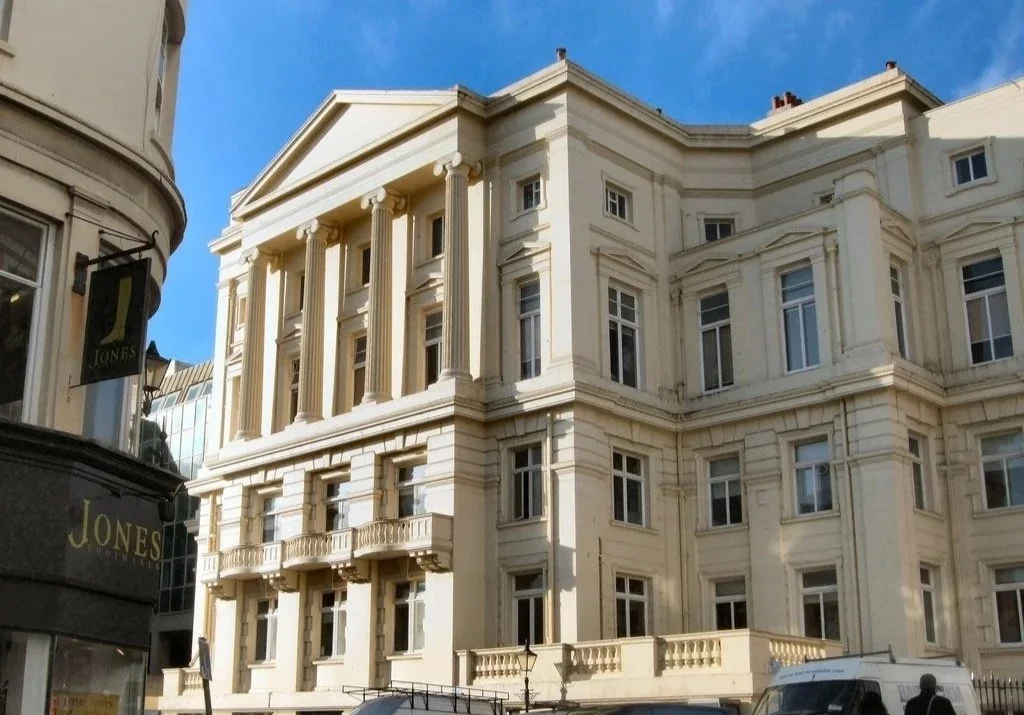
Brighton Town Hall on Bartholomew Square. The Review of Inequality and Life Chances was agreed by Brighton and Hove City Council in October 2025. Photo: Paul Gillett via Geograph, Creative Commons licence.
Brighton and Hove City Council sent this press release directly to ImJustBrighton on 2 June 2026. All statistics are sourced from official Brighton and Hove City Council documents and the Sussex Community Foundation Tackling Poverty report.
One in four children in Brighton and Hove is growing up in poverty. The city has the highest homelessness rate in Sussex, nearly double the national average. Parts of Brighton have some of the lowest social mobility in the country. These are not recent discoveries. They are facts that have sat in official reports for years.
Brighton and Hove City Council has now appointed an independent chair to lead a formal review into the causes of that inequality and what the city can do about it. Her name is Polly Herbert. She grew up in poverty in Moulsecoomb. And she is looking for local people to join her.
Who Is Polly Herbert
Polly Herbert is head of initial teacher education at the University of Brighton. She has more than 20 years of professional experience in education. She was appointed as the independent chair of Brighton and Hove City Council's Review of Inequality and Life Chances earlier this year.
She grew up in a single-parent family in Moulsecoomb, one of the most deprived areas in Brighton, classified in the 20 per cent most deprived areas in England. She has spoken about the lasting impacts that growing up without money has on confidence, health and opportunity.
Polly said: "This review represents a significant opportunity for the city to place lived experience at the centre of meaningful change. I am committed to working with communities and institutions across Brighton and Hove to ensure the review produces credible and impactful recommendations. To achieve this, it is vital we recognise and reflect not only people's professional insight, but the real, lived experiences from people living in our local communities. For this review to have the impact we all want it to, it needs those authentic voices to be heard."
Inequality in Brighton and Hove: What the Data Shows
One in four children in Brighton and Hove is living in poverty after housing costs, according to Brighton and Hove City Council's own public health intelligence data. The highest concentration of deprivation is in Whitehawk, Moulsecoomb and Hollingdean. All three areas are in the 20 per cent most deprived in England.
Brighton and Hove has the highest rate of households assessed as homeless in Sussex at 1.44 per cent, nearly double the national rate of 0.66 per cent, according to the Sussex Community Foundation Tackling Poverty report. A further 0.89 per cent of households are threatened with homelessness within 56 days. Brighton and Hove has the highest number of rough sleepers on a typical night in Sussex at 41 people.
The city has higher levels of pensioner poverty at 15.3 per cent than the national average. Queen's Park ward has the highest level of pensioner poverty in Sussex. Brighton and Hove is the town in Sussex with the largest number of households affected by fuel poverty. 18.7 per cent of residents aged 60 or over are living in income deprivation, compared to 14.2 per cent across England.
Brighton and Hove has the second highest number of highly deprived areas of any local authority in Sussex, with 15 neighbourhoods in the most deprived 10 per cent nationally. East Brighton is the third most deprived ward in the county.
A 2025 Sutton Trust report, cited at the full Brighton and Hove City Council meeting in October 2025 when the review was agreed, found that parts of Brighton and Hove have some of the lowest social mobility in the country. Overall wages in the city have not kept pace with inflation, meaning residents are worse off in real terms than they were in 2011.
What the Review Is
The Review of Inequality and Life Chances was agreed by Brighton and Hove City Council at a full council meeting on 13 October 2025. The motion called for a formal review of inequality in the city, drawing on lived experience and welcoming input from residents and experts through a city-wide call for evidence.
The review will focus on identifying and understanding persistent inequalities in Brighton and Hove. It will produce specific recommendations for action. The government has already invested £20 million in Whitehawk through the Pride in Place programme, with local residents shaping how it is spent. The council has created a Fairness Fund for its most deprived residents. The Household Support Fund extension brought a further £2.2 million targeted at the most deprived households. Free school meals have been extended and new bus routes and free bus passes introduced for Whitehawk families.
The council agreed this review because the gap has not closed. The data is getting worse in some areas, not better.
Six Panel Members Being Recruited
Polly Herbert is recruiting six panel members to join the review. Three will be City Voice members and three will be Community Voice members.
City Voice panel members are people from the health service, the local third sector, education institutions and local businesses who can offer professional experience and insight into inequality in Brighton and Hove. If you work for a charity, a GP surgery, a school, a housing association or a local business and you have seen what inequality does to people's lives from a professional perspective, this is the role for you.
Community Voice panel members are residents with lived experience of poverty and a determination to represent their communities. No qualifications required. No professional background needed. No previous experience of panel work necessary. What matters is that you have lived through poverty in Brighton or Hove and you want to help shape what happens next for the people still living it.
Travel costs, childcare costs and carer costs can be covered by the council if needed. Nobody should miss out because of the cost of getting there.
How to Apply
Email cabinet.office@brighton-hove.gov.uk before 19 June 2026. Include any relevant information and your reasons for wanting to join the panel. No formal application form. No minimum length. Just say who you are and why you want to be involved.
If you have questions before applying, contact the council at the same address or visit brighton-hove.gov.uk/news.
Polly Herbert grew up in Moulsecoomb. She is now running a review that could shape how Brighton and Hove addresses inequality for years to come. She wants people from those same communities sitting alongside her. If you or someone you know has lived through poverty in this city, the deadline to get involved is 19 June 2026.
For all Brighton and Hove news visit our Brighton News section. For our coverage of the new Mayor of Brighton and Hove read our article on Theresa Fowler's appointment as Mayor. For the full Brighton guide read our Brighton Travel Guide 2026.
Source: Brighton and Hove City Council official press release issued 2 June 2026. Statistics from the Sussex Community Foundation Tackling Poverty report, Brighton and Hove City Council demographics data and Brighton and Hove City Council full council minutes 13 October 2025.
