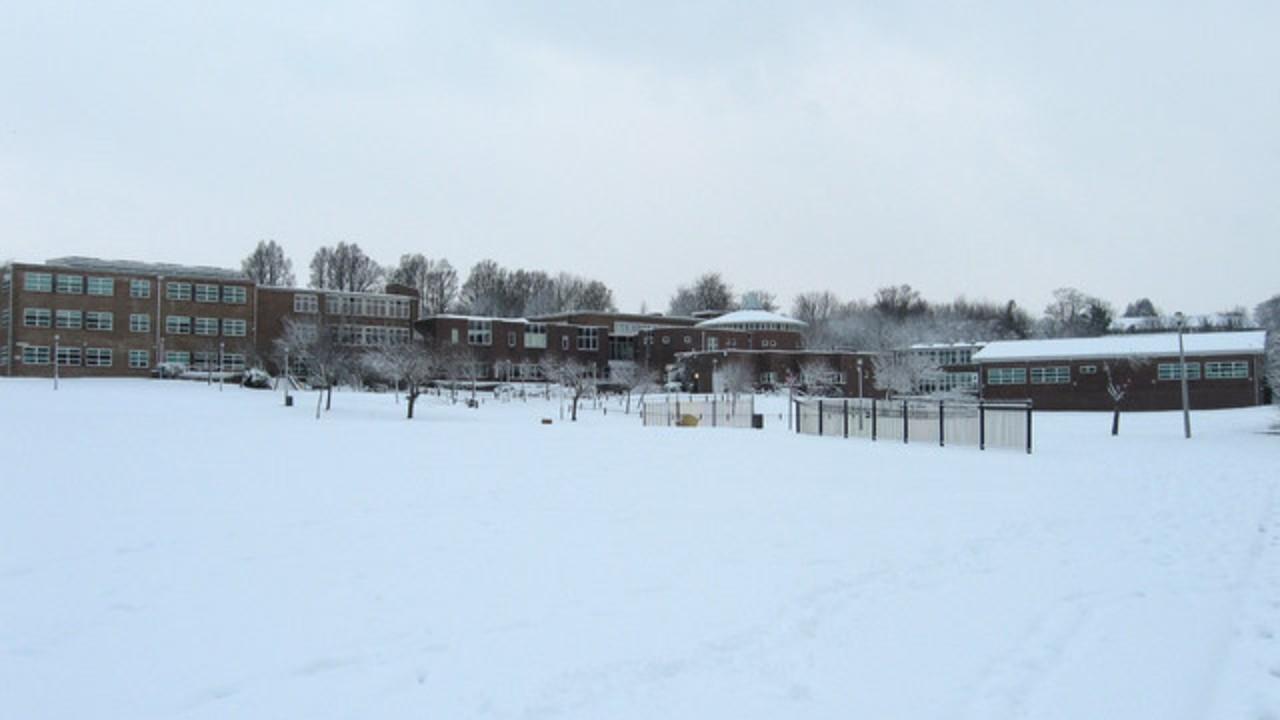
Dorothy Stringer School's child protection and safeguarding policy says the school has separate toilets and changing rooms for boys and girls, and that children aged 11 and over are not allowed to undress in front of members of the opposite biological sex. The policy was last reviewed in September 2026, the month new government guidance on single-sex facilities came into force.
The school was a defendant, with Brighton and Hove City Council, in a High Court claim brought by two claimants who cannot be identified. Good Law Project said in a statement on 11 November 2026 that the challenge has been withdrawn. Here is what the published documents say.
What the school's policy says
Section 17 of the school's Child Protection and Safeguarding Policy, headed School Premises, sets out three points.
Separate facilities. There are separate toilets and changing rooms for boys and girls.
Undressing. Children aged 11 and over are not allowed to undress in front of members of the opposite biological sex.
Alternatives. Where a child does not want to use the facility for their biological sex, the school says it will provide an alternative facility without compromising the provision of single-sex facilities.
The policy says it was last reviewed in September 2026 and is reviewed annually by the governing board. The school's separate Equalities Policy for autumn 2026 does not contain a specific changing-room provision.
What the 2026 government guidance requires
The Department for Education's Keeping children safe in education 2026 was published on 7 July 2026 and came into force on 1 September 2026. Its full text covers school premises in a section on toilets, changing rooms and showers.
Toilets. Schools must not allow children into toilets designated for the opposite biological sex, including when responding to a request to support any degree of social transition (paragraph 108). They must provide separate toilets for boys and girls aged 8 and over, except individual toilets in a room that can be locked from the inside and used by one pupil at a time (paragraph 109). If a gender-questioning child does not want to use the toilet for their biological sex, schools should consider whether they can offer an alternative, such as self-contained individual toilets, without compromising single-sex facilities or the safety, comfort, privacy or dignity of the child or other children (paragraph 111).
Changing rooms. Schools must not allow a child aged 11 or older at the start of the school year to undress in front of a child of the opposite biological sex, and must not give a child access to changing rooms designated for the opposite sex when supporting social transition (paragraph 115). If a gender-questioning child does not want to use the changing rooms or showers for their sex, schools should consider an alternative, such as a fully enclosed room for one child at a time that can be secured from the inside, or access at a different time (paragraph 117).
Records and review. Schools should keep a clear record of these arrangements, communicate them appropriately and review them regularly (paragraphs 112 and 118).
What the council's toolkit said
In January 2025 the council's Cabinet agreed to publish version 5 of its Trans Inclusion Schools Toolkit. The Cabinet decision, taken on 23 January 2025 and effective from 1 February 2025, recommended that all education settings in Brighton and Hove use the toolkit to inform policy and practice.
Section 4.3 of the toolkit covers changing rooms. It says the use of changing rooms by trans children and young people should be assessed case by case, and that in discussion with the child the school should weigh the needs of all other pupils, including girls and those with relevant religious or other beliefs. It also says any child with a need or desire for increased privacy, whatever the reason, should generally be given a reasonable alternative, such as a private area or a separate time to change, with the reason kept confidential.
The High Court order
The claim was brought as The King (on the application of LIN and LIP) v The Governing Board of Dorothy Stringer School and Brighton and Hove City Council, claim number AC-2026-LON-001527, in the Administrative Court. The claimants are referred to only by those letters.
Anonymity. On 24 June 2026 Mrs Justice Foster granted the claimants anonymity. Their identities, and anything likely to identify them, must not be published. We have not tried to identify them and do not report anything that could.
Applications. The order records an application by the claimants for permission to bring judicial review proceedings and to rely on expert evidence. It refused a request to expedite the case, citing expected changes to the guidance that the defendants said were due in summer or early autumn 2026. The defendants argued the claim was premature and academic and raised delay.
Hearing. The permission application was to be heard at an oral hearing estimated at two and a half hours, on the first available date after 1 October 2026.
This was a privacy and case-management order. It does not decide whether the school acted lawfully.
Good Law Project's statement
Good Law Project, which says it supported the school's case-by-case approach, said on 11 November 2026 that the challenge has been withdrawn and that the school now meets the standards in the revised guidance, including by providing private, gender-neutral spaces. Its statement says schools still have Equality Act duties to protect trans pupils from discrimination.
What the documents do not show
None of these documents says when the school's governors decided on its current arrangements, what its arrangements were before September 2026, or whether the court proceedings played any part in the change. The council's 2024 toolkit was published before the 2026 guidance, and the documents do not say whether the council has revised it since.


Comments
There are no comments on this story.
Comments are closed on this story.