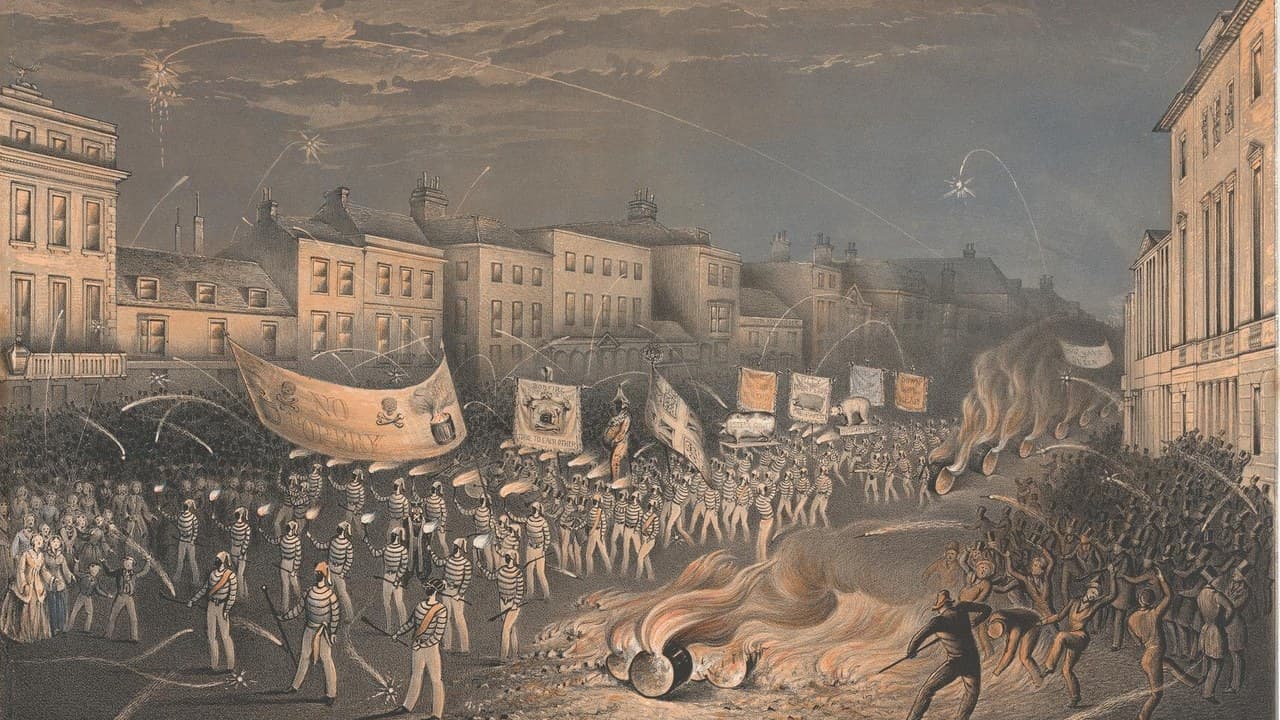
Lewes Bonfire burns because of two things: the 17 Protestant martyrs who were burned to death in the town in the reign of Mary I, and the failure of the Gunpowder Plot in 1605. East Sussex County Council says the celebrations mark both. This year the six Lewes bonfire societies process on Thursday 5 November 2026.
The martyrs. The martyrs were burned in front of the Star Inn, now the Town Hall, according to Historic England. Seventeen burning crosses are carried in the procession in their memory.
The societies. The Cliffe Bonfire Society dates from 1853, the year of Thomas Henwood’s print of the procession, shown below.
The night. Grand processions start at 8pm, bonfires are lit around 9.30pm, and fireworks follow, according to Lewes and Eastbourne Councils.
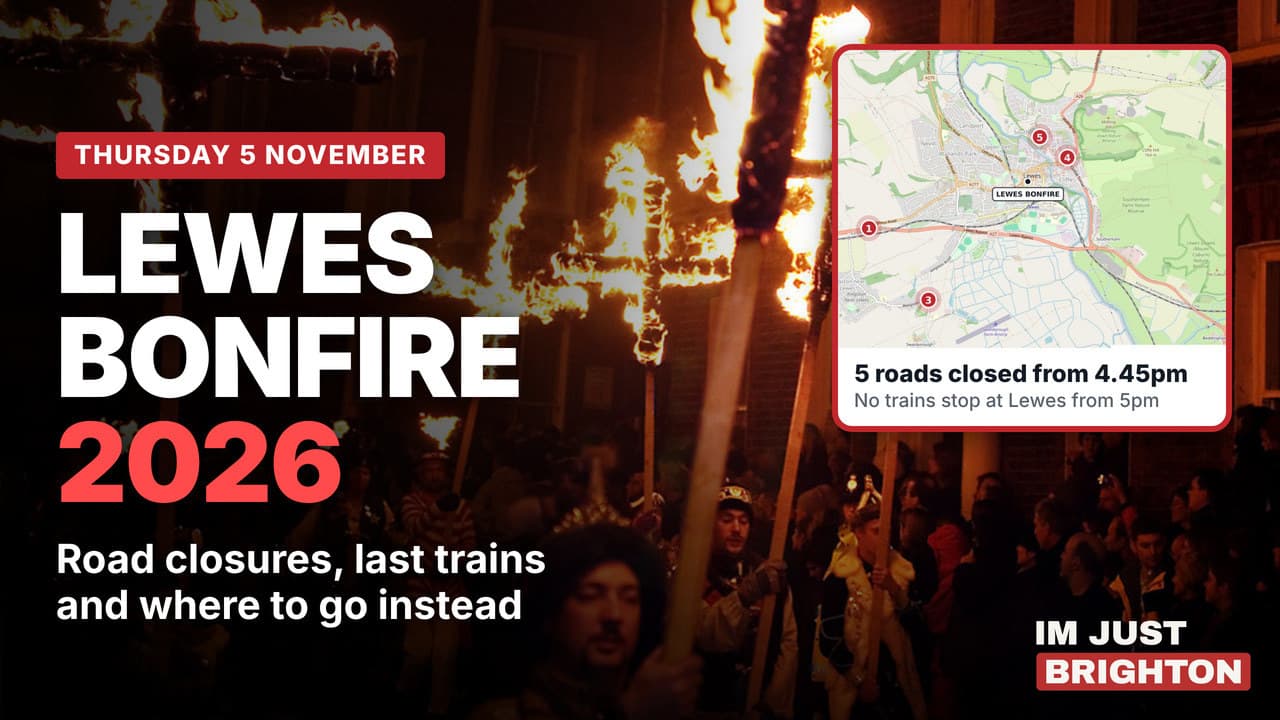
Planning to go? Read our Lewes Bonfire 2026 guide to road closures, last trains and travel advice first.
The 17 Protestant martyrs of Lewes
The Historic England list entry for the Lewes Martyrs’ Memorial says it commemorates seventeen Protestant martyrs who were “burned to death” during the reign of Queen Mary. It records that they died in front of the then Star Inn, now the Town Hall.
The entry describes a stone obelisk on a tall plinth, dated 1901 and “provided by public subscriptions”. It was first listed at Grade II on 29 October 1985. Its inscription panel names the martyrs and the dates of their executions.
East Sussex County Council’s We burn for good page says the Sussex martyrs were burned between 1555 and 1558, and that Lewes remembers its 17 with 17 burning crosses.
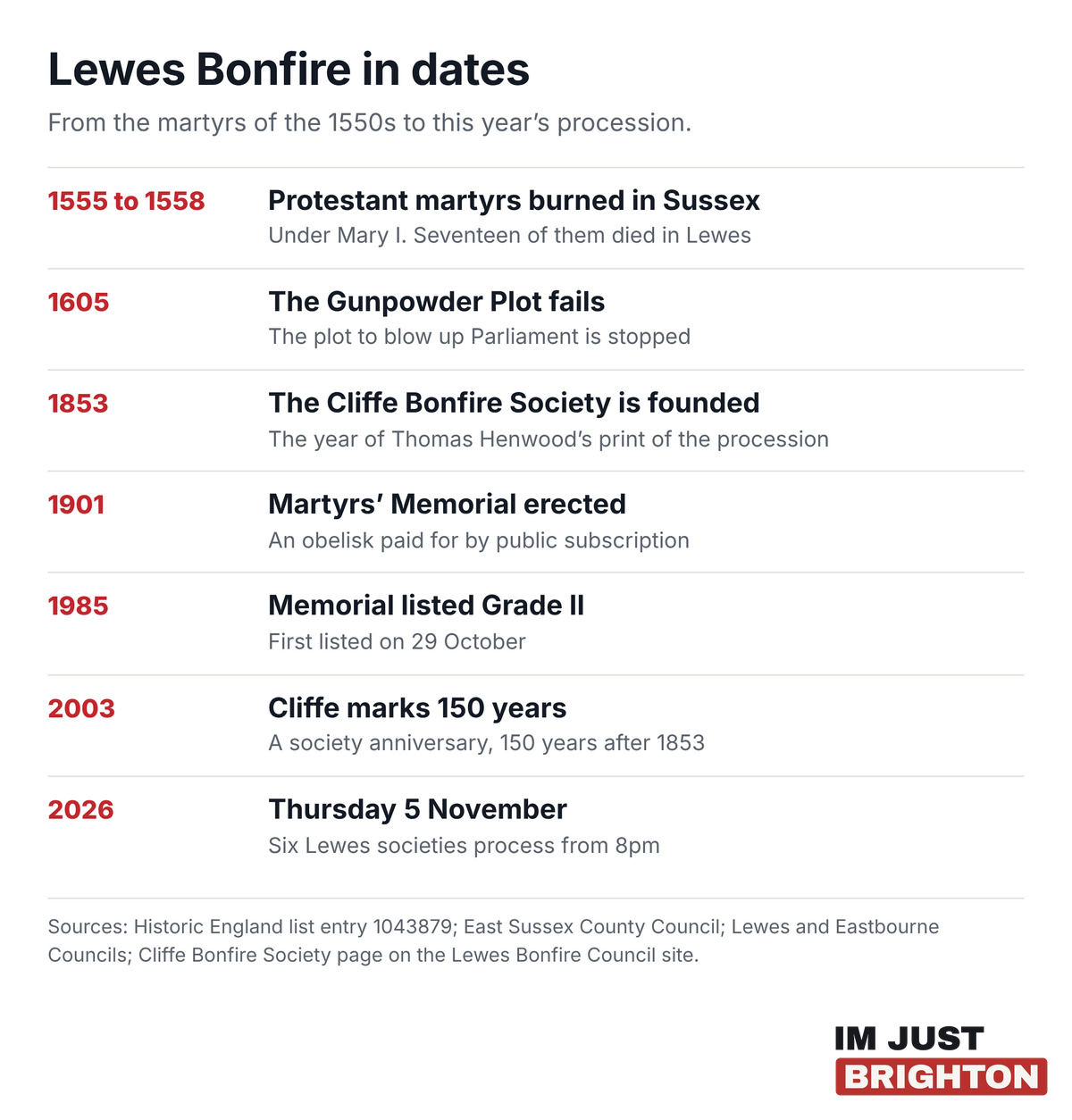
Lewes Bonfire in dates
Why Lewes also marks the Gunpowder Plot
Bonfire Night marks the failure of the Gunpowder Plot in 1605 across England. In Lewes the two stories run together. East Sussex County Council says the celebrations mark the failure of the plot and commemorate the Protestant martyrs burned in Sussex under Mary I.
The county’s bonfire societies carry a motto, “We burn for good”, which the council describes as a modern take on the unofficial Sussex motto “We wunt be druv”, meaning “we will not be driven”. Societies today raise money for local charities and community organisations.
The procession in 1853
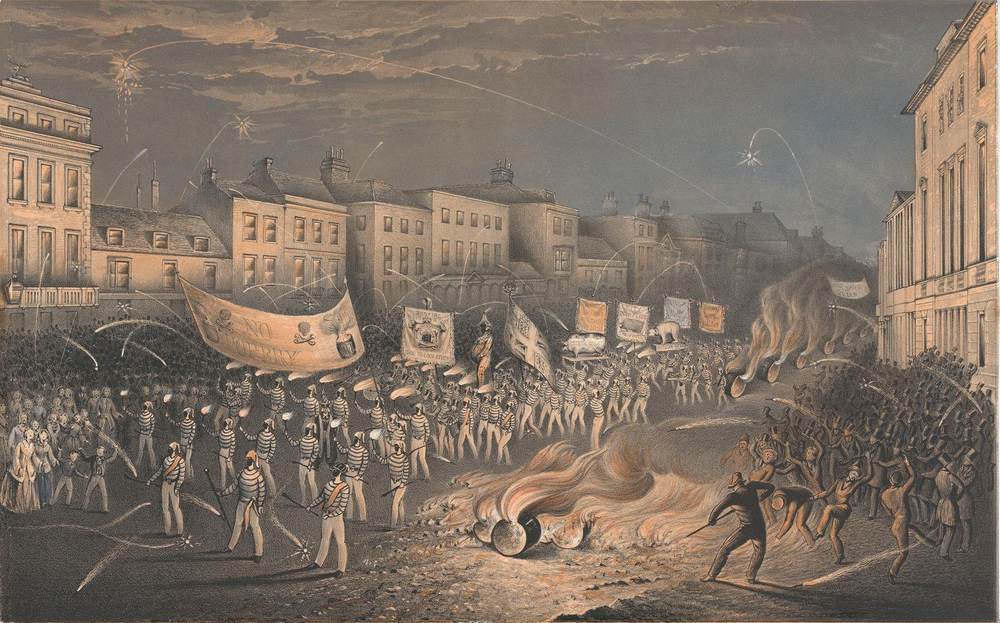
Thomas Henwood’s lithograph, held by the Yale Center for British Art, shows men in striped jerseys carrying torches and banners through a Lewes street, with burning barrels and crowds on either side. It is dated Nov 5th 1853.
The six Lewes bonfire societies and the Cliffe
Lewes has six bonfire societies: Lewes Borough, Commercial Square, Southover, Waterloo, South Street and Cliffe, according to Lewes and Eastbourne Councils. Each one holds its own procession and sells its own programme with its route.
The main route runs from Western Road through the Bottleneck, along the High Street, past the War Memorial and down School Hill to Boots Corner, says the council page on bonfire sites and processions.
The Cliffe Bonfire Society says it was founded in 1853, with the motto “Nulli Secundus”, and covers the Cliffe and Malling areas. Its Vikings carry blazing crosses for the martyrs. Its firesite is on Ham Lane, entered from Pinwell Lane, with tickets only. The society marked its 150th anniversary in 2003.
The banners tell the story
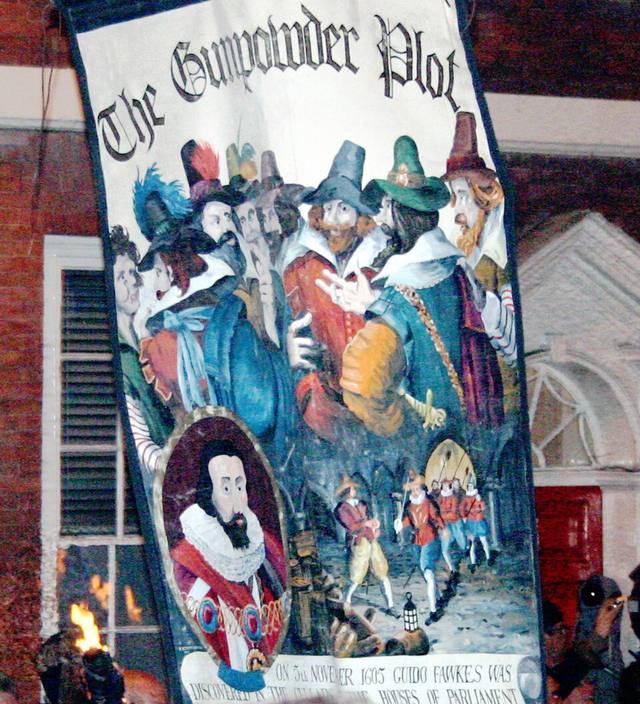
Banners are carried through the streets, and one from 2007 retells the Gunpowder Plot in paint. The text along the bottom records that Guido Faukes was discovered on 5th November 1605.
Lewes Bonfire 2026: what to know
The societies hold grand processions from 8pm on Thursday 5 November, then light their bonfires around 9.30pm, with fireworks at each society’s site. Most bonfire sites need advance tickets, sold by the societies, and capacity is limited.
The council’s advice for visitors is in our Lewes Bonfire 2026 travel guide, and East Sussex County Council’s page lists the other bonfire events in the county.
ImJustBrighton note. Lewes is one of several Sussex towns and villages with their own bonfire societies, including Rotherfield, which carries three crosses, and Mayfield, which carries four, according to East Sussex County Council.
Comments
No comments yet. Start the conversation.