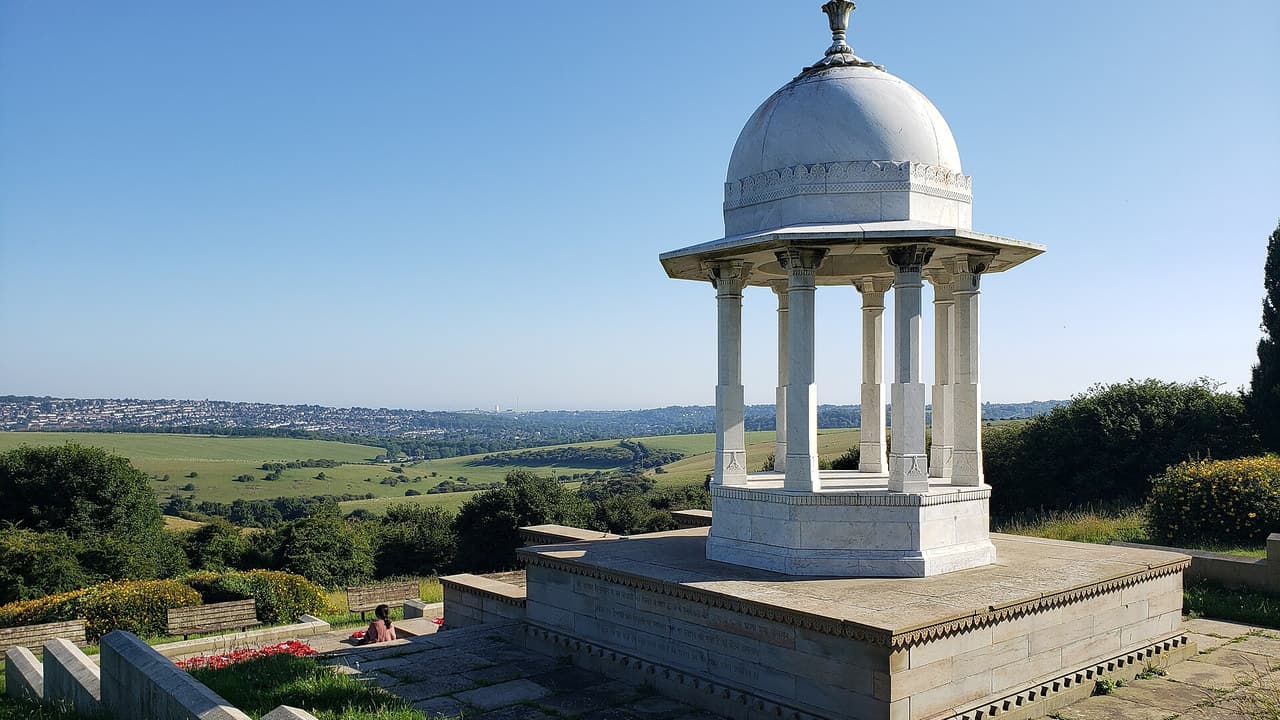
In December 1914 the Royal Pavilion became a hospital for wounded Indian soldiers. Brighton and Hove Museums says about 12,000 Indian troops were treated in the town between late 1914 and early 1916. Two memorials remember them: the Chattri on the Downs at Patcham and the Indian Gate in the Royal Pavilion Gardens.
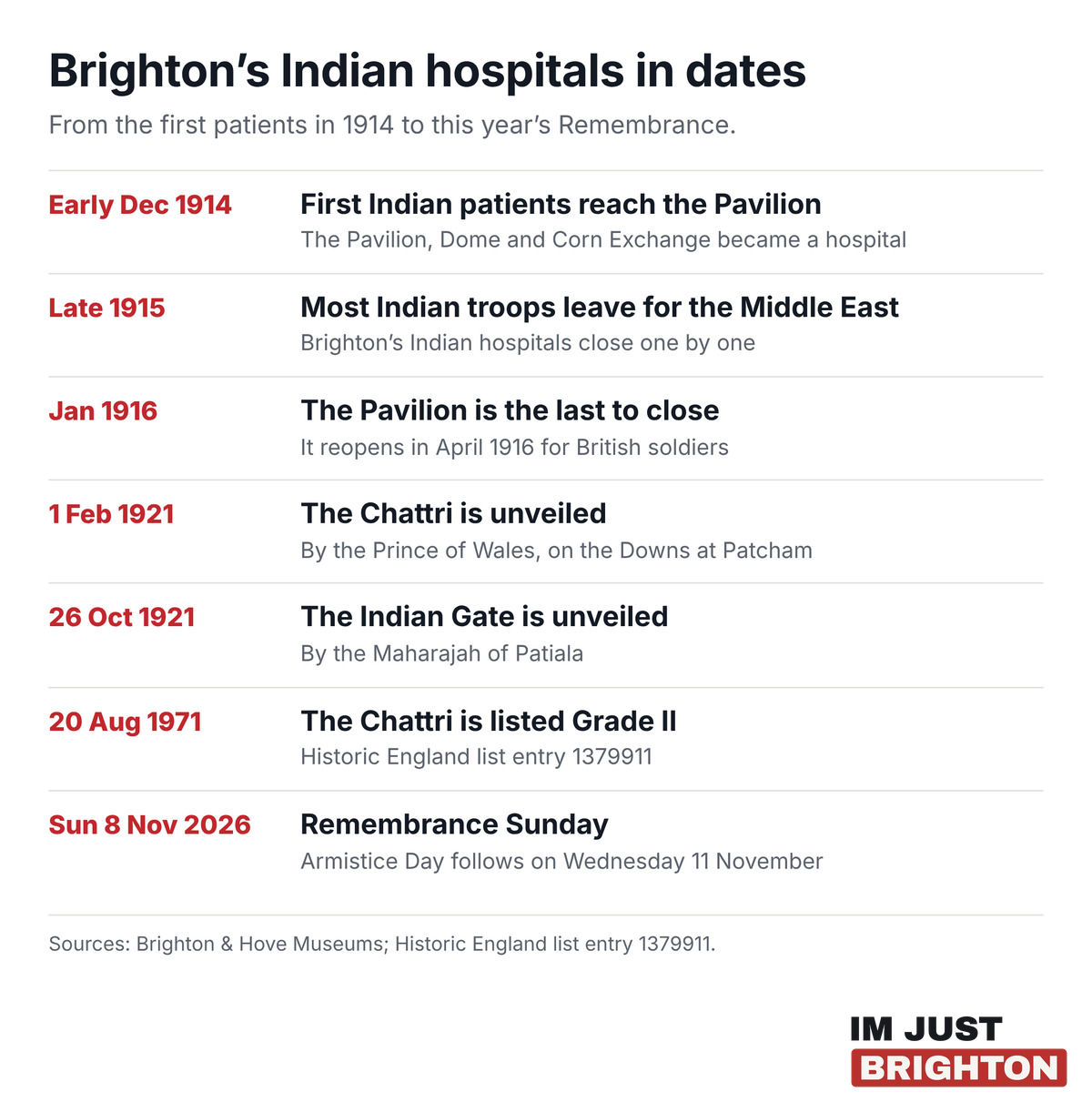
The hospital. The Pavilion, Dome and Corn Exchange were converted into a hospital in under two weeks, and the first patients arrived in early December 1914, according to Brighton and Hove Museums.
The memorials. The Chattri was unveiled by the Prince of Wales on 1 February 1921. The Indian Gate was unveiled by the Maharajah of Patiala on 26 October 1921.
This month. Remembrance Sunday is 8 November this year, and Armistice Day follows on Wednesday 11 November.
How the Royal Pavilion became a hospital
Brighton and Hove Museums says the Pavilion was the first of the town’s Indian hospitals to open, and that the town authorities provided the buildings. The Pavilion, the Dome and the Corn Exchange were converted into a medical facility in under two weeks.
The museums’ WW1 and the Royal Pavilion page says 600 beds were set up in new wards. New plumbing and toilets were installed, and X-ray equipment was added. The Great Kitchen became one of two operating theatres.
The same page says 18 patients died in the Royal Pavilion. In late 1915 most Indian troops were redeployed to the Middle East, and the Pavilion was the last of Brighton’s Indian hospitals to close, in January 1916.
Brighton’s Indian hospitals in dates
Food, faith and care for the wounded
The museums say nine kitchens were set up in the grounds so that patients could have food cooked by people of their own religion or caste.
Muslims and Hindus had separate water supplies. Sikhs had a tented Gurdwara in the Pavilion grounds, and Muslims had space on the eastern lawns to pray towards Mecca.
ImJustBrighton note. Brighton also ran Indian hospitals beyond the Pavilion. The Indian Gate page says it marks the York Place Schools hospital and the Kitchener Hospital as well as the Royal Pavilion.
The Chattri on the Downs
Hindu and Sikh soldiers who died in Brighton’s hospitals were cremated in the open air on the Downs near Patcham, according to Brighton and Hove Museums. Muslim soldiers who died were buried at a cemetery in Woking, near the Shah Jahan Mosque.
The museums say 53 Hindus and Sikhs were cremated at the Patcham site. The Chattri now marks the spot, and the Historic England list entry describes a memorial with a stepped square base, an octagonal pavilion and a domed roof, in the style of an Indian chattri.
The entry says it was built in 1921 of white Sicilian marble, designed by E.C. Henriques under the supervision of Sir Samuel Swinton Jacob. Its inscription is in English and Hindi and begins “To the memory of all the Indian soldiers.” It has been listed at Grade II since 20 August 1971.
Unveiled by the Prince of Wales
The Prince of Wales unveiled the Chattri on 1 February 1921, according to the museums’ account of the unveiling. The museums add that an annual ceremony still takes place at the memorial every June.
The names beside the memorial
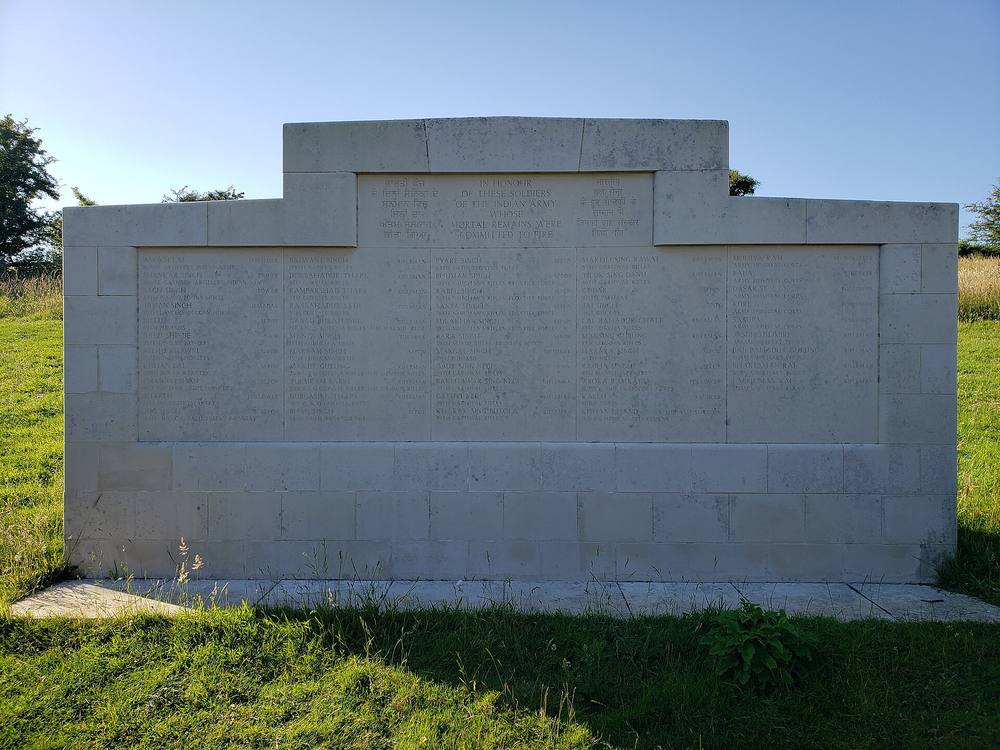
A stone panel of names stands at the Chattri site. Its heading, in English, begins “In honour of these soldiers of the Indian Army”.
The Indian Gate at the Royal Pavilion
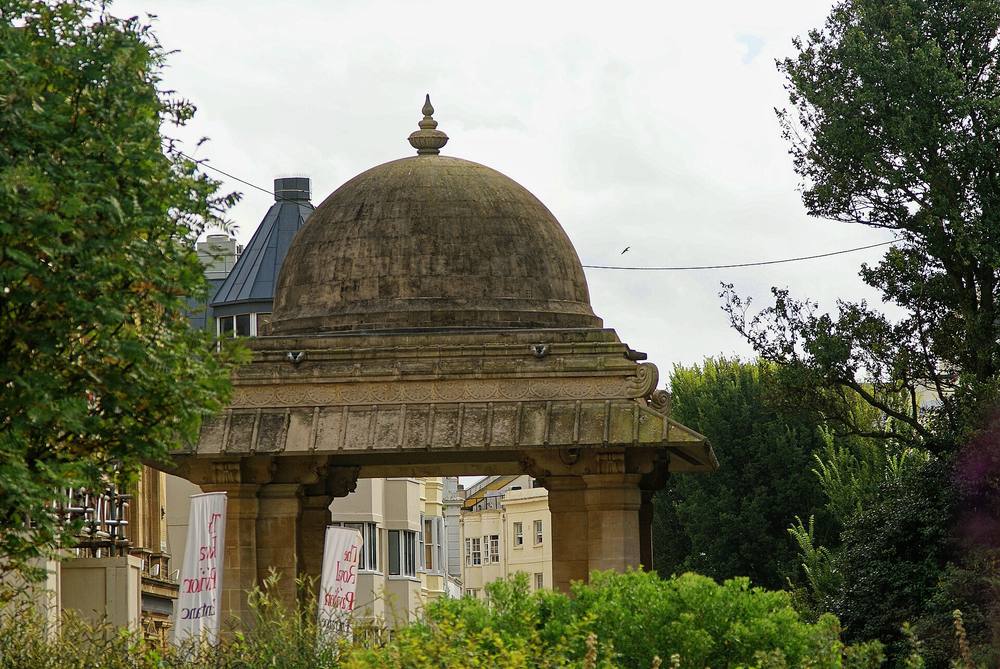
The Indian Gate was unveiled on 26 October 1921 by the Maharajah of Patiala, Bhupinder Singh, who opened it with a gold key. The museums say the key is said to be a replica of an original Royal Pavilion key.
The gate was designed by Thomas Tyrwhitt and given by individuals from India, including the Maharajah. Its inscription calls it a “gift of India”, thanks Brighton for caring for Indian soldiers tended at the Pavilion in 1914 and 1915, and dedicates it to the use of the inhabitants of Brighton.
The museums say the Mayor of Brighton, Bertram Southall, attended the ceremony, along with Alderman Charles Thomas-Stanford and Alderman John Otter, chair of the Indian Memorial Committee. The event was filmed by British Pathé, and the Maharajah went to a banquet at the Pavilion afterwards.
The museums say about 12,000 Indian troops were treated in Brighton and over 4,300 patients in the Pavilion, the Dome and the Corn Exchange.
After the Indian soldiers, a hospital for British limbless soldiers
The Pavilion reopened in April 1916 as a hospital for British soldiers who had lost arms or legs, according to Brighton and Hove Museums. It treated over 6,000 soldiers, and its last patients left in July 1919. The building returned to Brighton in 1920, and War Office compensation helped fund early restoration.
Remembrance 2026: what to know
Remembrance Sunday is Sunday 8 November 2026 and Armistice Day is Wednesday 11 November 2026. The Chattri’s own ceremony is held every June, according to Brighton and Hove Museums.
The Indian Gate stands in the Royal Pavilion Gardens, and the Chattri is on the Downs at Patcham in the South Downs National Park.
Comments
No comments yet. Start the conversation.