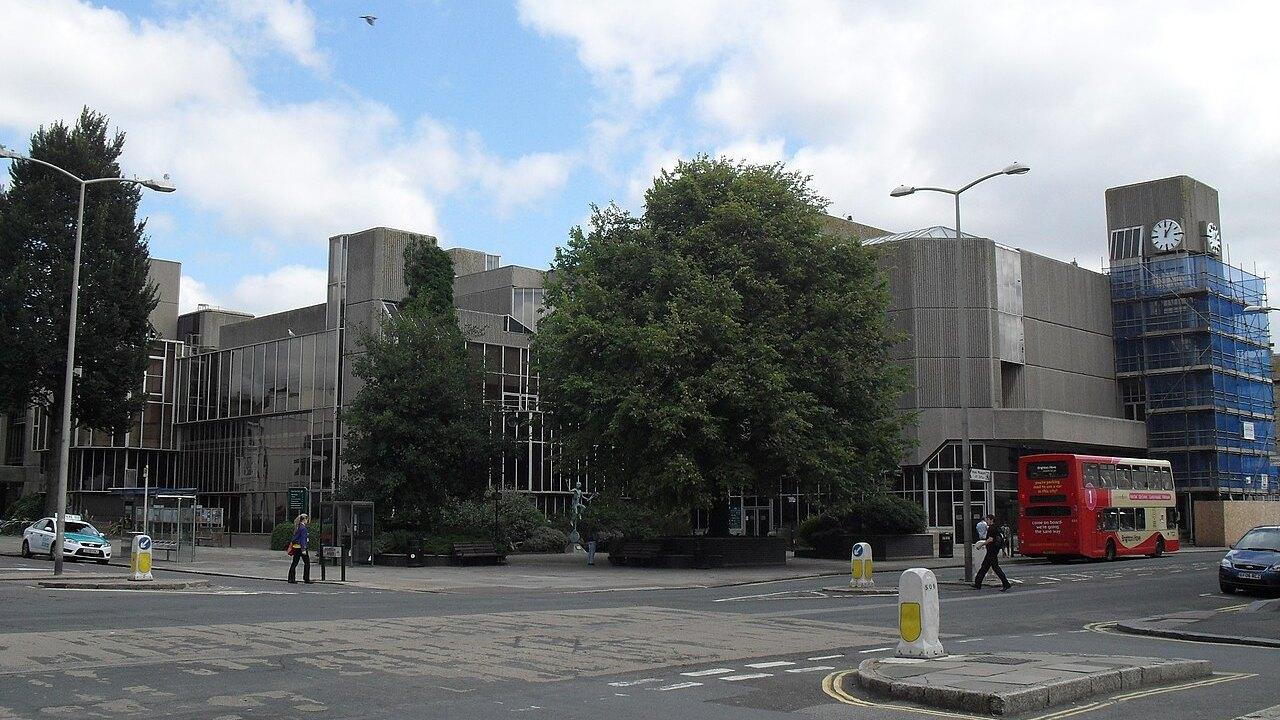
Brighton and Hove City Council has 2,358 households living in temporary accommodation and is proposing a three-year programme to bring 500 more homes under its own control. The figures come from a council report published for a scrutiny committee meeting on 10 November 2026.
The report goes to the People Overview & Scrutiny Committee from the Cabinet Member for Housing. The committee is asked to consider and comment on the programme, and the proposals are then due to be considered by Cabinet in November.
How many households are in temporary accommodation
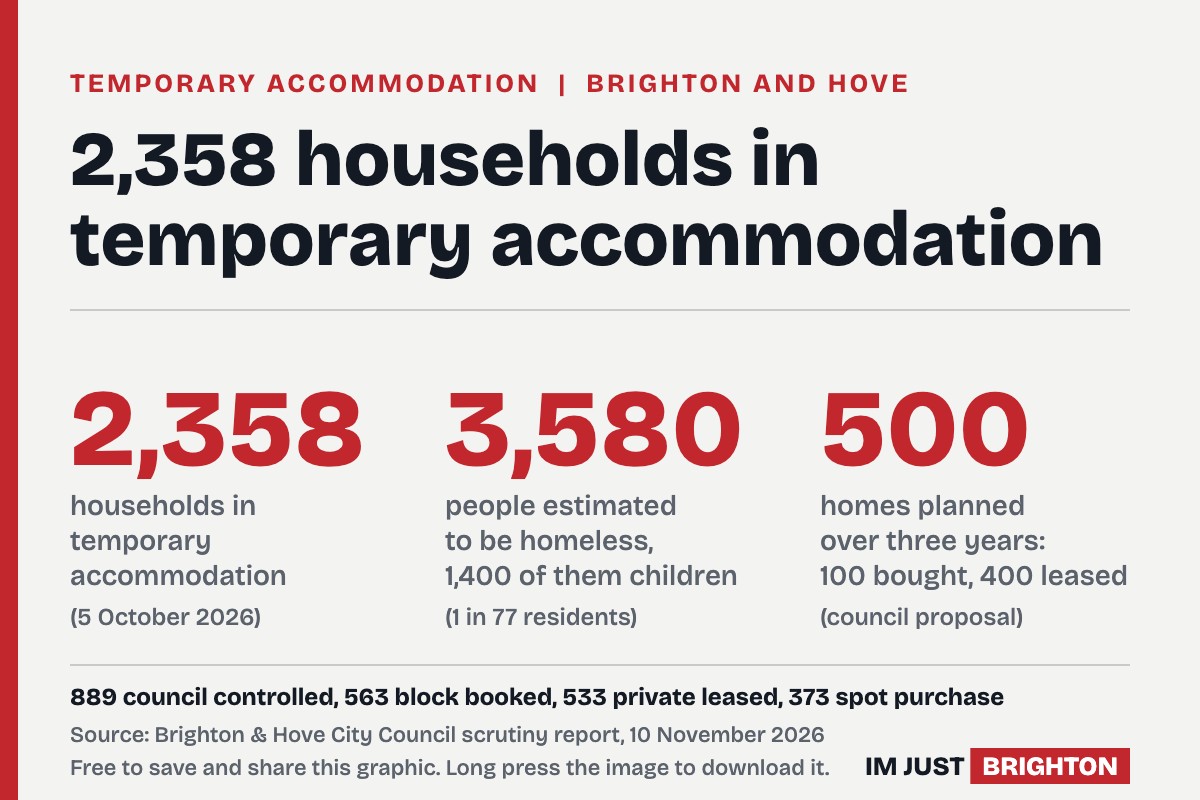
The council says 2,358 households were in temporary accommodation in early October 2026. The report says the city continues to face significant homelessness pressures and that, without further action, demand is forecast to keep rising.
The council reported 2,150 households placed in temporary accommodation at the end of November 2025. The October 2026 figure is 208 higher.
A presentation attached to the report estimates that 3,580 people in the city are experiencing homelessness, around 1 in 77 residents, including 1,400 children.
Where households are placed
The report gives this breakdown for 5 October 2026: 889 households in council controlled accommodation, 563 in block booked accommodation, 533 in private leased homes and 373 in spot purchase accommodation.
The council describes the accommodation it relies on from outside providers as expensive, market-dependent and outside its direct control.
The 500-home proposal
The programme would add 500 homes over three years: 100 bought by the council and 400 secured through long-term leases. It follows the Temporary Accommodation Supply Strategy that Cabinet approved in April 2026.
The report says the balance between buying and leasing could change as market engagement, viability assessments and exit strategies are worked through. It says leasing needs much less capital than buying, so more homes can be brought forward without significant borrowing.
The council commissioned consultants 31Ten to assess delivery models, including buying, long-term leasing and a housing company. The report says buying and leasing can deliver comparable or better outcomes without the extra governance and complexity of a separate company.
The homes would be held in the General Fund rather than the Housing Revenue Account. The report says homelessness is a General Fund function and the financial benefits would come back to homelessness budgets.
What temporary accommodation costs
The council forecasts spending about £16.939m net in 2026/27 on externally provided temporary accommodation. That is £5.451m on spot purchased accommodation, £9.150m on block booked accommodation and £2.338m on private sector leasing.
The programme contributes to an approved £5.140m temporary accommodation savings target. The report says any acquisitions or leases from 2027/28 onwards will need a separate business case and approval.
What the council expects by 2030
The council's presentation projects that, subject to Cabinet approval, spot purchase placements would fall from 373 to 50 and block booked placements from 563 to 151 by March 2030. Council controlled accommodation would rise from 889 to 1,389 households.
Decision dates
Scrutiny. The People Overview & Scrutiny Committee considers the report on 10 November 2026.
Cabinet. The proposals are due to be considered by Cabinet in November.
Comments
No comments yet. Start the conversation.