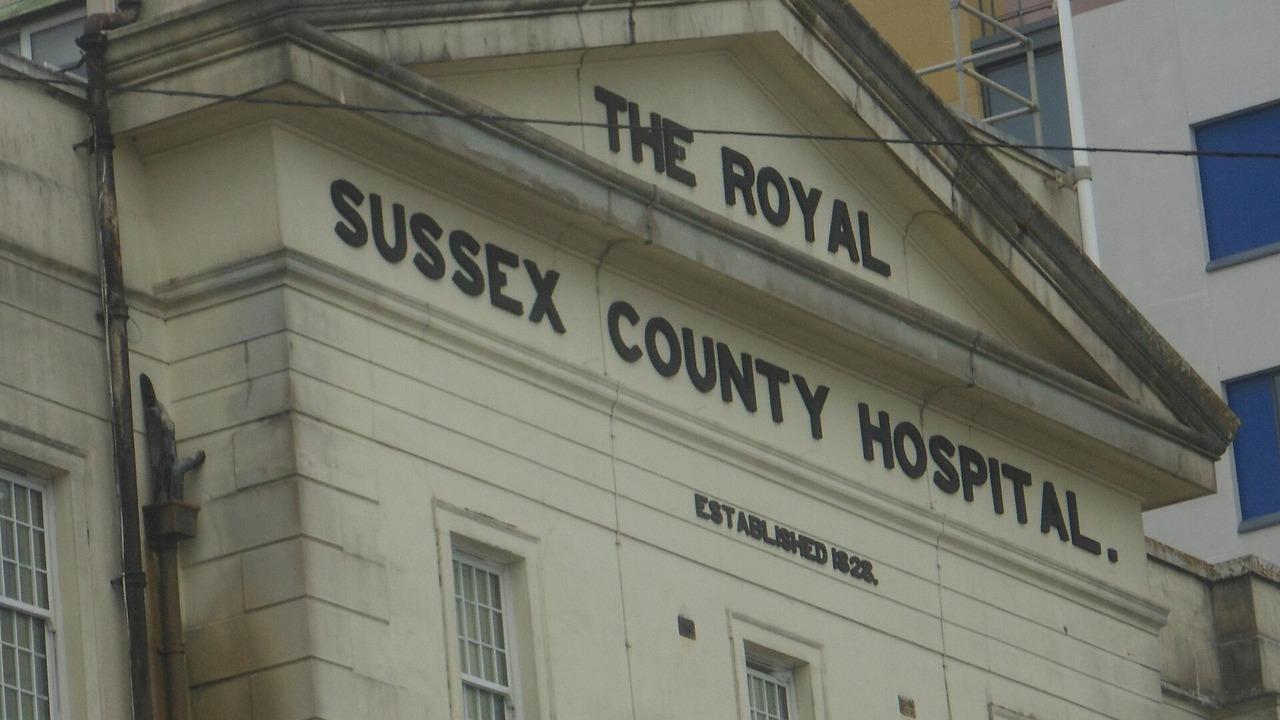
University Hospitals Sussex, the trust that runs the Royal Sussex County Hospital in Brighton, averaged 68 patients a day receiving A&E corridor care in September 2026. That is down from 101 a day in June, according to the monthly figures published by NHS England.
68 a day in September 2026, against 101 a day in June, a fall of about a third
The figures cover the whole trust, which runs seven hospitals, not the Royal Sussex County Hospital alone. The September figure is provisional, so it can still change.
What the figures show
The count began in May, when the trust averaged 65 patients a day in its emergency departments. June was the worst month at 101, and the busiest single day was 23 June, with 144 patients receiving corridor care. July came in at 93, August at 85 and September at 68. The trust submitted figures for all 30 days of September, and the monthly average is about 33% below June's.
A second count looks at the wards. Each morning at 8am, the trust reports how many adult ward patients have spent more than 45 minutes outside a proper bed space. The monthly averages were 39 in May, 32 in June, 37 in July and 38 in August, before falling to 21 in September.
21 patients on wards at 8am in September, against 39 in May
Across the whole Surrey and Sussex area, the NHS trusts in the integrated care board averaged about 186 A&E corridor cases a day in September. The Brighton-based trust accounted for 68 of them, more than a third.
The national picture
Across England, NHS England's figures show an average of 2,549 patients a day in A&E corridor care in September, plus 760 on wards at 8am. Together that is 3,310 a day, the figure the Royal College of Nursing reported on 8 October, when it said September was the highest level recorded since the data was first published in May.
Added together in the same way, the trust's own figure was 88 a day in September, down from 133 in June. Over the same period the England total rose by about 4%, from 3,188 to 3,310. A single month from a new dataset cannot say why the trust's number moved the other way.
What counts as corridor care
NHS England defines corridor care as care given in a setting that is not clinically suitable, such as a corridor. A patient only counts once they have been there for more than 45 minutes. A space fails the test if it lacks things like oxygen and a call bell, privacy, dignity (access to food, water and a toilet), a chance to sleep, or sign-off from the trust's infection control team.
In A&E, the count covers every patient who received corridor care for more than 45 minutes in the previous 24 hours, from midnight to midnight. Delays in handing over patients from ambulances are not included, because they are reported separately.
How to read the numbers
NHS England publishes one set of figures for the trust as a whole. The trust lists four of its seven hospitals as having an A&E department: the Royal Sussex County Hospital in Brighton, the Princess Royal Hospital in Haywards Heath, St Richard's Hospital in Chichester and Worthing Hospital. The published numbers cannot show how many of the cases happened at the Royal Sussex County Hospital.
NHS England marks the collection as experimental and describes the measure as immature, with figures expected to move as reporting settles ahead of winter. Its guidance was refined after the March launch and may not be applied the same way at every trust, so comparing one trust with another needs care. Trusts have 14 days to amend what they have submitted, which is why the latest month is labelled provisional.
What the trust has said
The trust's public board met on 31 March 2026. The minutes, published in the board papers for 14 May, record the interim chief executive, Dr Andy Heeps, confirming the trust's commitment to eliminating corridor care during 2026/27 through better patient flow and more capacity.
The same minutes show a board member raising the new 45-minute standard in A&E and the need to move patients on to the right place more quickly, particularly where mental health demand is rising. Dr Heeps said a multi-agency summit was planned with the local mental health trust to agree short-term steps and longer-term fixes.
The A&E rebuild
The longer-term answer is a £62m rebuild of the emergency department at the Royal Sussex County Hospital. On its programme page, last reviewed on 11 August 2025, the trust says the resus and majors area will double in size and open in February 2028. A new patient assessment and triage area and a new Urgent Treatment Centre follow from January 2028. A&E and the Urgent Treatment Centre are due to stay open throughout the work.
The hospital site is changing in other ways too. The minutes say the helipad became operational at the start of March 2026, which we covered in our report on the helipad and the £250m cancer centre foundation stone.


Comments
There are no comments on this story.
Comments are closed on this story.