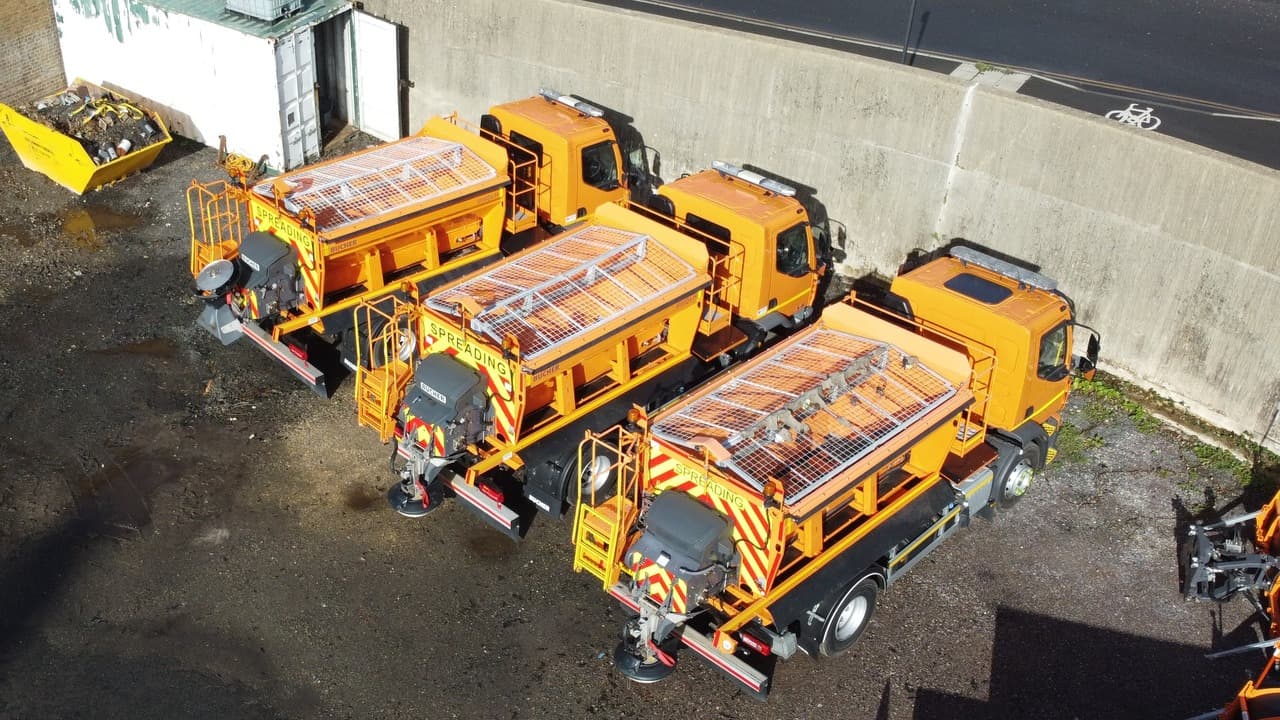
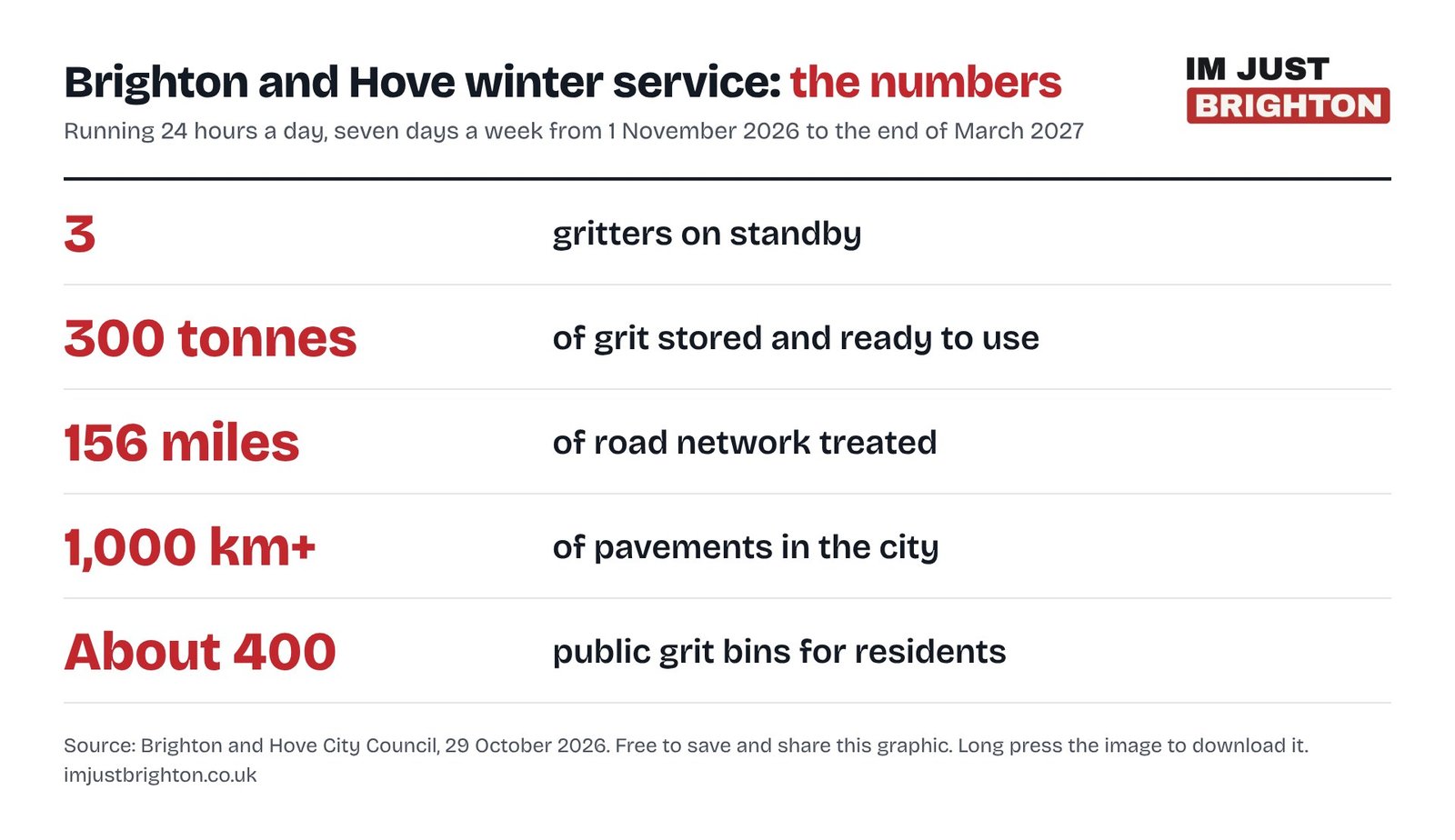
Brighton and Hove City Council's winter gritting service started running 24 hours a day, seven days a week on 1 November 2026, with crews and three gritters on standby until the end of March 2027. The council says it is treating around 156 miles of the city's roads, with about 300 tonnes of grit stored and ready to use.
The council announced its winter plans on 29 October. This is what is covered, what is not, and how to get a grit bin refilled.
Which Brighton and Hove roads get gritted
The council treats approximately 156 miles of the road network, and it focuses on priority routes. These include key bus corridors, major roads, and routes serving hospitals, emergency services, schools and the city centre. Gritting routes and winter road maintenance information are on the council's website.
Teams use a network of road temperature sensors across the city, together with detailed weather forecasts, to monitor conditions around the clock. That lets them plan treatments before freezing temperatures, frost and ice arrive.
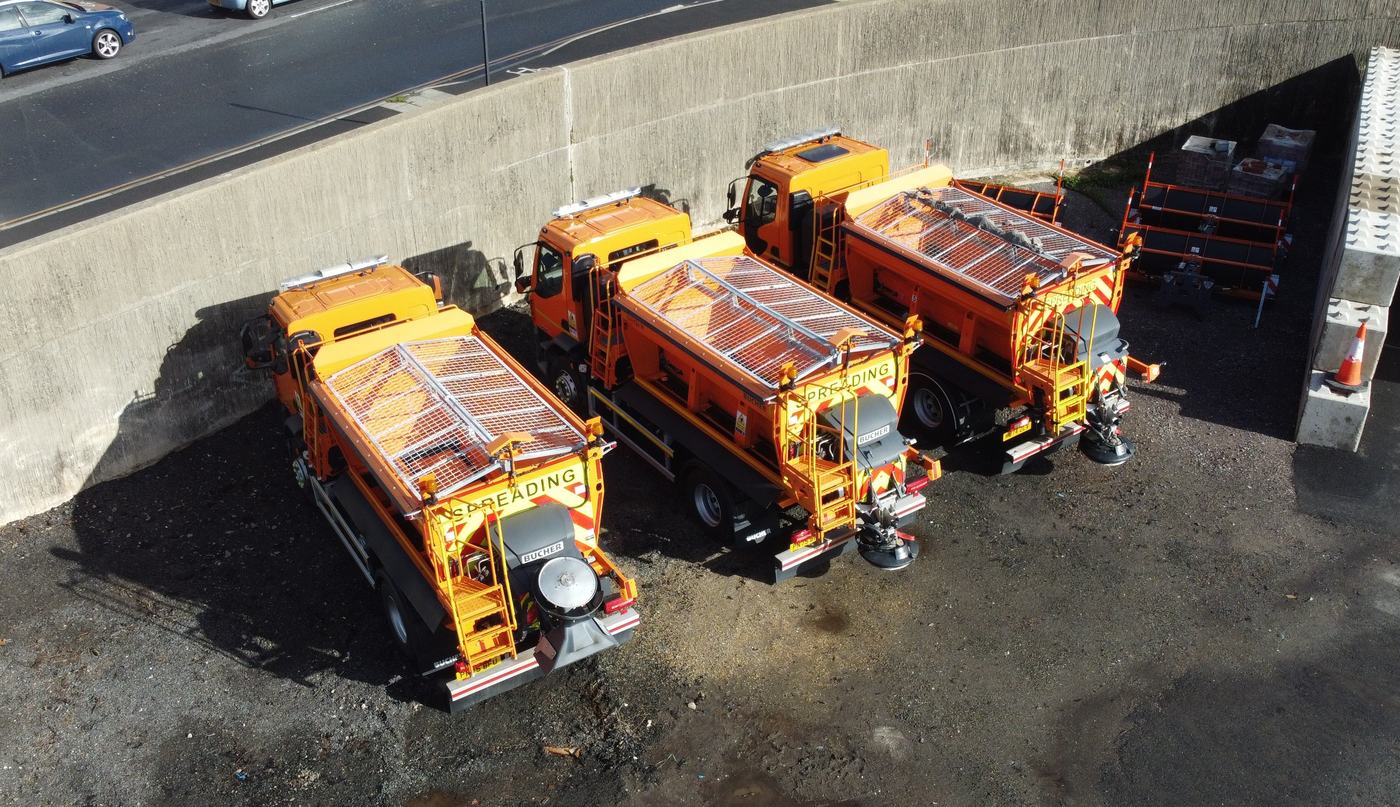
How much grit, how many gritters
Around 300 tonnes of grit are in store, and the council says extra supplies are available if the weather stays cold for a long period. Three gritters are on standby through the season.
In severe winter weather the council has additional contractors to help with snow clearance and pavement gritting on essential routes, including areas around hospitals, schools, care facilities and other key public services.
Pavements and grit bins
Brighton and Hove has more than 1,000 km of pavements and around 400 public grit bins that residents can use during icy weather. The council says every grit bin will be inspected and topped up where needed before winter, then checked and refilled through the season depending on the weather and demand.
If you spot a grit bin that is running low, damaged or needs attention, you can report it online or contact the council's highways team.
What gritting can and cannot do
The council says gritting greatly reduces the risk of ice forming, but it cannot guarantee roads will stay completely free of ice and snow. Grit works best when traffic helps to spread it across the road, which stops water from freezing.
Councillor Trevor Muten, Cabinet member for Transport and City Infrastructure, asked drivers, cyclists and pedestrians to take extra care when it is cold and icy. He said everyone has a part to play.
The cold also affects people sleeping outside. Our guide explains when the emergency shelter opens in Brighton when the weather turns severe.

Comments
No comments yet. Start the conversation.