Extreme weather shows need for solar progress, says Greater Brighton Economic Board chair
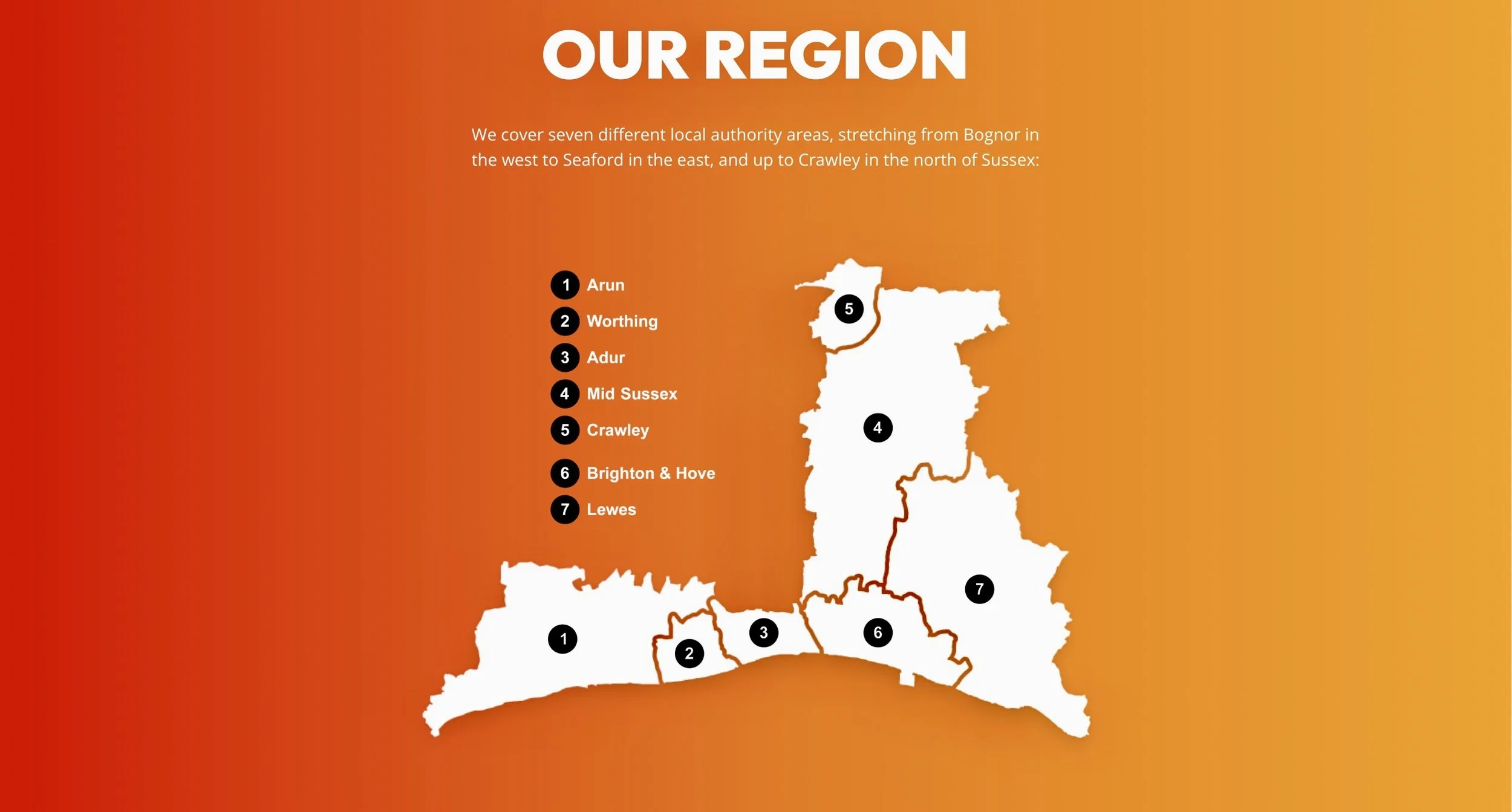
The Greater Brighton Economic Board covers seven local authority areas across Sussex (Credit: Greater Brighton)
The chair of the Greater Brighton Economic Board says this summer's extreme weather makes the case for developing a renewable energy network across Sussex, as work continues to identify sites for future solar farms.
The Greater Brighton Economic Board (GBEB) brings together seven local authorities across Sussex, from Bognor in the west to Seaford in the east and Crawley in the north, along with the University of Brighton, the University of Sussex, Chichester College Group, NHS Surrey and Sussex, the South Downs National Park Authority and regional business networks. Set up in 2014, the board has previously helped secure more than £160 million in Local Growth Funds for projects including flood defences and transport upgrades across the region.
Since 2024, one of the board's key ambitions has been helping Sussex reach net zero energy by 2040, meaning the region would produce as much zero-carbon energy as it uses. To help get there, GBEB launched Sussex Energy, a network of specialists and local organisations focused on driving renewable energy supply across the county, with Solar Across Sussex, one of its initiatives, aiming to deliver large-scale solar generation.
"As one of the UK's sunniest regions, Sussex is incredibly well positioned to take advantage of solar energy. Through Solar Across Sussex we have a real opportunity to tackle high energy bills, increase energy security, address climate change and help grow our local green economy. Solar energy is, and must remain, a strategic priority for the region as we do what we can to tackle climate change, lessen our impact on the environment and learn to adapt to the changing weather we are all seeing."
— Councillor Caroline Baxter, Leader of Worthing Borough Council and Chair of the Greater Brighton Economic Board
Councillor Baxter, who recently took over as chair from Councillor Bella Sankey, Leader of Brighton & Hove City Council, said solar power can also give farms and landowners in rural areas an additional income stream while cutting their own energy bills.
Momentum already building
MCS-certified renewable energy installations across Sussex local authorities grew by around 27% between 2024 and 2025, compared with roughly 5% growth the year before. The challenge now, GBEB says, is sustaining and accelerating that pace.
"Increasing local solar generation in Sussex will make our energy supply more secure, reduce our exposure to volatile energy prices, and has the potential to attract investment and create more jobs, all while reducing our impact on the environment."
— Councillor Caroline Baxter
Solar Across Sussex is one of several Sussex Energy workstreams the board has been developing since the mission launched in July 2024, alongside efforts on funding and finance for renewable projects and a strategic review of existing low-carbon initiatives across the county to close gaps and build a stronger pipeline of schemes.
The Greater Brighton Economic Board's push on solar sits alongside Brighton & Hove's own solar rollout on more than 1,400 council homes, part of the wider drive to cut bills and carbon across the city and county.