
Work under way to extend Hove beach and protect the coastline
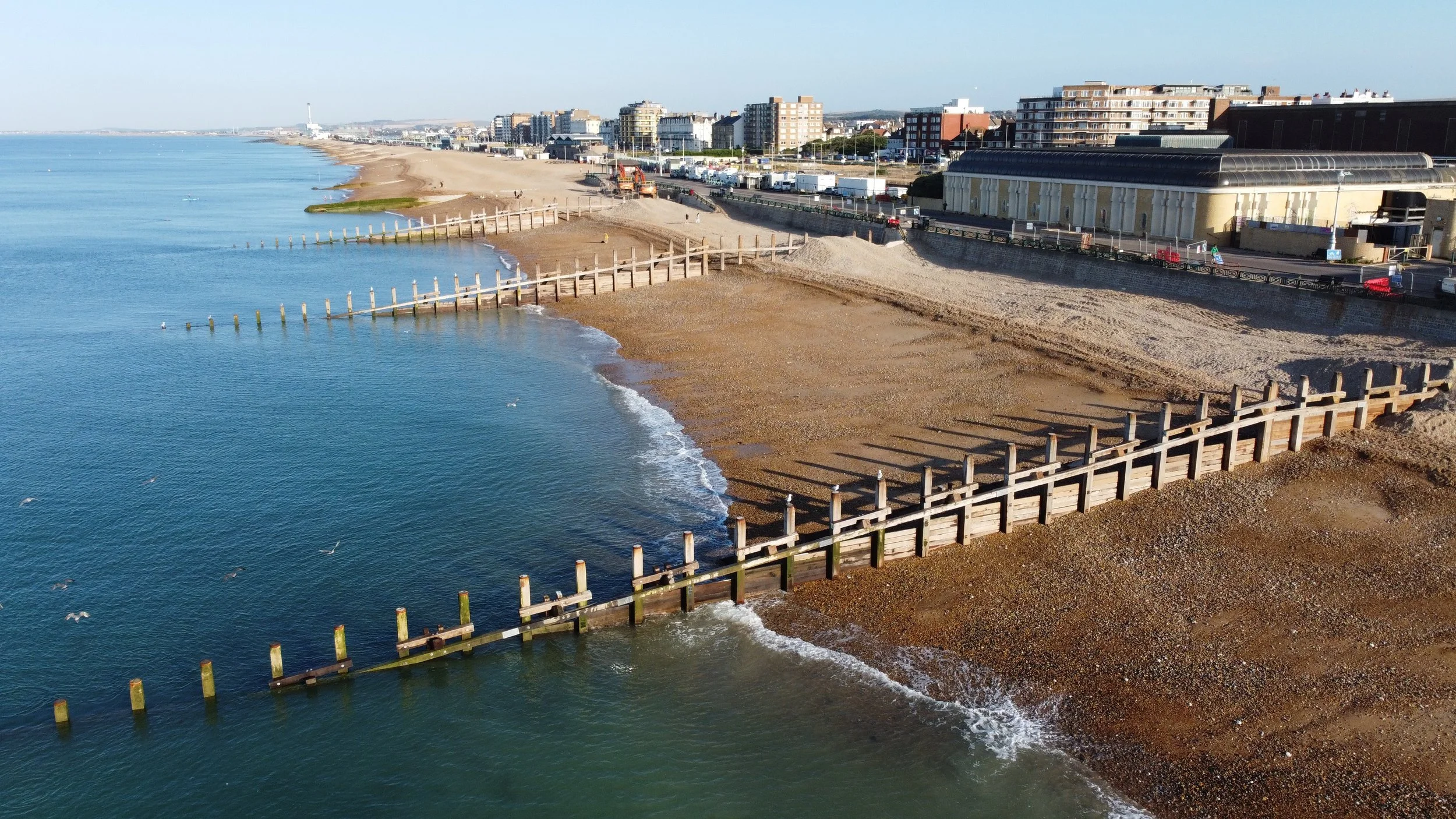
The new groyne field on Hove beach, which is being filled with thousands of tonnes of shingle to widen the beach by around 25 metres
Thousands of tonnes of shingle are being pumped ashore at Hove this month to widen the beach by around 25 metres, in one of the most visible phases yet of the long-term scheme protecting Brighton & Hove's coastline from flooding and erosion.
A major scheme to protect a key stretch of Brighton & Hove's coastline from erosion and flooding has entered an exciting new phase. Work began on Monday 3 August to fill a newly built groyne field in Hove with thousands of tonnes of shingle, and the operation is now well under way along the seafront.
Taken from a licensed dredging site in the English Channel, the shingle is being pumped between the groynes using a large dredger working about 700m offshore, with support vessels and safety boats protecting the area and assisting the operation.
A wider beach for Hove
The new shingle will extend the beach between the King Alfred Leisure Centre and Second Avenue by around 25 metres out to sea. As well as protecting the area from flooding and coastal erosion, the larger beach will reduce the amount of shingle washing up onto the promenade during storms and windy conditions, a problem residents have watched play out for many years.
The work is scheduled to take around four weeks and has to be carried out around high tide. While it continues, this section of the beach is closed to keep everyone safe. The closure applies specifically to the King Alfred to Second Avenue stretch, so other parts of the city's seafront remain open as normal.
The new groyne field
Work to construct nine new timber groynes has been taking place along the stretch since the start of the year. Once the beach is replenished, they will become largely buried beneath the new shingle, with only their upper sections remaining visible above the surface.
Groynes are barriers built out from the shore to slow the natural drift of shingle along the coast. By holding shingle in place between them, the field keeps the beach high and wide, which is what allows it to absorb wave energy and shield the homes and businesses behind the promenade. Full details of the design are set out on the council's coastal protection pages.
Councillor Trevor Muten, Cabinet Member for Transport and City Infrastructure
Councillor Muten added that the city has seen for many years the impact storms can have, with tonnes of shingle washing up onto the promenade, and that the completed scheme will help massively to reduce that and keep the prom accessible for everyone.
Part of a 10km coastal scheme
The Hove work is one piece of a much larger, long-term project: the Brighton Marina to River Adur Flood and Coastal Erosion Risk Management Scheme, which aims to improve coastal defences along a 10km stretch of shoreline and reduce the risk of a one-in-200-year flood and erosion event.
According to the council, the scheme is delivered in partnership with Adur District Council, Shoreham Port, the Environment Agency and the Western Esplanade Management Company, and is primarily funded by the Environment Agency. Its benefits include avoiding the loss of residential and commercial properties, among them Shoreham Sewage Pumping Station and Shoreham Power Station.
The coastline itself is defended by several layers working together: the beaches, which are the primary protection from flooding and erosion, the chalk cliffs such as the Undercliff Walk, sea walls, and timber groynes. Each year the council also moves an average of 16,000 cubic metres of shingle back westward from around the Marina, countering the natural eastward pull of longshore drift.
Joris Jipping, Project Manager, Van Oord
A community clean before the work
Ahead of the shingle works starting, the coastal defence scheme project team partnered with Leave No Trace Brighton to host a community beach clean at the King Alfred on the morning of Tuesday 28 July, inviting members of the public to come along and help clear the shoreline before the machinery moved in.

Leave No Trace Brighton, the not-for-profit behind the community beach cleans
The partnership behind the clean
Leave No Trace Brighton is a Brighton-based not-for-profit community interest company. Its mission is to educate, encourage and empower individuals, communities and businesses to reduce waste and to keep the city's beaches, green spaces and seas clean for everyone to enjoy. Alongside its own regular clean-ups, it partners with organisations across the city on projects like this one on the Hove seafront.
ImJustBrighton is proud to be listed among the group's key partners, and to help share the work being done to protect our coastline with the wider community. As an independent Brighton and Hove media platform, telling local stories like this one, from the council schemes shaping the seafront to the volunteers giving up their mornings to look after it, is exactly what we exist to do.
ImJustBrighton is an independent local media platform sharing Brighton and Hove's news, culture and community stories. You can follow along and get in touch through imjustbrighton.co.uk.

ImJustBrighton logo, a white flying seagull above the words IM JUST in white and BRIGHTON in a red box, on a dark textured background (Logo via Wikidata Contributors / CC0)
Join the next beach clean
The 28 July event was a one-off tied to the coastal works, but the community can get involved year-round. Leave No Trace Brighton runs regular clean-ups with Sea Lanes on the last Sunday of every month from March to September, on the beach behind Sea Lanes. All equipment is provided, there's no need to book, and volunteers just turn up. With the season running into the autumn, that means dates still to come at the end of August and September.
Find out more
The council has published full detail on the scheme, including videos explaining the new groyne field and how shingle recycling works, on its coastal protection pages. The original announcement is on the council's news page, and Leave No Trace Brighton's partners are listed on its supporters page.