Councillors are due to decide whether part of the former Brighton and Hove Sports and Social Club on Lewes Road can become a mosque. The council’s planning officers recommend that permission is granted, with nine conditions, in their report to the Planning Committee. The committee meets at 1pm on Wednesday 28 October 2026 in the Council Chamber at Hove Town Hall, and the application is item 72E on the agenda.
Application. BH2026/01449, full planning permission.
Where. 16 Lewes Road, Brighton BN2 3HP. Round Hill ward.
What. Part conversion of the social club to a place of worship, with five rooms for occasional sleeping by priests.
Recommendation. Grant, subject to conditions.
Decision. Planning Committee, 28 October 2026.
What is proposed
The application covers about 293 square metres, 32.5% of the club’s floor space. The other 608 square metres, 67.5%, would stay as the social club. No extensions or outside changes are proposed. The ground floor hall, bar and stage would become a prayer room, and on the first floor three offices would become five rooms for occasional sleeping. The report says the original description said “bedrooms” and was changed to “priest rooms”.
The first-floor events space, with its bar, dance floor and lounge, would be kept for wider community use. The bar would be removed because no alcohol would be served on the premises. The kitchens, library, plant room, corridors, stairs and toilets would be shared by the mosque and the community space.
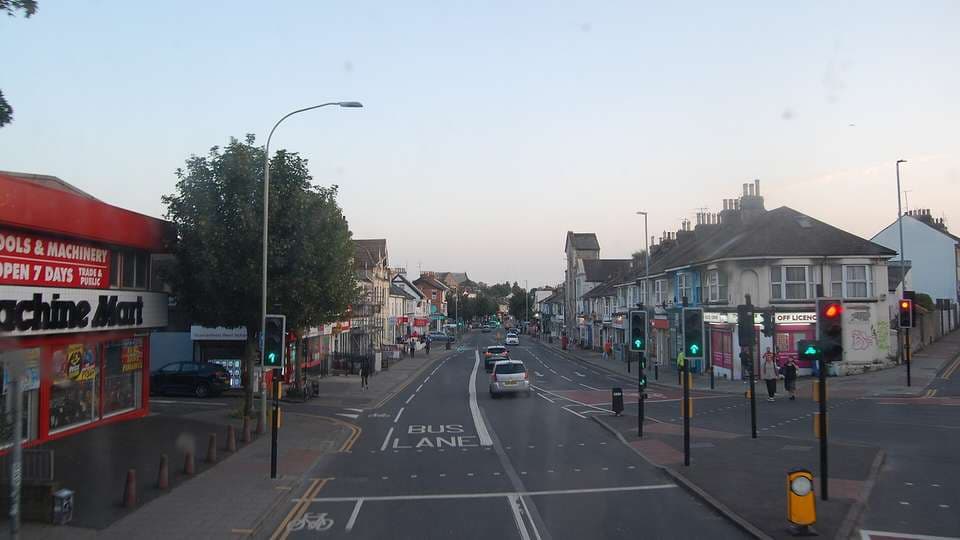
The building is a large three-storey block on the north-west side of Lewes Road. The club sits at the back of it, set back from the road and facing Park Crescent Place. The report says two one-bedroom flats added on the roof of the front part are not directly above the club.
What the officers say
The central question in the report is whether the club would be lost as a community facility. Policy DM9 of the City Plan Part Two protects community facilities, and the report notes that it names places of worship as one. Officers conclude the plan is “a change between community facility uses rather than the loss of a community facility”, and so not contrary to the policy.
On neighbours, the report says that with no outside changes there would be no loss of daylight, sunlight, outlook or privacy. It calls the applicant’s management plan “reasonable and comprehensive”, and says noise conditions would manage the effect on nearby homes. On traffic, it says the objections about parking, the red route and congestion were not backed by the highways authority and are “not considered to be significantly impactful issues given the location and capacity of the existing site”. It concludes the proposal would not cause harm sufficient to warrant refusal.
Officers also say that the effect on property values, which some objectors raised, is not a material planning consideration. On equalities, the report says officers considered the applicant’s information, the consultee responses and third-party comments and found the plan would not have an unacceptable impact on groups with protected characteristics.
The conditions
If councillors agree, permission would carry nine conditions. The main ones are:
Hours. The premises can be used for worship, meetings and associated activities only between 8am and 10pm Monday to Saturday, and between 8am and 9pm on Sundays and bank holidays.
Noise. Noise from the use must not exceed the existing background level at one metre from the nearest homes. A noise impact assessment must be approved before the use starts, with any mitigation put in place first.
No outside sound. No external loudspeakers, tannoys or public address systems can be installed or used at the site at any time.
The sleeping rooms. The five rooms may be used only for occasional sleeping linked to the place of worship. They cannot be occupied as separate homes, houses in multiple occupation, hostels or short-term holiday lets.
Management plan. The mosque must operate at all times in line with its approved management plan.
Cycles and rubbish. Details of secure cycle parking and of refuse and recycling storage must be approved before the building is occupied.
What the council’s teams say
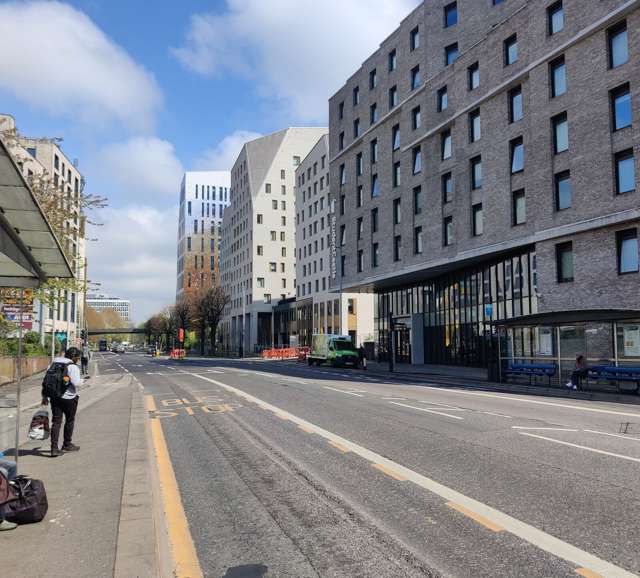
Environmental health replied on 13 July that the plan is acceptable subject to conditions on a noise management plan, hours of use, amplified sound, noise insulation and plant noise. The highways authority replied on 7 August that it is acceptable subject to conditions on cycle storage and refuse and recycling. It said the change is unlikely to bring a significant increase in trips compared with the club, and that having no car parking is acceptable because many major bus routes run along Lewes Road and the city centre is ten minutes away by bike. It assessed the plan on the basis that the sleeping quarters would be for occasional, temporary use and that nobody using them would become eligible for resident parking permits. The planning policy team said it had no comment.
The management plan
A mosque management plan was added to the application on 5 August. It says trained volunteers in high-visibility vests would be present during prayer times and opening hours to help worshippers arrive and leave quietly, with extra volunteers for larger events. It says people leading gatherings would remind worshippers to leave promptly and not congregate outside, and that signs would ask visitors to respect neighbours. No amplified music would be played.
The plan also says a named mosque manager would deal with complaints, keep a record of each complaint and what was done, and act as the contact for the council and neighbours. It says the premises are protected by CCTV.
What people told the council
The report counts 10 letters of objection, 14 in support and one that neither objects nor supports. Councillor Raphael Hill also made a representation in support.
The objections cited extra traffic, noise, highway safety, crowds gathering on a narrow pavement, the entrance being on a red route, harm to residents’ amenity, the loss of community floor space and conflict with Policy DM9. Some said adjacent neighbours were not consulted, that there was too little information and no noise assessment for the events space, and that groups of men would gather. Some raised concerns about LGBTQ+ inclusion and gender equality. Others raised property values and overdevelopment.
The supporters said it would use an under-used building, serve the local community and benefit the Muslim community, bring economic, educational and youth benefits, and offer charity and volunteering opportunities and better connections between communities. The report says the one neutral letter said the site is already used for regular prayer, that crowds are unsustainable and dangerous, and that the red route leaves nowhere to pick up or drop off.
Councillor Hill’s representation raised the lack of space for Muslim worshippers in the city, greater connections between communities and a benefit to residential amenity, and suggested that extra parking restrictions on nearby streets may be worth considering.
How to take part
The papers can be read on the council’s planning register under reference BH2026/01449. The agenda says anyone wanting to speak had to give written notice to Democratic Services by 12 noon on Thursday 22 October. The same committee is also due to consider plans for council flats at Oakley House. For that item, see our report, Council Plans 20 Affordable Flats at Oakley House, Brighton.

Comments
No comments yet. Start the conversation.