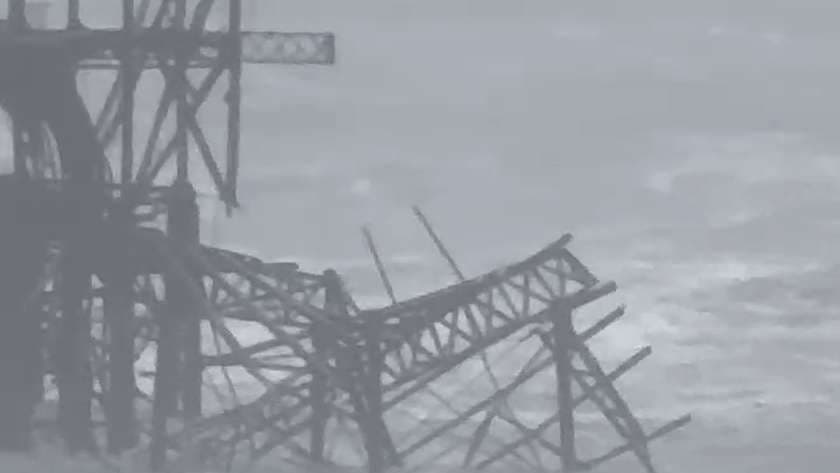
The West Pier Trust says Storm Austen has caused more of Brighton’s West Pier to collapse into the sea. ImJustBrighton put eight questions to the Trust early on Saturday 24 October 2026 and it replied with a statement. It says the ruin is far too dangerous and costly to stabilise, and that everyone should keep a safe distance. The statement is published here in full.
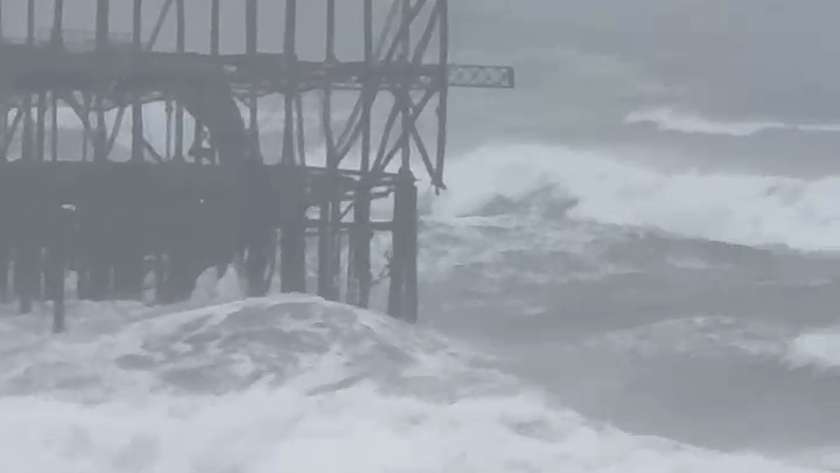
Footage sent to ImJustBrighton by readers on Friday 23 October shows collapsed ironwork lying in heavy surf beside what is left of the structure.
Our questions. Eight questions to the Trust’s chief executive, early on Saturday 24 October 2026. The Trust replied within hours.
What happened. More of the ruined West Pier fell into the sea during Storm Austen on Friday 23 October 2026, according to the Trust.
The Trust’s advice. Stay at a safe distance. The Trust says the structure is too dangerous, and too costly, to stabilise.
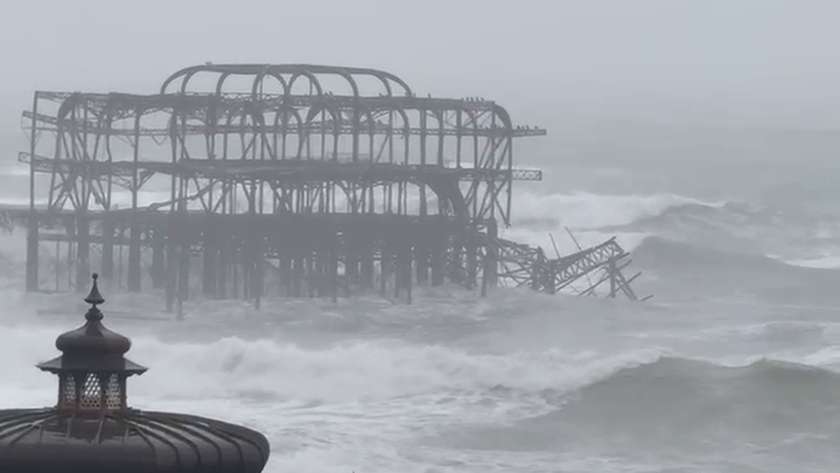
What the photos show. The central iron frame still stands, with a separate piece of ironwork on each side and open water between them. See our West Pier before and after report.
Why it is falling. The Trust owns the pier, has no funds to hold it steady and says its restoration became impossible after two arson attacks in 2003 and the loss of its lottery grant in 2004. The full story is below.
The pier. Grade I listed, first listed on 9 October 1969, according to the Historic England list entry.
Weather on Saturday. On Saturday 24 October the Met Office had a yellow warning for heavy rain across Brighton and Hove from 11am to 11pm.
Before and after
These are our own comparisons, made from reader photos taken on Friday 23 October 2026 and from photos of the pier in 2024. They are our reading of the pictures, not an official account of what fell.
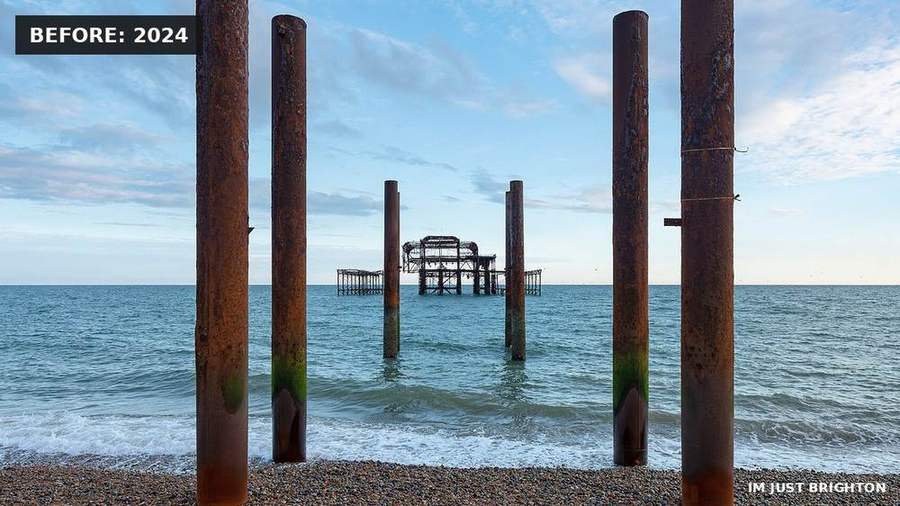
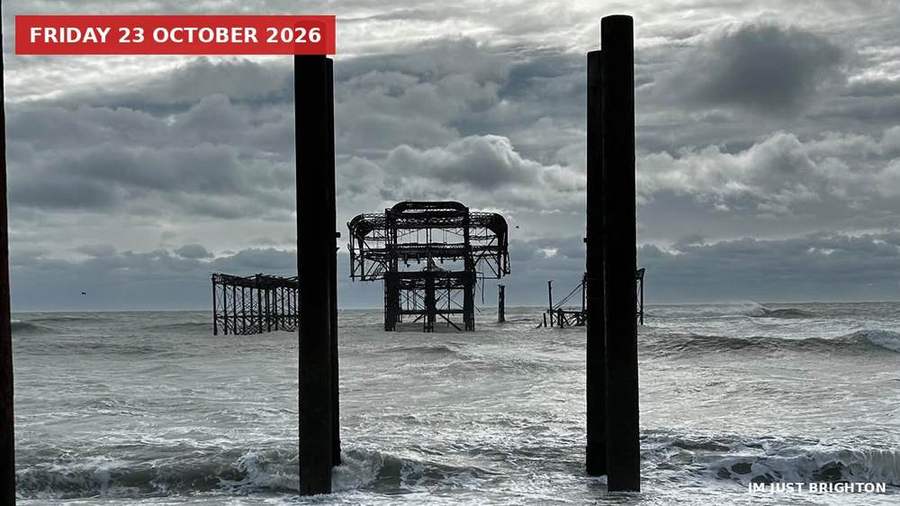
From the beach, between the iron legs, the pier that stood under blue sky and calm sea in 2024 now stands as separate pieces in heavy surf.
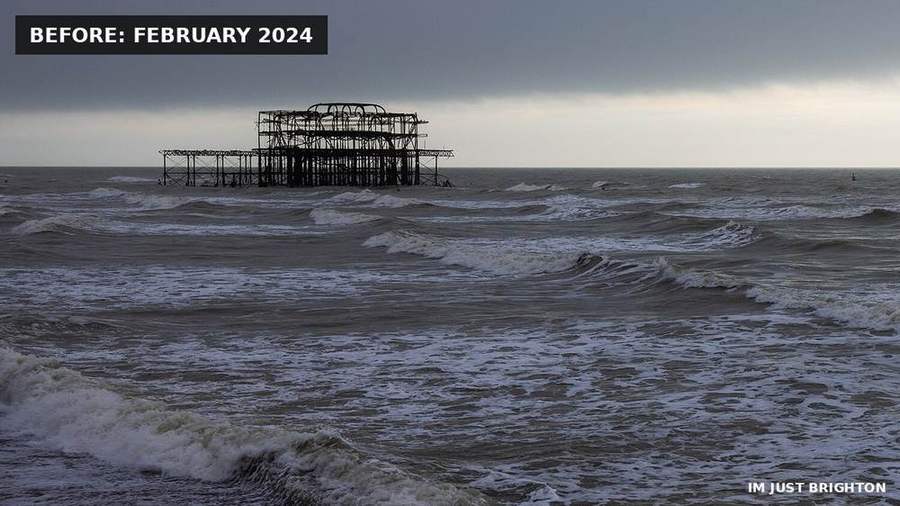
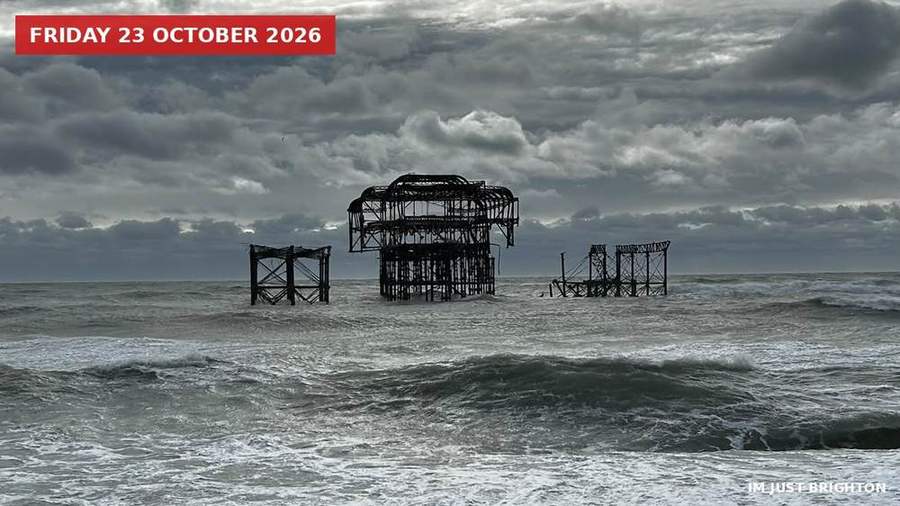
In the 2024 storm photo the ironwork reads as one connected frame. In Friday’s photo it appears as three separate pieces, with a gap of open water between them. The Trust has not said which section fell.
What the West Pier Trust says
ImJustBrighton contacted the Trust’s chief executive, Rachel Clark, early on Saturday 24 October with questions on which section of the pier fell, whether the site has been inspected, the danger to the public, who is responsible for the fallen ironwork and whether more collapse is expected. Ms Clark, who said she is on annual leave, replied with the statement below from the Trust’s Honorary Historian, Professor Fred Gray, dated 23 October 2026.
Storm Austen has caused more of Brighton’s West Pier to collapse into the sea.
Ever since the two devastating arson attacks in 2003, the West Pier has been whittled away by nature. All ruins are alive and ever-changing, and this is true of the West Pier.
It is far too dangerous (and costly) to try to stabilise the structure.
Everyone should stay at a safe distance and watch the battle between pier and the elements. We don’t know when the pier will eventually disappear beneath the waves, but disappear it will.
That so much still remains is a tribute to the Victorian designers and engineers who built the pier.
Professor Fred Gray, West Pier Trust Honorary Historian, 23 October 2026
Ms Clark said anyone wanting more information should contact Professor Gray. ImJustBrighton has also asked Brighton and Hove City Council for comment and will update this report when either responds.
What the footage shows
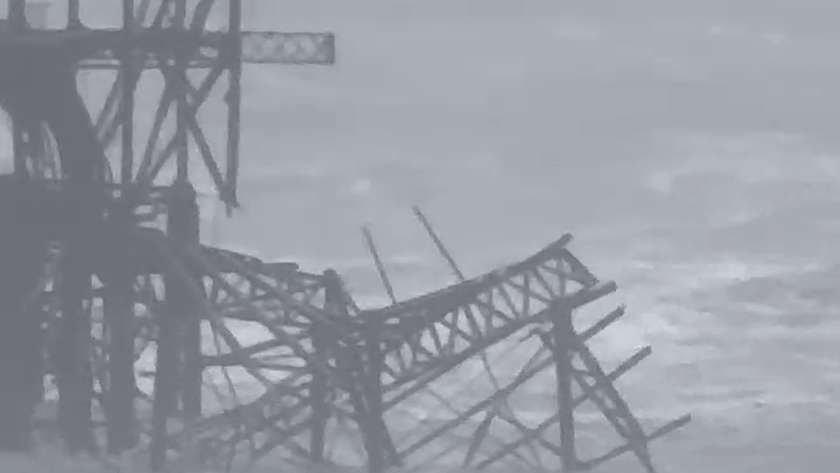
Clips filmed from the seafront in rough sea show the remaining frame of the pier standing in heavy surf. Beside its base, a tilted section of lattice girders lies in the water with waves breaking over it.
For photos set against the pier as it looked in 2024, see our report, West Pier Before and After Storm Austen: Why It Is Falling Apart.
Why the West Pier keeps falling
No engineer’s report on this collapse has been published, so there is no official explanation for why this section went. What is on record is how long the ruin has been decaying. The Trust’s website says the pier was destroyed in two arson attacks in 2003, which ended hopes of restoring it, and that the ruin has been in a state of active collapse for three decades.
The Trust says it does not know when the ruin will collapse further, only that it is certain to happen, and that it will most probably end up as an offshore reef revealed only at low tide. It says it does not have the funds to hold the structure steady and that doing so is technically not feasible. Its management plan is to mark the site, warn people not to approach and remove debris that reaches the beach at low water.
The Trust’s account of the collapse and fire years records a huge storm in December 2002 that seriously damaged the concert hall, then the destruction of the pavilion on 28 March 2003 and of the concert hall on 11 May 2003. It also records a pier collapse in September 2003.
Historic England’s listing says the pier was badly damaged in the October 1987 hurricane. On restoration, Brighton and Hove City Council’s West Pier page says the Heritage Lottery Fund cancelled a £14m grant in January 2004, and that freak storm damage in June 2004 led English Heritage to conclude the pier could no longer be restored.
Who owns the pier, and why nobody is saving it
The pier is owned by the West Pier Trust. The Trust, created in 1978, says on its About the Trust page that it is a charity and limited company that owns the pier and the rights that attach to it, and that it is non-profit making.
The Trust says that once the lottery grant was withdrawn in 2004 there was no prospect of public funding for a full restoration. In 2005 it decided to look instead for a solution that would combine the heritage of the pier with a new feature, which it says led it to the Brighton i360.
ImJustBrighton note. The Crown Estate Commissioners sold the pier to the Trust for £100 in 1983, according to its chronology. The Trust has said it has “no intention of removing the remains unless overwhelming safety issues arise”.
What is left of the pier
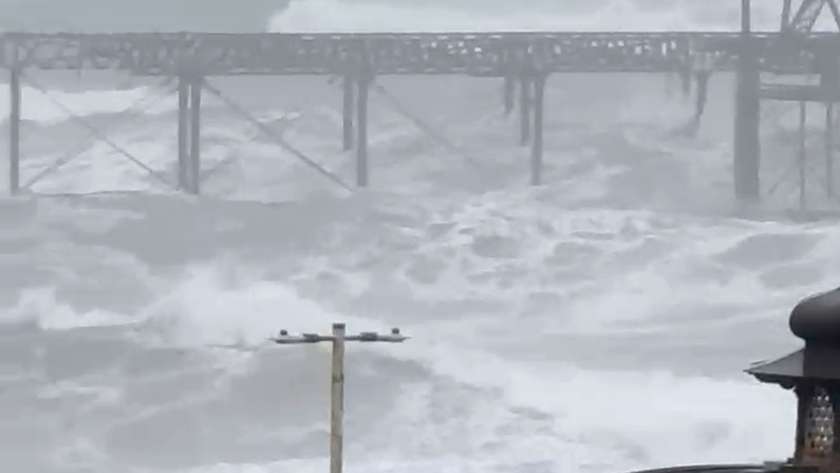
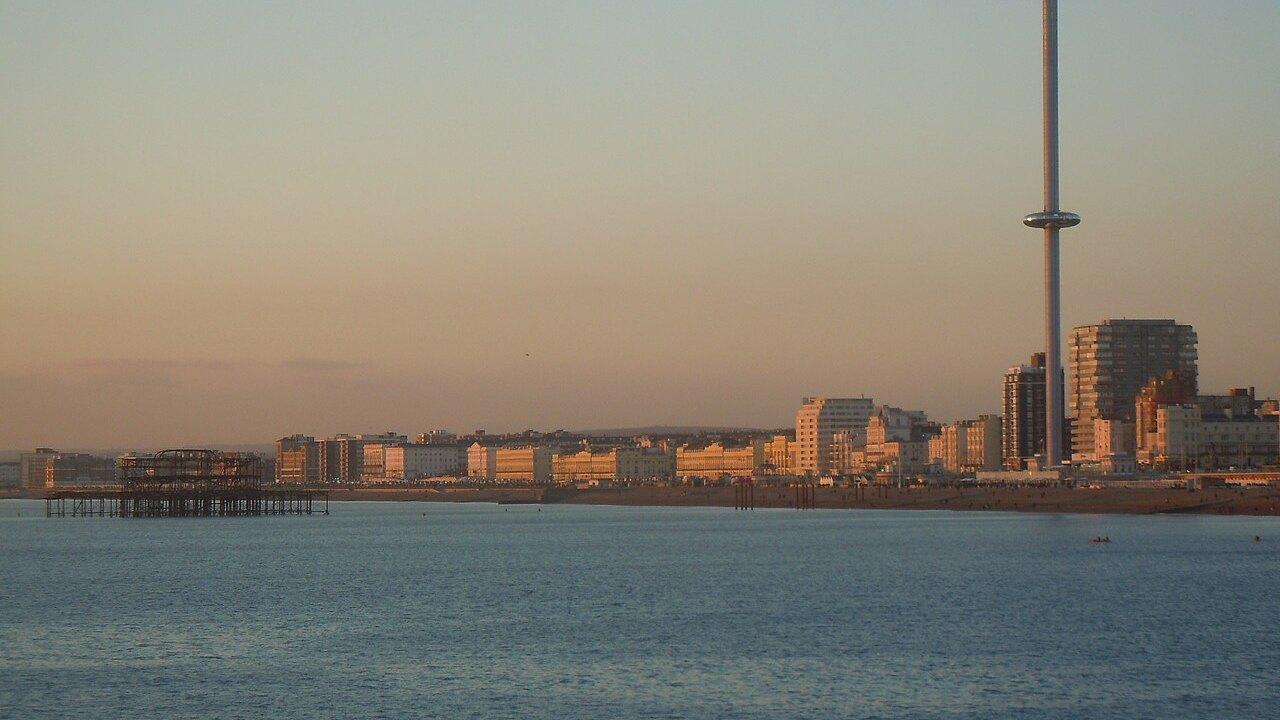
The footage shows the tallest part of the surviving frame, a row of curved iron arches standing on its legs in the sea, with birds perched along the top. Alongside it, a long horizontal run of lattice ironwork stands on iron legs with waves breaking through it. The rest of the pier that once reached out from the seafront is gone.
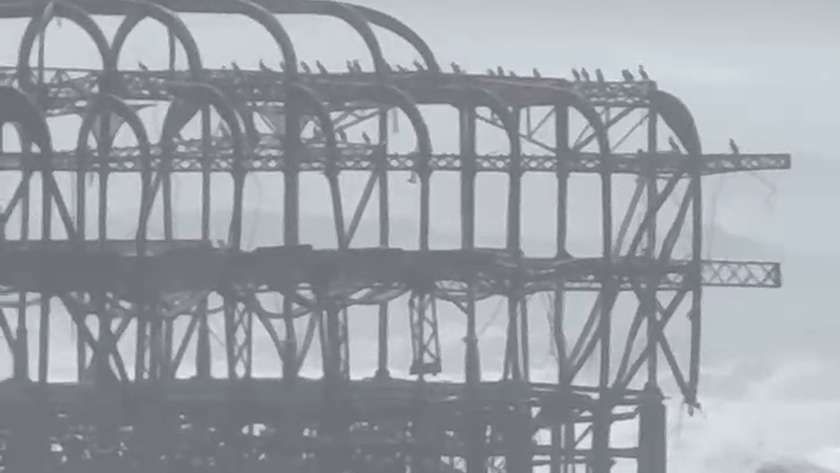
The Trust says the ruin has become a haven for wildlife, home to cormorants and many other birds as well as sea life. It adds that when it surveyed the remains on the lowest tide of the year, it found the pier in better shape than first hoped, with detailed ironwork, staircases and walkways surviving. That survey was before this storm.
What ImJustBrighton asked the Trust
Readers wanted to know what had happened to the pier, so ImJustBrighton went to the people who look after it. The questions covered which section fell, whether the site has been inspected, the danger to the public, who is responsible for the fallen ironwork and whether more collapse is expected.
“We asked the Trust eight questions because readers wanted to know what had happened to the pier. Its answer is clear that the ruin is too dangerous to stabilise, so please keep a safe distance.”
Tim Graichi Cucarella, founder of ImJustBrighton
The statement does not say which section fell, whether the Trust has inspected the site, who is responsible for the fallen ironwork or what will happen to debris on the beach. We will add the Trust’s and the council’s answers to this report when they arrive.
The weather
The Met Office storm centre lists Storm Austen as named on 20 October and Storm Boelo as named on 22 October 2026.
On Saturday 24 October the Met Office had a yellow rain warning for Brighton and Hove, East and West Sussex and the rest of London and the South East, valid from 11am to 11pm, issued at 9.05am. It expected 25 to 30mm of rain widely, with surface water flooding in places. Read our Storm Boelo rain warning report. Its wind warnings for Storm Boelo, including two amber warnings, covered northern parts of the UK, not Sussex. Warnings can change, so check the Met Office warnings page.
The West Pier Centre
The Trust runs the West Pier Centre, in an arch at beach level east of the i360, near the Golden Spiral. Its website says it is open 12pm to 3pm from Friday to Monday, and that it may close temporarily in bad weather, so call 01273 321499 or email info@westpier.co.uk to check first. According to the Trust’s news page, its autumn exhibition, which opened on 11 September 2026, features astrophotography of Brighton by Michael Steven Harris.
Staying safe
The Trust says the structure is dangerous and should not be approached, and its statement asks everyone to keep a safe distance. Do not try to get close to the pier or to any debris on the beach.
The Met Office’s coastal advice is to be aware of large waves, because even from the shore they can sweep you off your feet and out to sea. In an emergency, call 999 and ask for the Coastguard. After Storm Goretti in January, the council advised people to keep out of the water and away from the water’s edge, keep pets on a lead and away from washed-up items, and avoid handling debris.
A short history of the West Pier
1866. The pier opened. The Trust’s chronology gives its length as 1,115 feet and its cost as £27,000.
1969. The pier was listed. Historic England records it as Grade I, first listed on 9 October 1969.
1975. The whole pier closed to the public for safety reasons, according to the Trust.
1983. The Crown Estate Commissioners sold the pier to the Trust for £100, according to the Trust.
1998. The Heritage Lottery Fund approved £14.2m for restoration, according to the Trust.
2002 to 2004. A storm, two arson attacks and a collapse damaged the pier, and the restoration funding was withdrawn.
2017. The West Pier Centre opened in February in a renovated arch on the seafront.
What happens next
The Trust says on its website that it is investigating the creation of a new contemporary West Pier for Brighton. Its statement does not say whether the latest collapse changes that. We have asked the Trust and the council for more details and will update this report when they reply.
Comments
No comments yet. Start the conversation.