
Brighton Council to Invest £1.3 Million in Bins as Fortnightly Collections Are Explored
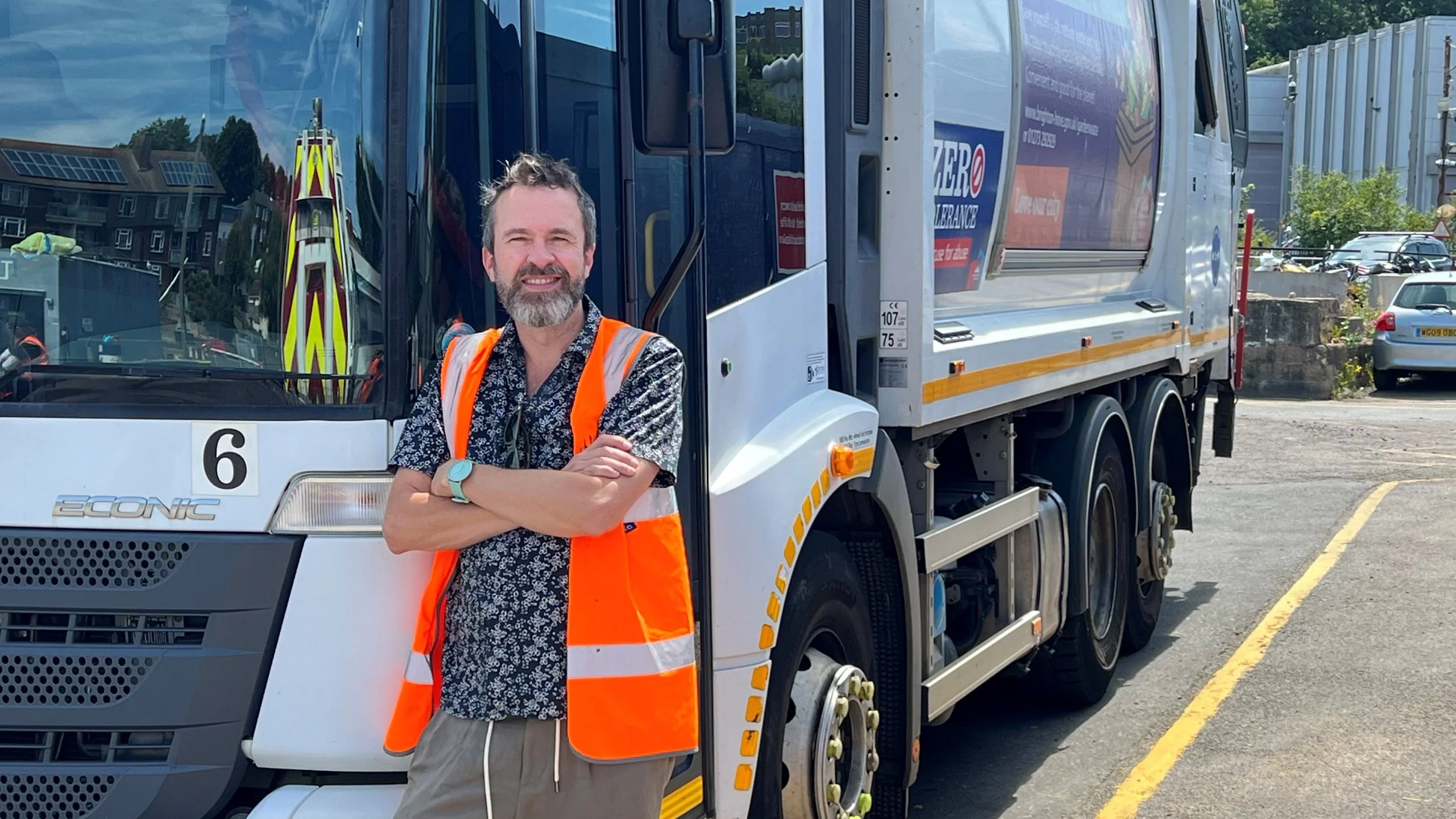
Councillor Tim Rowkins with one of the council's food waste collection vehicles (photo: Brighton and Hove City Council)
Brighton News
Brighton and Hove City Council is set to invest a further £1.3 million in waste and recycling services, as it works to improve the reliability of bin collections and lays the groundwork for a possible move from weekly to fortnightly rubbish collections.
The investment, considered by Cabinet, follows improvements made over the past two years, including the introduction of weekly food waste collections, the expansion of recycling and investment in new vehicles, equipment and digital technology.
Last year the council approved investment in new refuse and recycling vehicles, and nine new vehicles are now beginning to arrive and will enter service in the coming months. The latest proposals would add four extra crews to increase spare capacity, put more investment into vehicles, strengthen operational management and performance monitoring, bring in more mechanics to keep vehicles on the road, and provide extra support to respond quickly to missed collections.
The council says the age of much of its collection fleet is the single biggest cause of missed collections, so the investment in vehicles and mechanics is expected to bring a step change to day-to-day operations and a more reliable service for residents.
Could fortnightly collections be coming?
Alongside the new investment, the council is continuing to explore whether fortnightly kerbside rubbish collections could be introduced in the future. No decision has been made. The council says further improvements in reliability, and more evidence of waste moving out of rubbish bins and into recycling and food waste collections, are needed before Cabinet considers any change.
Any change would apply to kerbside collections only. Recycling and weekly food waste collections would continue as they are, and communal refuse and recycling collections would stay on a daily schedule, with separate work under way to improve that part of the service.
The council now collects more than 100 tonnes of food waste every week, but says almost half of the material still placed in rubbish bins could be recycled or composted. A recent waste composition analysis found that 29.4 per cent of residual waste is food waste, down from 38 per cent in the previous analysis, with a further 14.6 per cent being dry mixed recycling. More than 1,600 residents have shared their views through surveys and engagement events, showing strong support for recycling and food waste collections while highlighting the importance of reliable services, adequate bin capacity and clear communication.
We know that more work is needed to get the service to the level that residents deserve, and so we are bringing forward this further investment to improve reliability and drive towards zero missed bins
Councillor Tim Rowkins, Cabinet Member for Net Zero and Environmental Services
Councillor Tim Rowkins said the council had made major improvements to waste and recycling over the past three years, making it easier for residents to recycle more and reducing the amount of rubbish thrown away. He added that while over 100 tonnes of food waste is now collected each week, much of what remains in refuse bins could still be recycled or composted, and the council wants to see more of that waste move into recycling, along with further improvements to reliability, before considering any change to the collection model.