
Brighton and Hove sets out a plan to strengthen its visual arts scene
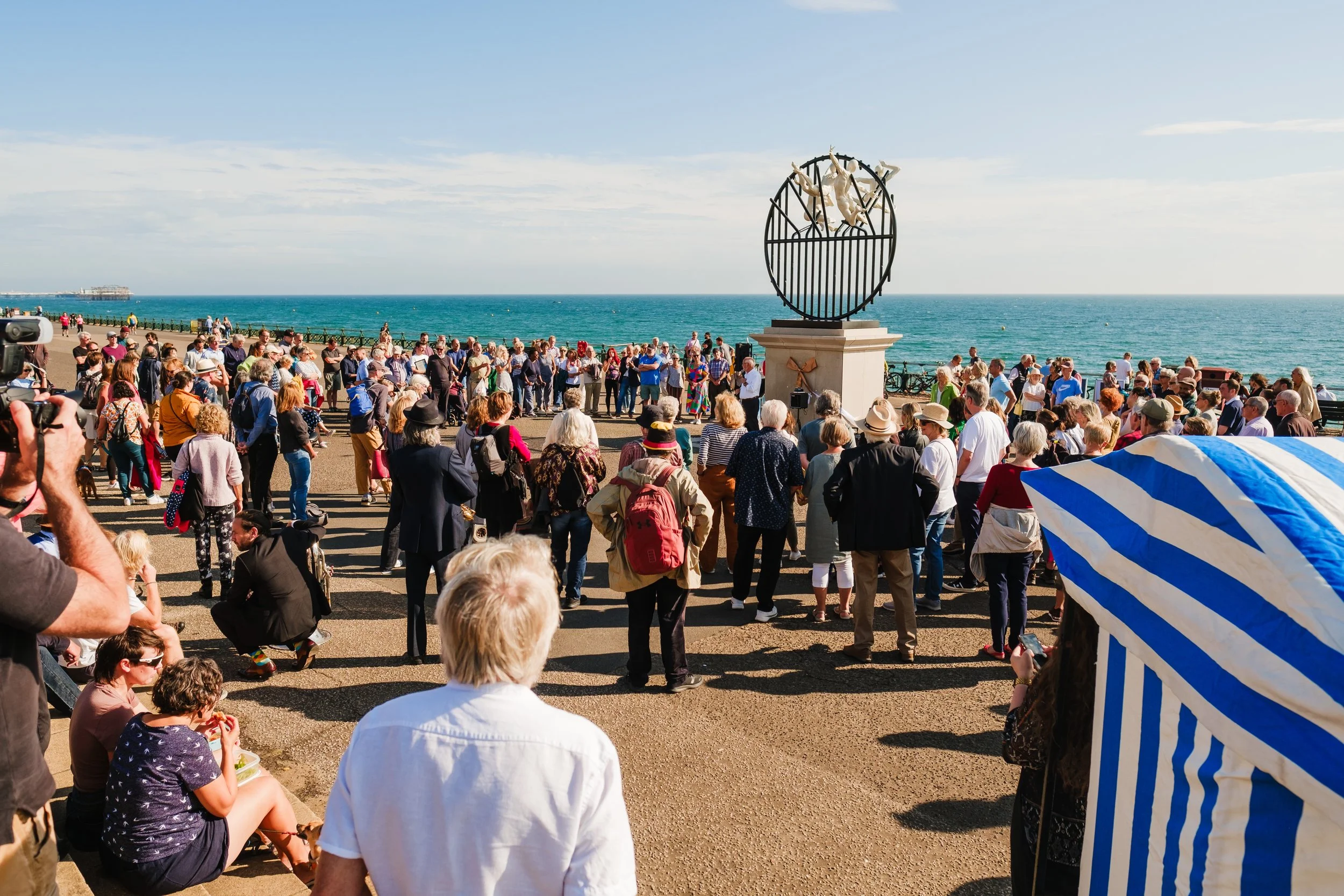
A crowd gathers on the seafront for a Hove Plinth unveiling, part of Brighton and Hove's public art scene. Photo: Brighton and Hove City Council
Brighton and Hove sets out a plan to strengthen its visual arts scene
Brighton and Hove has launched a new plan to protect and grow its visual arts scene, one of the things the city is best known for. Called Re:Frame, the report sets out where the sector is strong, where it is struggling, and what the city can do to keep creativity at its heart.
The city's galleries, museums, open studios, festivals, street art and installations draw thousands of visitors every year and support careers for residents and graduates. Brighton and Hove has far more artists and arts organisations than the national average, and its creative industries contribute more than £1.5 billion to the local economy while supporting over 16,000 jobs. But the sector has been hit hard in recent years by the pandemic, the cost-of-living crisis, funding cuts and the loss of key venues.
To tackle this, the council worked with Arts Council England, the Brighton Visual Arts Coalition and the Brighton and Hove Culture Alliance, commissioning Cultural Associates Oxford to produce the analysis. It was shaped by local artists and organisations through a sector-wide survey and two in-person "Innovation Sprint" workshops, so the recommendations come from the people working in the scene rather than being imposed from outside.
Re:Frame sets out a vision for Brighton and Hove to become an internationally regarded centre for visual arts, home to a thriving arts marketplace, a city where art is embedded in everyday life, an attractive place for artists to work, a strong local ecosystem, a leader in public art, and a city with a single shared vision for the sector.
Councillor David McGregor, Cabinet Member for Economy, Culture, Heritage and Tourism, said the sector is central to the city's identity. "Brighton and Hove is a city shaped by creativity, independence and people who are prepared to do things differently. Our visual arts sector is central to that identity, bringing people together, supporting jobs and making our city a better place to live, work and visit," he said.
"This report sets out practical ways to support artists, protect creative spaces and make visual art more accessible to everyone. The sector has faced huge challenges, but it remains ambitious and full of ideas." He pointed to the council's plans for an internationally significant art gallery at Black Rock, for which it is currently seeking investment through its new seafront prospectus.
Peter Heslip, Director of Visual Arts at Arts Council England, welcomed the analysis. "Brighton and Hove has an exceptional visual arts community, and Re:Frame sets out a strong vision for its future," he said. "By working together, we can support artists and ensure creativity remains central to the city's identity and economy."
Following the launch, artists, funders, organisations and institutions are being invited to an open meeting to meet the project board and discuss the analysis, with the date to be shared through arts networks and social media. The full Re:Frame report is available to read on the council's website.
For more Brighton and Hove news and community stories, follow ImJustBrighton, where we reach more than 500k people a month.