
Council Rules Out New England House Rebuild and Opens New Creative Workspace
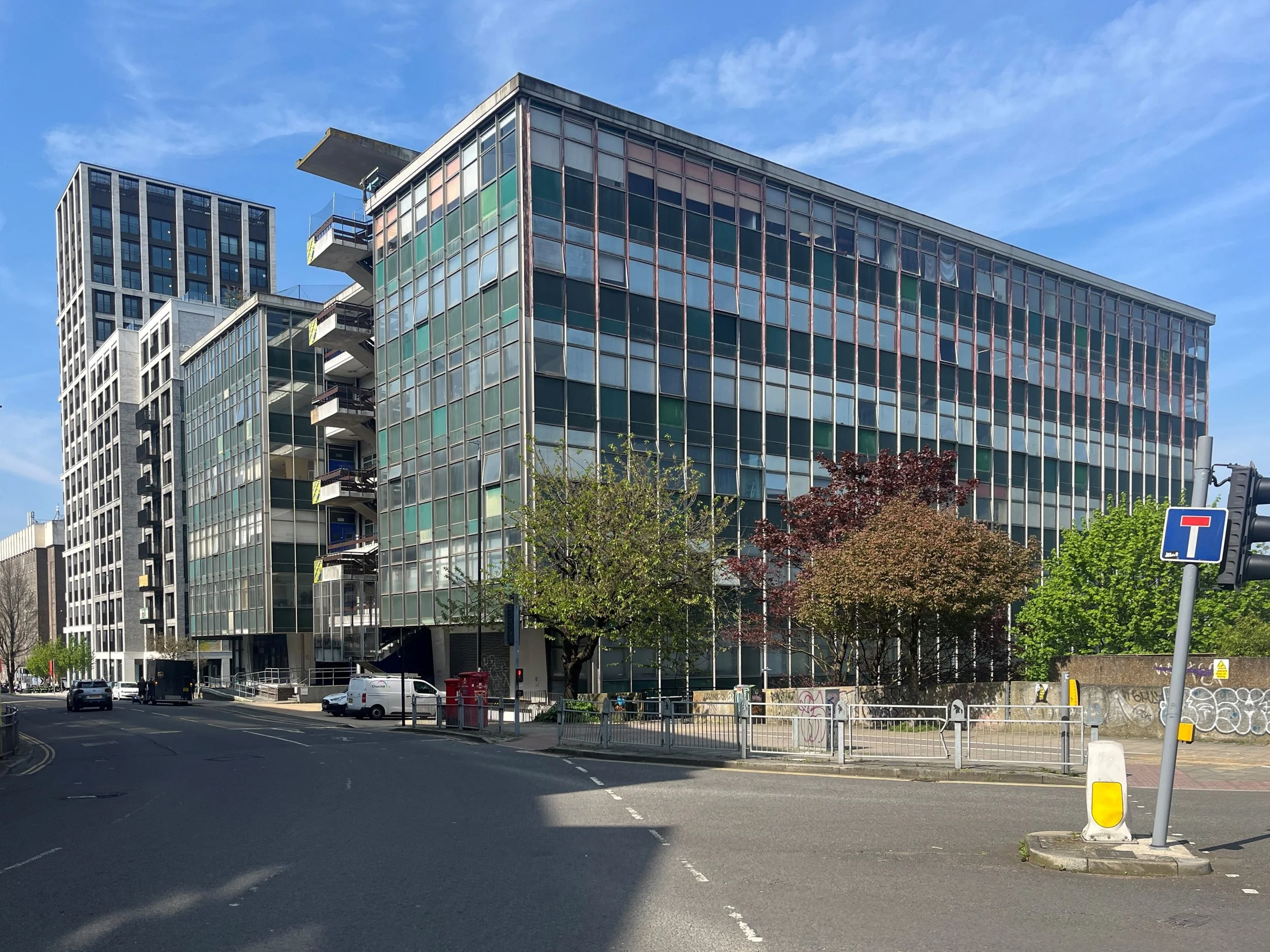
New England House, which has been fully vacated after being found an intolerable fire risk
Brighton News
Brighton and Hove City Council is opening up more than 30,000 square feet of workspace for creative businesses and beginning the long-term regeneration of the New England House site, after ruling out a council-funded rebuild of the landmark building as too costly.
Under the council's Asset Strategy, considered by Cabinet on 16 July, vacant workspace at Phoenix House on West Street and Lyndean House on Queens Road will be marketed to creative, cultural and digital businesses from mid-August. The space is aimed at businesses affected by the closure of New England House, and at supporting a sector that makes up around one in five of all businesses in the city.
The council is also preparing a development brief for the wider New England area, seeking external partners to deliver a mix of new workspace and housing through a future public-private partnership. Planning policy requires that no employment floorspace is lost overall, so a similar amount of workspace would have to be re-provided on or near the site, and affordable housing would be expected if homes are built.
New England House at a glance
The numbers behind the decision
1963
The year New England House opened, the world's first high-rise industrial business centre
100+
Tenants and over 700 workers based there before it closed
16,000m²
Central workspace lost when the building was vacated
The end of an era for New England House
New England House opened in 1963 and has been described as the world's first high-rise industrial business centre. At its height it was home to more than 100 tenants and over 700 workers, the majority in the creative, cultural and digital sectors.
In November 2024 an independent fire engineer concluded the building was an intolerable fire risk in its existing condition. The council secured full vacant possession by June 2026, a move that took around 16,000 square metres of centrally located workspace out of use. While emptying the building, the council waived rent, reduced service charges and contributed towards tenants' moving costs, but a shortage of comparable affordable space still displaced businesses, with some leaving the city, scaling back or ceasing trading.
How we got here
November 2024
An independent fire engineer finds New England House an intolerable fire risk in its current condition.
June 2026
The council secures full vacant possession, taking around 16,000m² of central workspace out of use.
July 2026
Cabinet considers the Asset Strategy, ruling out a council rebuild and backing new workspace elsewhere plus a development brief for the site.
From August 2026
Over 30,000 sq ft at Phoenix House and Lyndean House is marketed to creative businesses, while the council seeks development partners for the wider area.
Why the council is not rebuilding
The council examined two options to bring New England House back into use, and judged both unviable given its current financial position, which recently saw it forecast an overspend of almost £20 million and seek government support. Either would have been among the largest speculative commercial developments in the city for years.
Two options, both rejected
What it would have cost to save the building
Option 1 · Deep retrofit
£67m
Keep the frame, replace almost everything else
Payback: 18 to 33 years
Handover: autumn 2029
Upside: lower carbon, keeps the building's character
Option 2 · Demolish and rebuild
£97m
Knock it down, build a modern block
Payback: 25 to 50 years
Handover: winter 2029
Upside: most efficient, purpose-built for the sector
Both carried a peak budget pressure of between £15.8m and £18.2m before earning any income.
While I understand the significant part New England House has played in many local creative businesses, the reality is that a council-funded rebuild or retrofit is likely to involve too much financial risk for taxpayers
Councillor Jacob Taylor, Deputy Leader and Cabinet Member for Finance and City Regeneration
Councillor Taylor said the council was instead taking a pragmatic approach to the long-term redevelopment of the site, one that would support jobs, protect public money and enable regeneration of the wider area, creating new employment space and homes in the future. By promoting the space at Phoenix House and Lyndean House to established creative organisations first, he said, the council could support those businesses now and then open access to freelancers and individual artists.
Backing the creative economy
Councillor David McGregor, Cabinet Member for Economy, Culture, Heritage and Tourism, said the city's creative sector was one of the things that made Brighton and Hove special, but that artists, makers, designers and growing creative businesses were under real pressure to find suitable workspace.
This is about the council directly intervening to support our creative economy. By opening up council-owned space at Phoenix House and Lyndean House, we can help businesses and creatives stay in the city, grow here, and create new opportunities for the next generation of creative talent
Councillor David McGregor, Cabinet Member for Economy, Culture, Heritage and Tourism
The move is part of a wider push to regenerate the city, alongside projects such as the 222 new council homes and community hub taking shape in Moulsecoomb. More detail on this scheme is available on the council's New England House project pages and in the council's news announcement.