UPDATE, 12 OCTOBER 2026
This plan is now on hold. The government paused local government reorganisation on 7 September, and East Sussex County Council has since started a court challenge, according to Brighton and Hove News. Read the latest on the court challenge.
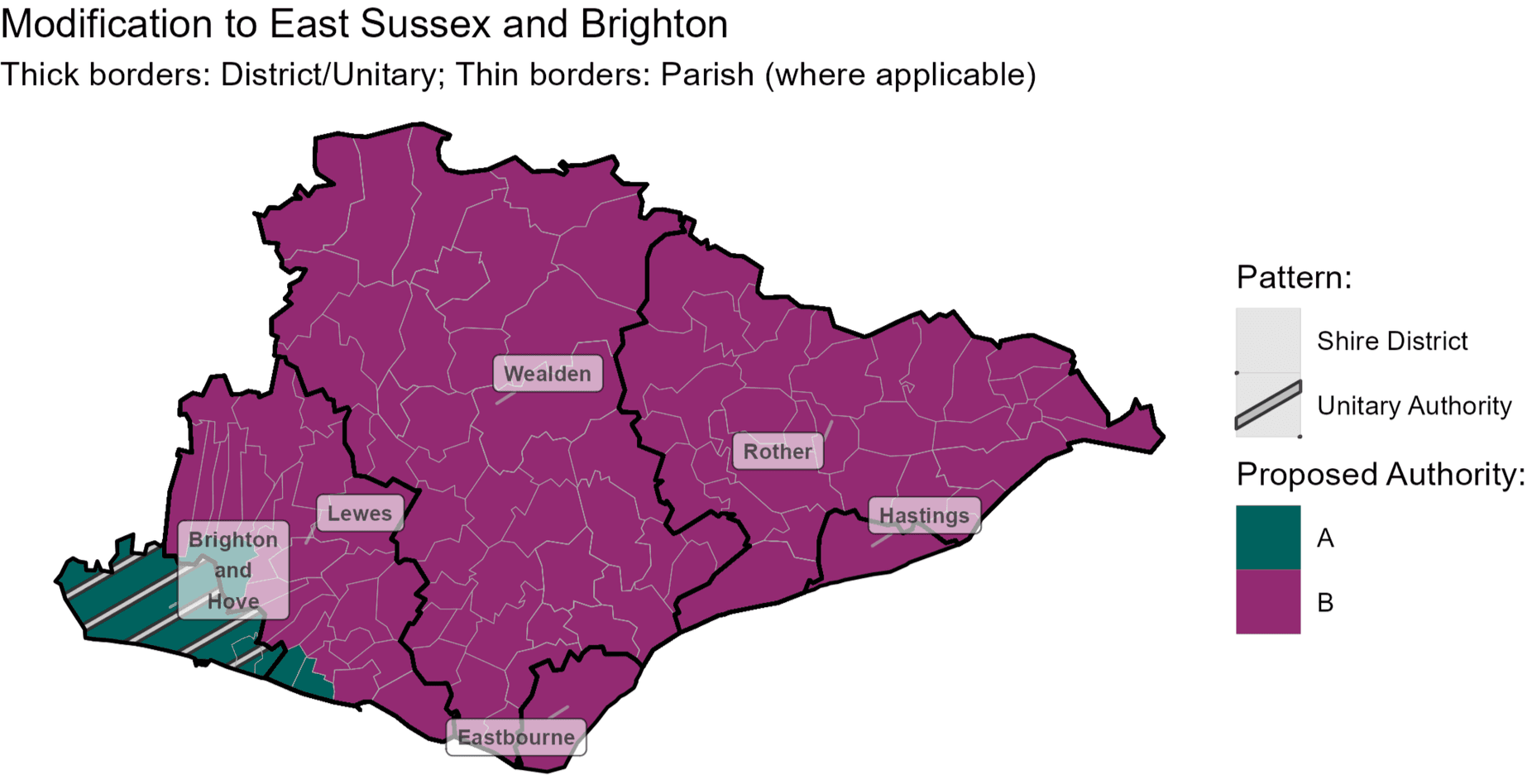
Brighton and Hove will expand for the first time in 29 years, taking in Peacehaven, Telscombe Cliffs and East Saltdean from April 2028, after a government decision that 89 per cent of consulted residents in those areas opposed.
Housing Secretary Steve Reed confirmed the change on Thursday 16 July. The new authority will cover around 308,000 people. Lewes District Council and East Sussex County Council are both considering a legal challenge.
Four areas move across: East Saltdean and Telscombe Cliffs, Peacehaven West, Peacehaven East and Peacehaven North. Falmer parish, named in the government's own consultation and home to the university campuses, was dropped at the last minute and stays with East Sussex. Kingston and Newhaven, both in Brighton and Hove's original bid, also stay put.
Nothing changes for residents until Vesting Day on 1 April 2028. A shadow council covering the new boundary is elected in May 2027, and the Structural Changes Order goes before Parliament in autumn 2026. Existing councillors in Brighton and Hove and Lewes are expected to have their terms extended to 2028.
The numbers behind the objection
Lewes District Council has also pointed out that the government never published the results of its first statutory consultation, which drew 3,828 responses between November 2025 and January 2026.
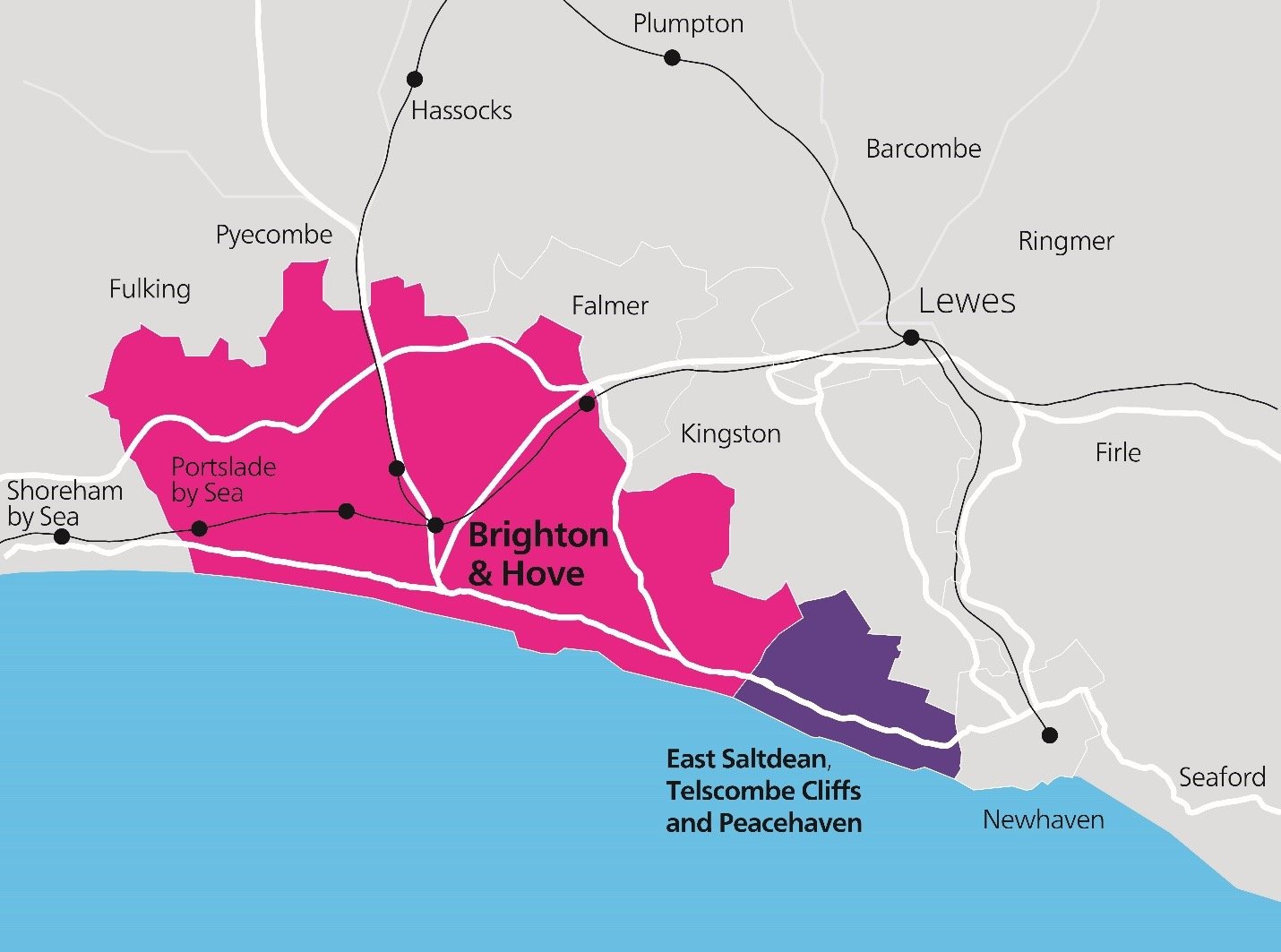
Brighton and Hove in pink, with East Saltdean, Telscombe Cliffs and Peacehaven joining the city, map issued by Brighton and Hove City Council
Housing is the accusation
Lewes District Council leader Councillor Zoe Nicholson, who said she was furious with the decision, connected it directly to Brighton and Hove's government requirement to build close to 40,000 new homes by 2040.
"Stripped of the process and the paperwork, this is a Labour government handing part of East Sussex to a Labour-run council in Brighton, to help it build the homes its own targets require."
She has said residents would lose their local identity, their local voice and their agency, and that services would be reshaped around the needs of a city rather than small towns and villages. East Sussex County Council leader Councillor Andy Woolley called the outcome one of the worst possible, and said legal action remained an option.
Brighton and Hove City Council leader Councillor Bella Sankey welcomed the decision, acknowledging that views had been strongly held and that some residents would remain sceptical.
"Day-to-day we all already travel along the same roads, our children go to the same schools and colleges, we work in the same places and we use the same local business."
Councillor Jacob Allen, cabinet member for local government reorganisation, said the announcement gave the council clarity for planning, and that the focus now was on the 700 services it provides. He described it as the start of creating a local authority that works for the communities involved, but not the end.
How it reached this point
Councils were invited to submit reorganisation plans in February 2025. Two rival bids arrived that September: East Sussex councils wanted one county-wide authority with Brighton and Hove left on its existing boundary, while Brighton and Hove proposed a five-council Sussex model that expanded the city.
In March 2026 the Secretary of State said he could not decide, citing the cost and risk of splitting services under Brighton's plan and the problem of leaving the city on its current footprint under the East Sussex one. A further five-week technical consultation followed on moving parts of Lewes district into the city. Announcing the final decision, Mr Reed said two-tier structures are confusing for residents, divide responsibilities, slow down decisions, duplicate costs and blur accountability.
A second new authority of around 537,000 people will cover Eastbourne, Hastings, Rother, Wealden and the rest of Lewes district. No decision has been made for West Sussex. Separately, a Sussex-wide mayor is due to be elected in May 2028.
Brighton and Hove's boundaries have not moved since the two towns merged in 1997.
Sources: Brighton & Hove City Council, gov.uk consultation, Lewes District Council, East Sussex County Council.

Comments
No comments yet. Start the conversation.