The University of Sussex is recruiting participants for its Mind Meets Body study
University research
University of Sussex researchers are recruiting Brighton participants for a mind and body study
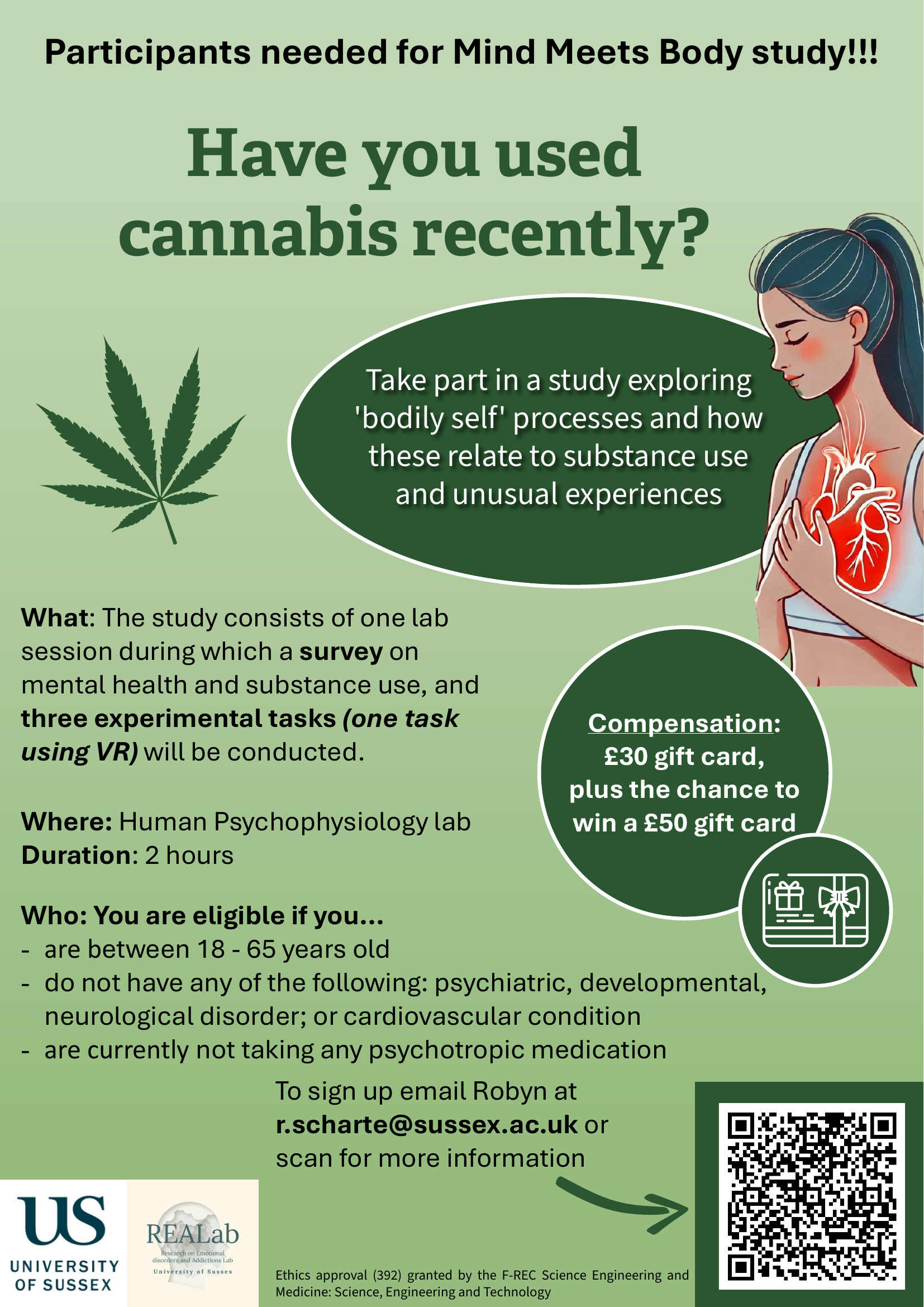
Researchers at the University of Sussex are looking for people across Brighton and Hove to take part in a new study called Mind Meets Body, exploring how the body and mind connect, and how that relates to substance use and unusual perceptual experiences.
The study is run by the university's REALab, the Research on Emotional, Disordered and Addictive behaviours Lab, based in the School of Psychology. It looks at what researchers call bodily self processes, how a person perceives and reads the internal signals of their own body, and how those processes relate to substance use and to anomalous experiences, meaning unusual perceptions such as seeing shapes, lights or colours that are not really there.
The study explores how the body and mind connect and how that relates to cannabis use
What is involved
One lab session, a survey and three tasks
Taking part means a single lab session of up to two hours, held on the University of Sussex campus. The session is made up of two parts, a survey and three experimental tasks.
The survey. The survey includes questions on mental health, substance use, interoception and unusual experiences, and will be completed on a device in the lab.
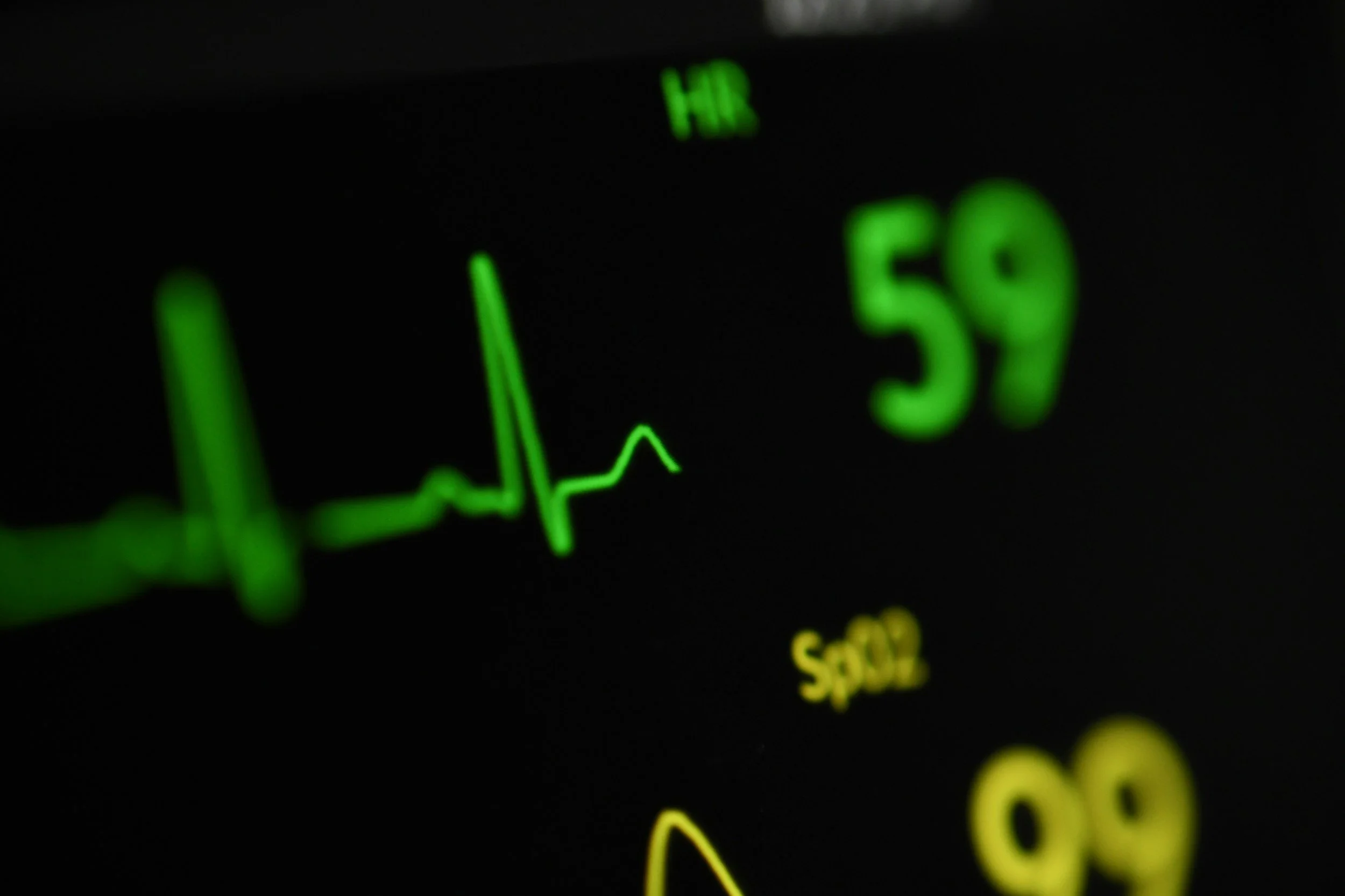
Three experimental tasks. The experimental tasks assess bodily-self processes. One of the tasks uses a mixed reality approach, meaning that participants will wear a VR headset for about 40 minutes, similar to headsets used for video gaming. During the three tasks, participants will also wear a pulse-oximeter, a small device on their fingertip, to record heart rate.
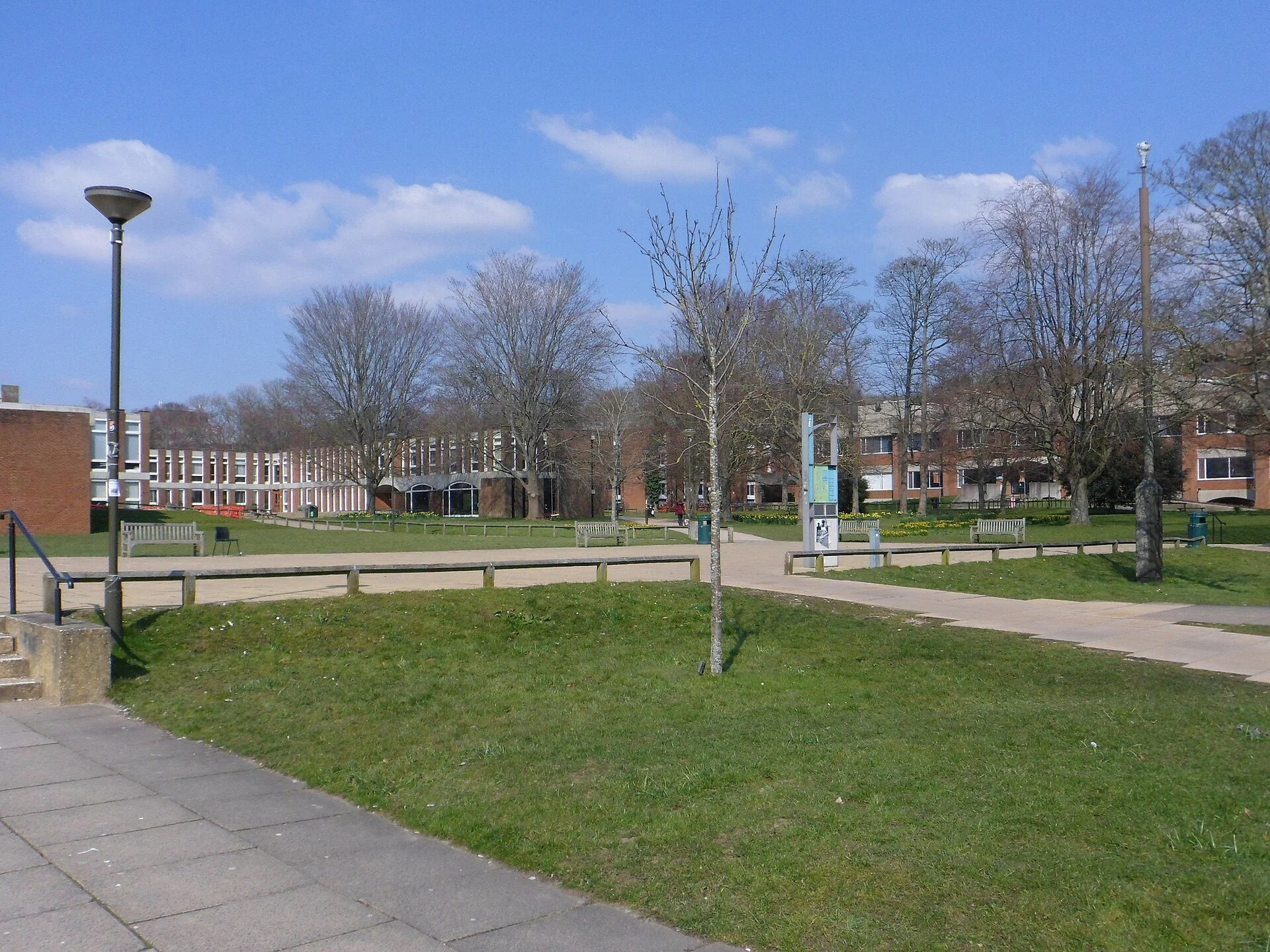
The University of Sussex campus at Falmer, Brighton, featuring its distinctive academic buildings and landscaped grounds. Credit: Wikimedia Commons
Eligibility and compensation
Who can take part
The study is open to anyone meeting the following criteria:
Aged between 18 and 65
No current diagnosis of a psychiatric, developmental or neurological disorder
No current or history of a cardiovascular condition
Not currently taking any psychotropic medication, for example antidepressants
Participation is voluntary. Participants are free to withdraw at any time before or during the session.
Participants complete a survey and three short tasks in a single lab session on the University of Sussex campus. Credit: Pexels